



01. Edit your contract insurance online
Type text, add images, blackout confidential details, add comments, highlights and more.

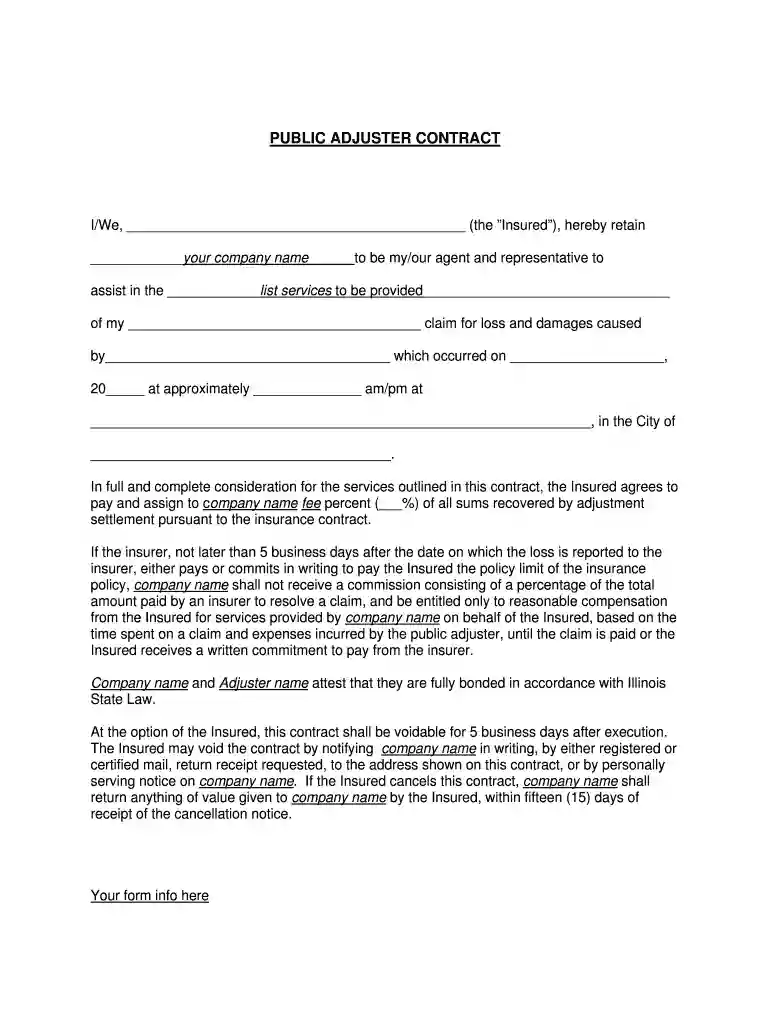
Type text, add images, blackout confidential details, add comments, highlights and more.

Draw your signature, type it, upload its image, or use your mobile device as a signature pad.

Send insurance agreement sample via email, link, or fax. You can also download it, export it or print it out.
An insurance contract is a legally binding agreement between an insurer and an insured, outlining the terms and conditions under which the insurer will provide compensation to the insured for specified losses. This contract typically includes critical elements such as the policyholder's rights, the insurer's obligations, and the detailed coverage for risks that are agreed upon by both parties. Commonly used for various types like health, life, auto, and property insurance, these contracts also specify the duration of coverage, premium amounts, and the process for filing claims.
Understanding these definitions helps policyholders grasp the obligations and protections provided by their insurance contracts, making the document more comprehensible and accessible.
Using an insurance contract sample PDF involves carefully reviewing the document to understand its structure, terms, and stipulations. Here are key steps to effectively utilize the sample:
Review the Structure: Examine the layout of the sample to understand how to format your own contract. Note headings like 'Policyholder Information', 'Coverage Details', and 'Signatures'.
Customize Content: Modify the template by filling in specific information relevant to your agreement, including names, dates, and financial amounts.
Clarify Legal Terminology: Be familiar with insurance terminology outlined in the document. If terms are confusing, researching them can enhance understanding.
Utilize Annotations: Use PDF editing tools to annotate the contract, highlighting essential components or adding comments for clarity.
Legal Review: Before finalizing any insurance agreement, consult with a legal expert if you have doubts regarding the terms or implications.
This sample serves as a foundational guide to drafting and understanding personalized insurance contracts.
Completing an insurance contract sample PDF requires attention to detail and adherence to the outlined structure. Follow these steps:
Gather Information: Collect all needed information, including contact details, policy values, and coverages. This preliminary step ensures you have all necessary data at hand.
Fill Out Each Section: Begin by inputting information into the designated fields. Pay close attention to accurately completing sections such as premium amounts, deductible values, and coverage limits.
Double-Check for Accuracy: After entering the information, review it for any mistakes. Accuracy is crucial, as errors can lead to complications when filing claims or during policy enforcement.
Initial Review with Stakeholders: Share the completed draft with other parties involved—such as co-signers or beneficiaries—to ensure that all involved understand and agree with the terms outlined.
Finalize and Sign: After confirming that all details are correct, obtain necessary signatures from all parties involved. Ensuring that the document is signed in the correct places is vital for its legality.
By following these structured steps, users can confidently complete their insurance contracts, tailored to their specific needs.
Understanding various terms commonly found in insurance contracts is essential for both policyholders and insurers to navigate the complexities of coverage:
Being familiar with these terms promotes better comprehension of the insurance contract terms, enabling individuals to make informed decisions.
The insurance contract sample PDF is not just a template; it holds legal significance when appropriately completed and executed. It is critical to consider the following aspects:
By acknowledging these legal aspects, users can ensure their insurance contracts are robust and enforceable.
Here are practical scenarios illustrating how to utilize the insurance contract sample PDF effectively:
Individual Life Insurance Policy: An individual looking to secure life coverage may use the sample PDF to draft a policy that outlines terms regarding premium payment, coverage limits, and beneficiary designations.
Small Business Liability Insurance: A business owner might adapt the sample to create a liability insurance contract, customizing sections related to coverage types and premium amounts specific to their business operations.
Health Insurance Enrollment: Families or individuals enrolling in a health plan can use the sample PDF to establish details regarding their coverage, understanding exclusions or required payments.
These examples demonstrate the versatility of the insurance contract sample in various contexts, enabling users to tailor agreements to their unique situations.
When utilizing an insurance contract sample PDF, it is essential to consider state-specific rules governing insurance agreements. These regulations can significantly impact the validity and execution of contracts:
Licensing Requirements: Most states require insurers to be licensed, and this affects the enforceability of the contracts offered within that state.
Consumer Protection Laws: Certain states have additional consumer rights concerning insurance policies. This might include mandatory disclosures or cancellation periods that must be detailed in the contract.
Claims Handling Procedures: States may dictate specific deadlines and procedures for filing claims, which should be incorporated into the insurance contract.
Understanding these state-specific regulations ensures compliance, protects policyholders' rights, and allows for smoother interactions with the insurance provider.
At DocHub, your data security is our priority. We follow HIPAA, SOC2, GDPR, and other standards, so you can work on your documents with confidence.
SAMPLE INDEPENDENT CONTRACTOR AGREEMENT the performance of this Contract (including, without limitation, unemployment insurance, social security.Read more
Jan 1, 2020 This life insurance plan provides financial protection for your beneficiary(ies) by paying a benefit in the event of your death. The amount yourRead more
I, the undersigned holder of this Service Contract, hereby authorize the following Lien Holder: 1. To receive any refund for credit to my account.


