




01. Edit your form 17 articles of dissolution online
Type text, add images, blackout confidential details, add comments, highlights and more.

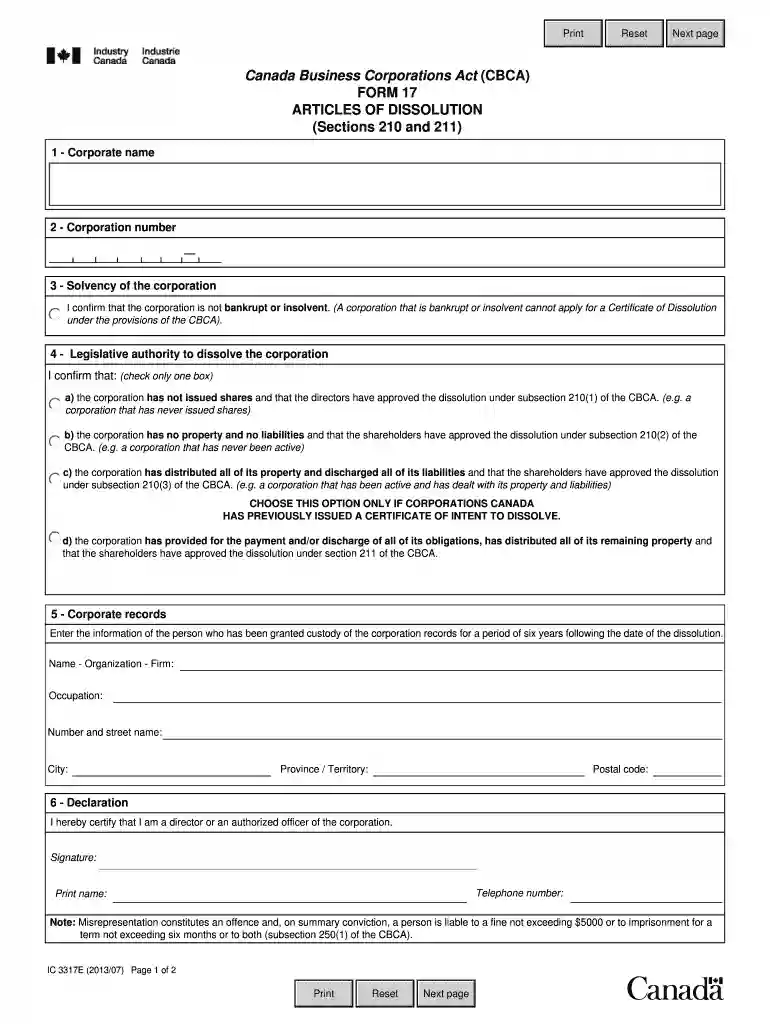
Type text, add images, blackout confidential details, add comments, highlights and more.

Draw your signature, type it, upload its image, or use your mobile device as a signature pad.

Send articles of dissolution via email, link, or fax. You can also download it, export it or print it out.
Form 17, known as the Articles of Dissolution, is an essential document for corporations looking to officially dissolve their business in accordance with the Canada Business Corporations Act (CBCA). This form is used to notify the relevant authorities that a corporation is relinquishing its legal status as a registered entity and is ceasing its operations. Completing Form 17 is necessary for both compliance and to release the corporation from any future liabilities.
To successfully fill out Form 17, certain information and documentation are mandatory. It typically requires:
This information is critical as it verifies the legitimacy of the dissolution request and protects stakeholders involved.
Filing Form 17 involves several steps to ensure that the process is handled correctly. The steps generally include:
Following these steps ensures compliance with legal requirements and helps avoid potential penalties.
Understanding key terms can aid in navigating the dissolution process. Some important terms include:
Familiarity with these terms enhances clarity around the processes and implications of dissolution.
Dissolving a corporation has several legal implications. Actions taken during the dissolution process can impact:
These aspects illustrate the importance of careful planning and execution when considering a corporate dissolution.
Several scenarios highlight different contexts in which corporations may need to file Form 17:
Understanding these scenarios can aid corporations in better evaluating the decision to dissolve.
Filing deadlines are crucial for compliance. Corporations should be aware of:
Awareness of these deadlines minimizes risks associated with dissolution.
There are options for how to file Form 17. The digital version offers several advantages:
While paper versions remain available, the digital option enhances the overall efficiency of the dissolution process.
Failure to properly complete and submit Form 17 can lead to various penalties, such as:
Understanding these potential repercussions emphasizes the importance of adhering to proper procedures in the dissolution process.
We've got more versions of the form 17 articles of dissolution form. Select the right form 17 articles of dissolution version from the list and start editing it straight away!
At DocHub, your data security is our priority. We follow HIPAA, SOC2, GDPR, and other standards, so you can work on your documents with confidence.
No debt of the corporation remains unpaid. A majority of the incorporators or initial directors authorized this dissolution. DATE OF INCORPORATION: Future dateRead more
Feb 27, 2025 Adsorption of contaminants by soils removes them from solution and slows down contaminant movement to groundwater. The majority of energeticRead more
APPENDIX C - SAMPLE FORM FOR CERTIFICATE OF DISSOLUTION 10. APPENDIX 17. Sample Financial Report for Dissolving Entities Not Otherwise Required toRead more


