




01. Edit your modelo de cis client information sheet online
Type text, add images, blackout confidential details, add comments, highlights and more.

Type text, add images, blackout confidential details, add comments, highlights and more.

Draw your signature, type it, upload its image, or use your mobile device as a signature pad.

Send formulario cis client information sheet via email, link, or fax. You can also download it, export it or print it out.
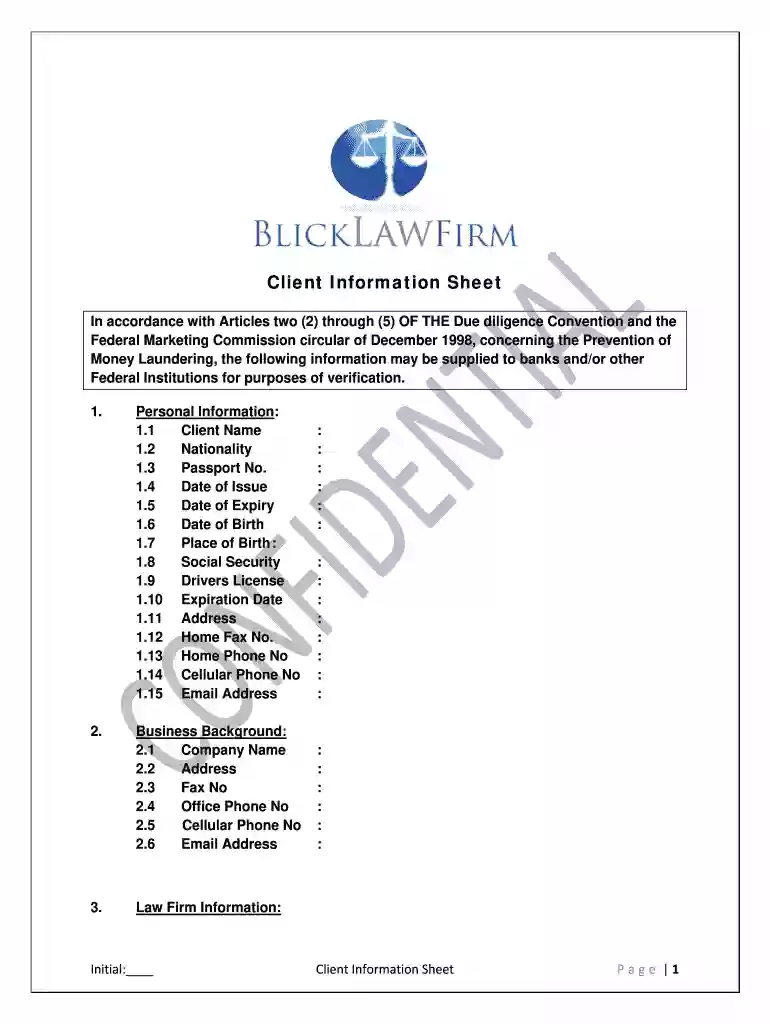
The Client Information Sheet serves as a vital tool for businesses and legal entities to collect essential personal and business information for verification and compliance purposes. In the U.S., this document often accompanies forms like the W-9, ensuring adherence to tax laws and anti-money laundering regulations. Understanding its components, use cases, and associated requirements is crucial for efficient data management and legal compliance.
The Client Information Sheet typically includes several fundamental elements, ensuring comprehensive data collection:
These components help organizations perform necessary due diligence and maintain accurate records.
Utilizing the Client Information Sheet involves several straightforward steps that ensure the collection of necessary data:
These procedures can significantly enhance the efficiency of data collection and management for both individual and business clients.
Certain key considerations should be taken into account when collecting information through the Client Information Sheet:
Addressing these considerations can greatly enhance the trust and reliability of the information collected.
With advances in technology, businesses have several options for how they handle the Client Information Sheet—digitally or on paper.
Digital Version:
Paper Version:
Businesses may choose to leverage a combination of both approaches, allowing flexibility for clients while maintaining security.
The Client Information Sheet can be applied in various scenarios:
Real-world applications illustrate the importance of comprehensive data collection in supporting due diligence and compliance efforts.
This structured overview of the Client Information Sheet highlights its critical components, usage, and the importance of compliance. Each aspect works together, emphasizing the significance of thorough information management in today's regulatory landscape.
At DocHub, your data security is our priority. We follow HIPAA, SOC2, GDPR, and other standards, so you can work on your documents with confidence.
Oct 20, 2025 Disclaimer: Cerritos College has made reasonable efforts to ensure the accuracy of the information contained in the College Catalog at theRead more
Sep 1, 2025 DOCKET NO. Defendant. CASE INFORMATION STATEMENT. OF. NOTICE: This statement must be fully completed, filed and served, with all requiredRead more


