



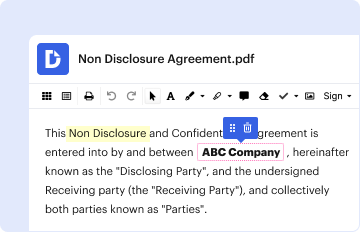
01. Edit your sample notice to employee as to change in relationship online
Type text, add images, blackout confidential details, add comments, highlights and more.

Type text, add images, blackout confidential details, add comments, highlights and more.
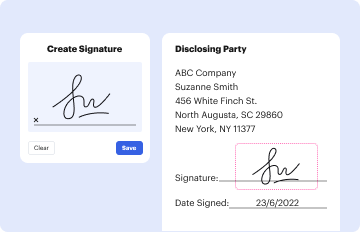
Draw your signature, type it, upload its image, or use your mobile device as a signature pad.
Send notice to employee as to change in relationship via email, link, or fax. You can also download it, export it or print it out.
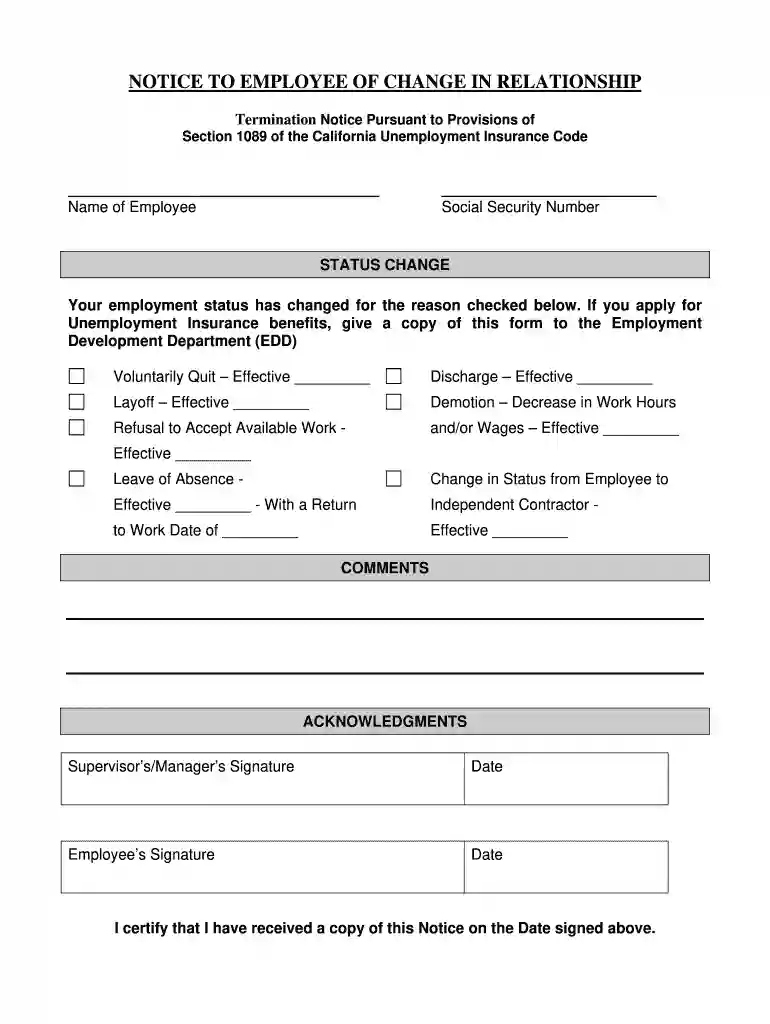
The notice to employee as to change in relationship is a critical document that informs staff of significant changes to their employment status. This includes scenarios such as resignations, layoffs, or conversions to independent contractors, fulfilling legal requirements, particularly under California law.
Employee Details: The notice should begin with basic information about the employee, including their name, job title, and employee identification number when applicable. This ensures clarity and avoids confusion regarding the affected individual.
Employer Information: Include details about the employer, such as the company name, address, and contact information. This serves as a reference point for further communication regarding the employment change.
Effective Date: Clearly state the date when the change in employment status takes effect. This detail is crucial for both the employer and employee to understand the timeline associated with the status change.
Reason for Change: The notice should outline the reason for the change in the employee's relationship with the organization. Common reasons might be voluntary termination, involuntary termination, layoffs, or changes in job classification.
Acknowledgment Section: Incorporate a dedicated area for both the employee and a supervisor or HR representative to sign. This ensures that all parties have read, understood, and acknowledged the contents of the notice.
Employers must adhere to specific legal requirements when issuing this notice. For example, the California Unemployment Insurance Code Section 1089 mandates that termination and change of employment status notifications must be provided in writing. This legal framework ensures that employees receive necessary information about their rights and responsibilities.
Draft the Document: Use a template for the notice, adding specific details relating to the employee and the reason for the change.
Review by HR or Legal Department: Ensure that the notice complies with relevant laws. Obtain approval to minimize the risk of legal repercussions.
Deliver the Notice: Provide the notice to the employee directly, either in person or through certified mail. This guarantees that the employee receives the documentation.
Document Retention: Keep a copy of the notice in the employee's file for record-keeping and compliance purposes.
Voluntary Resignations: If an employee resigns, the notice should detail the circumstances surrounding the resignation and confirm the last working day.
Layoffs or Downsizing: In the instance of layoffs, it is essential to clearly communicate the reasons to maintain transparency.
Changes to Independent Contractor Status: If an employee transitions to an independent contractor, the document should outline this change and any new responsibilities or terms associated with the new status.
Sample Notice for Voluntary Quit: "This notice confirms your resignation submitted on March 10, 2023, effective March 24, 2023. We appreciate your contributions during your time here."
Sample Notice for Layoff: "Due to adverse economic conditions, your position will be eliminated effective April 1, 2023. You will be provided with severance as per company policy."
To prevent misunderstandings, the notice must be clear, precise, and devoid of ambiguous language. Employees should easily comprehend the changes without needing further clarification. This clarity can also aid in reducing potential disputes regarding employment status or rights post-termination.
The notice to employee as to change in relationship is a vital component of employee relations, ensuring compliance with legal requirements, fostering transparency, and preserving the integrity of organizational practices. Following a structured approach when drafting and distributing this notice encourages positive relationships and minimizes organizational risks.
At DocHub, your data security is our priority. We follow HIPAA, SOC2, GDPR, and other standards, so you can work on your documents with confidence.


SAMPLE. NOTICE TO EMPLOYEE AS TO CHANGE IN RELATIONSHIP. (Issued pursuant to provisions of Section 1089 of the California Unemployment Insurance Code).Read more
May 8, 2021 We ask you to give us as much notice as possible so that we can replace you. Termination policy. According to local laws, we may also compensateRead more
Your employment status has changed for the reason checked below. Voluntary quit effective . etaD. Layoff effective . Date. Leave of absenceRead more


