






Definition & Meaning
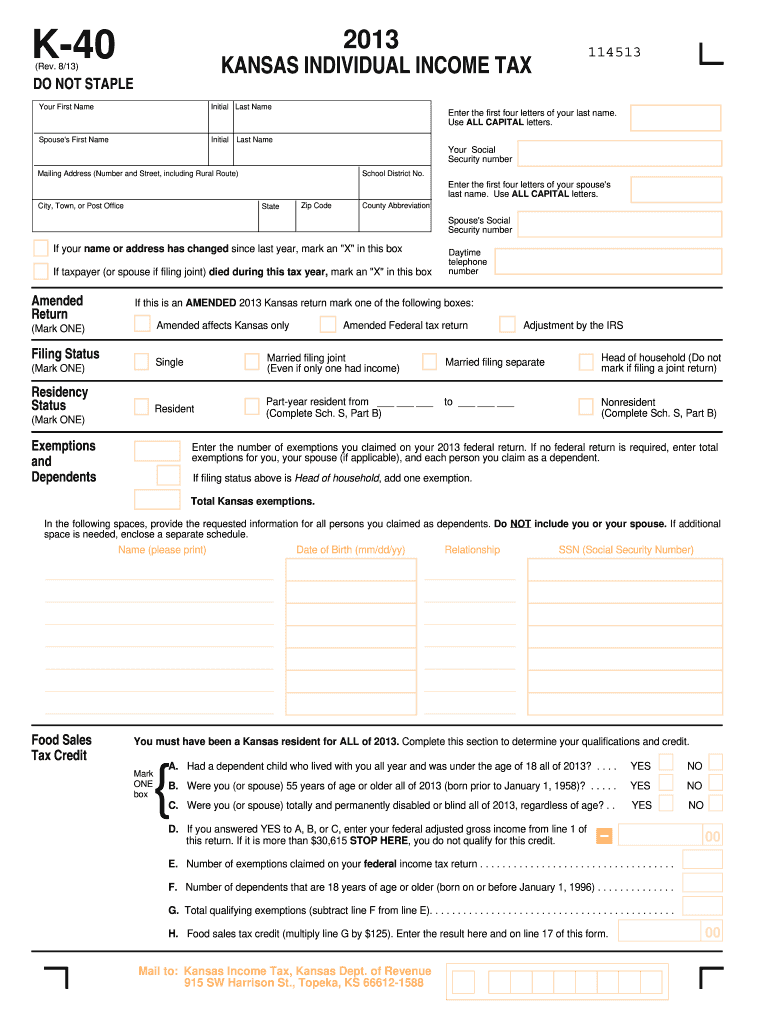
The 2013 Kansas Individual Income Tax form is a document designed for residents of Kansas to report their taxable income and calculate taxes owed for the year 2013. This form is essential for ensuring compliance with Kansas state tax laws and serves as a written record of a taxpayer's income, deductions, exemptions, and tax credits for the specified tax year. It provides a structured pathway for taxpayers to report their financial activities transparently and accurately, which is crucial for state revenue collections and individual financial accountability.
How to Use the 2013 Kansas Form
Using the 2013 Kansas Individual Income Tax form requires a thorough understanding of its structure and purpose. Filers must enter personal information accurately, choose the correct filing status, and report their earnings. Taxpayers can use the form to claim various deductions and exemptions which can affect their taxable income. By following the detailed instructions accompanying the form, users can also calculate tax credits available to them, such as for childcare expenses or education. It is important to review all lines of the form to ensure that no relevant financial detail is omitted, preventing potential penalties for incomplete submission.
Steps to Complete the 2013 Kansas Form
-
Gather Personal Information: Collect details such as your full name, social security number, and address.
-
Determine Filing Status: Identify whether you are filing as single, married filing jointly, or head of household.
-
Report Income: Enter details of all sources of income, including wages, salaries, and additional earnings.
-
Claim Exemptions: Indicate the number of dependents and any personal exemptions applicable.
-
Calculate Deductions: Determine eligible deductions such as student loan interest or mortgage interest payments.
-
Apply Tax Credits: Identify and apply credits for which you qualify, such as education credits or renewable energy credits.
-
Total Tax Liability: Use the form to calculate total taxes owed or the refund amount.
-
Review and Sign: Double-check all entries for accuracy, sign the form, and prepare it for submission.
Required Documents
To correctly complete the 2013 Kansas form, taxpayers need several supporting documents. These include W-2 forms detailing their employment income, 1099 forms for other income types such as royalties or contractor payments, and receipts or statements for deductible expenses. Additionally, any documentation concerning paid taxes, such as estimated state tax payments, should be gathered in advance. Having these documents organized before starting the form simplifies the process and helps ensure that all financial details are captured accurately.
Important Terms Related to 2013 Kansas Form
- Gross Income: Total income earned before taxes and deductions.
- Adjusted Gross Income (AGI): Gross income minus specific adjustments, impacting final tax liability.
- Filing Status: The category defining the taxpayer’s family situation for tax purposes, which affects standard deduction amounts.
- Tax Credit: Amount that can be directly subtracted from taxes owed, offering more substantial savings than a deduction.
Filing Deadlines / Important Dates
The deadline for submitting the 2013 Kansas Individual Income Tax form was typically April 15, 2014. However, if that date fell on a weekend or federal holiday, the deadline would occasionally be extended to the next business day. Taxpayers could also request an extension, which would allow for submission by October 15 of the same year. It is essential to meet these deadlines to avoid penalties and interest charges for late filing.
Legal Use of the 2013 Kansas Form
The legal use of the 2013 Kansas form is to facilitate honest reporting of income and the fair calculation of taxes owed under state law. This form ensures that individuals comply with Kansas tax statutes, contributing to the proper funding of state programs and operations. Misuse of the form, such as knowingly submitting false information, can lead to significant legal repercussions, including fines or imprisonment. It serves as a legally binding document between the taxpayer and the state tax authorities.
Penalties for Non-Compliance
Failing to file the 2013 Kansas Individual Income Tax form or underreporting income can result in penalties, which often include financial fines and accrued interest on unpaid taxes. The Kansas Department of Revenue can impose penalties of up to 25% of the amount due for deliberate non-compliance. Furthermore, submitting fraudulent information can lead to more severe fines and potential criminal charges. Taxpayers should ensure compliance to avoid such consequences and maintain good standing with tax authorities.
Taxpayer Scenarios
Different taxpayers encounter unique situations that affect how they complete the 2013 Kansas form. For example:
- Self-employed Individuals: Must include income from all business activities and may deduct relevant business expenses.
- Students: Might qualify for education credits or tuition deductions if suitable documentation is provided.
- Retirees: Often report income from pensions or social security, which may be taxed differently.
Each scenario requires meticulous attention to detail concerning income reporting and the application of eligible deductions and credits. Understanding these nuances ensures the form is accurately completed for each taxpayer's specific situation.