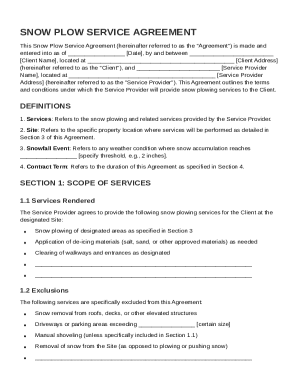
Credit card authorization form 2026

Get Form
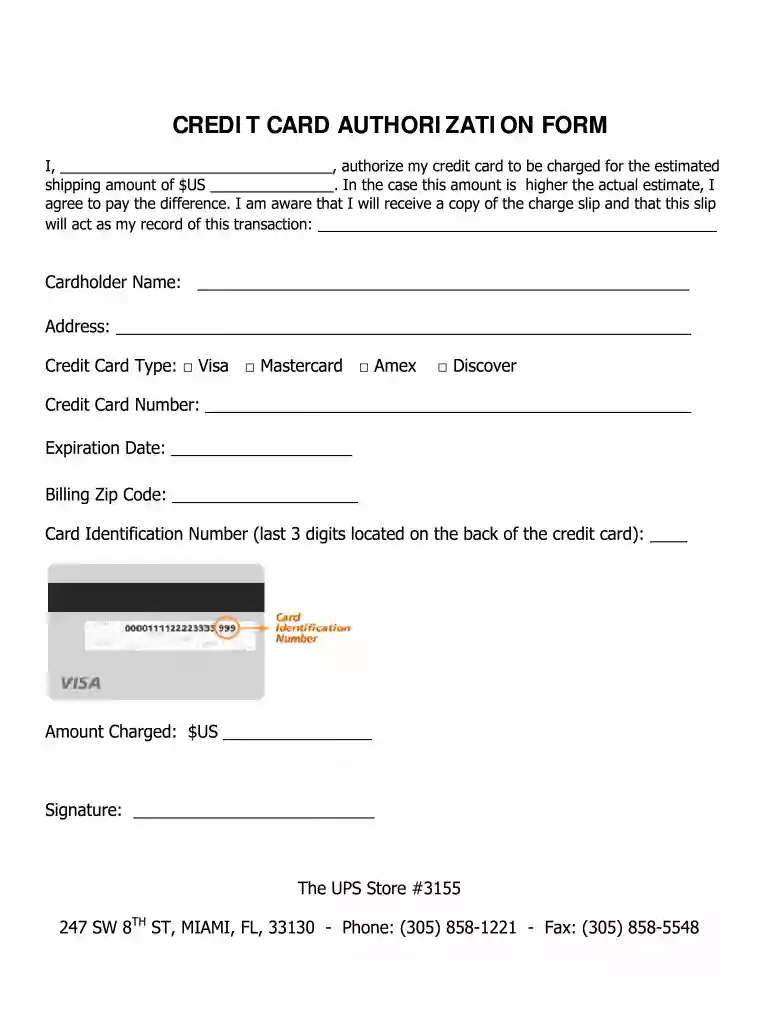
authorization to run credit card form Preview on Page 1

Here's how it works

01. Edit your authorization to run credit card form online
Type text, add images, blackout confidential details, add comments, highlights and more.

02. Sign it in a few clicks
Draw your signature, type it, upload its image, or use your mobile device as a signature pad.

03. Share your form with others
Send credit card format pdf via email, link, or fax. You can also download it, export it or print it out.

Definition and Understanding of the Credit Card Authorization Form

A credit card authorization form is a legal document used by businesses and service providers to obtain permission from a cardholder to charge their credit card for specific transactions. This form includes essential information such as the cardholder’s name, account number, expiration date, billing address, and signature, confirming their consent for the charge. The purpose of this document is to ensure that the transaction is authorized and to protect both parties—in particular, the merchant—from fraud.

Key Features of the Credit Card Authorization Form

  • Identification Information: Contains the cardholder's details, including full name and contact information.
  • Credit Card Details: Captures the card number, expiration date, and CVV to process payments.
  • Authorization Statement: Clearly states that the cardholder allows the merchant to charge their card for either a one-time fee or recurring payments.
  • Signature Section: Requires the cardholder’s signature, validating the authorization.
  • Disclaimer of Liability: Often includes a statement that the cardholder is responsible for any additional charges that may arise beyond the initial transaction estimate.

How to Use the Credit Card Authorization Form Effectively

Using a credit card authorization form properly is essential for ensuring smooth transactions while maintaining security. Here are the steps to utilize this form effectively:

  1. Obtain the Form: Depending on the service or product, you can acquire a suitable credit card authorization form from your business's website, financial institutions, or through template services.

  2. Fill Out the Form: Provide complete and accurate information in the designated fields. Double-check for any errors, especially in the credit card details, as mistakes can lead to failed transactions.

  3. Sign and Date: The cardholder must sign and date the document to confirm that they authorize the payment. An unsigned form is essentially void and cannot be processed.

  4. Submit the Form: Submit the completed form as per the merchant’s instructions, which could include online submissions, email, or traditional mail.

  5. Confirmation of Charge: After the form is submitted, the cardholder should expect a transaction receipt or confirmation, detailing the charge to their card.

Steps to Complete the Credit Card Authorization Form

Completing a credit card authorization form requires attention to detail. Follow these steps to ensure the form is filled out correctly:

  1. Identify Required Information: Gather necessary information before starting the form, including your credit card number, expiration date, CVV code, and billing address.

  2. Fill in Personal Information:

    • Name: Enter the full name of the cardholder as it appears on the card.
    • Contact Info: Include your phone number and email address for communication.
  3. Input Credit Card Information:

    • Credit Card Number: Clearly write the full numeric sequence.
    • Expiration Date: Indicate the month and year.
    • CVV Code: Provide the three or four-digit security code.
  4. Authorization Details:

    • Include specific details about the transaction, including the amount and purpose if necessary.
    • Indicate if this is a one-time authorization or if recurring payments will be processed.
  5. Review and Sign:

    • Read through the terms outlined in the authorization statement to understand the agreement.
    • Sign and date the form to validate the authorization.

Important Terms Related to Credit Card Authorization Forms

Understanding certain terms associated with credit card authorization forms clarifies their use and importance in transactions. They include:

  • Merchant Account: An account held with a bank or financial institution allowing businesses to accept credit card payments.
  • Chargeback: A transaction reversal initiated by the credit card issuer, often due to potential fraud or disputes.
  • Recurring Payments: Automated transactions that process on a regular schedule, requiring explicit authorization from the cardholder.
  • Encryption: The technology used to protect cardholder information during data transmission, enhancing security.
  • PCI Compliance: The Payment Card Industry Data Security Standards that businesses must adhere to in processing card payments.

Legal Use of Credit Card Authorization Form in the United States

The legal framework surrounding credit card authorization forms in the U.S. involves several key considerations:

  • ESIGN Act Compliance: Electronic signatures and records are under the legal purview of the ESIGN Act, which ensures that digital signatures have the same legal status as paper signatures.
  • Cardholder Protection: Legally, cardholders must be informed of their rights, including the ability to dispute unauthorized charges.
  • Privacy Regulations: The handling of personal and financial information collected within the authorization form must adhere to privacy laws such as the GDPR (General Data Protection Regulation) if applicable and the CCPA (California Consumer Privacy Act) for California residents.
  • Fraud Prevention: Authorization forms serve as a protective measure against potential fraud. Merchants are encouraged to implement authentication processes to validate the identity of the cardholder.

Examples of Using the Credit Card Authorization Form

Various industries employ credit card authorization forms for their operations, often with specific adaptations. Here are practical examples:

  • E-commerce: Online retailers use the form during the checkout process to authorize payments securely.
  • Service Providers: Businesses offering subscription services utilize these forms to ensure that customers have agreed to recurring charges.
  • Event Planning: Event organizers often require a credit card authorization for deposits or payments for venues, catering, and entertainment.
  • Travel and Hospitality: Hotels might request this form to secure reservations and additional incidental charges.
  • Health and Education Services: Medical offices and educational institutions may employ these forms to facilitate prompt payments for services rendered.

Comprehending the nuances associated with the credit card authorization form enables both cardholders and merchants to navigate the payment landscape effectively, ensuring clarity and security in financial transactions.

be ready to get more

Complete this form in 5 minutes or less

Get form

Security and compliance

At DocHub, your data security is our priority. We follow HIPAA, SOC2, GDPR, and other standards, so you can work on your documents with confidence.

Learn more
ccpa2
pci-dss
gdpr-compliance
hipaa
soc-compliance