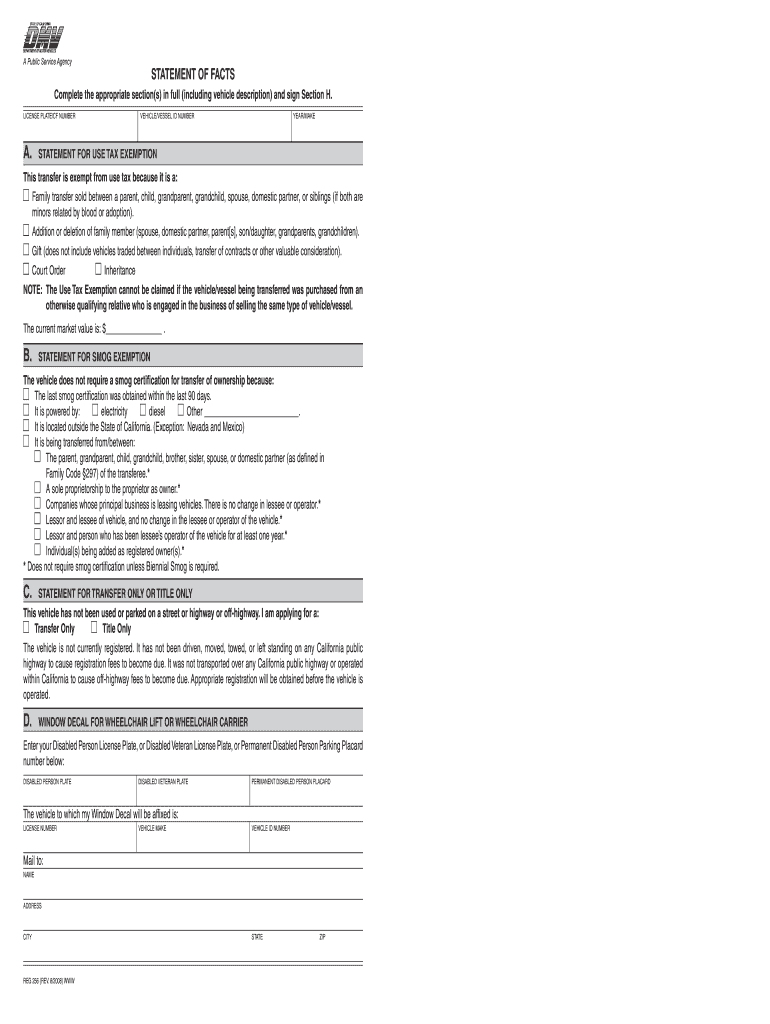







Definition and Purpose of Form REG 256
Form REG 256, known as the "Statement of Facts," is a vital document used primarily in California for various vehicle-related transactions with the Department of Motor Vehicles (DMV). It serves multiple purposes, including substantiating claims for a use tax exemption, confirming smog certification exemption, or clarifying specific vehicle ownership situations. This form helps ensure that the transactions and requests made to the DMV adhere to regulatory standards and requirements specific to the needs of the applicant.
Key Uses of Form REG 256
- Use Tax Exemption: This section allows applicants to provide reasons for claiming exemptions from use tax on vehicle purchases or transfers, facilitating smoother transactions by ensuring compliance with tax regulations.
- Smog Certification Exemption: Applicants can declare situations where they believe their vehicle qualifies for smog certification exemption, often due to specific vehicle conditions or purchase situations.
- Transfer or Title Only Applications: When a change in the name or ownership of a vehicle needs to be processed without additional forms, REG 256 simplifies the application process by clarifying details directly.
- Change of Vehicle Body or Ownership Details: If modifications to a vehicle's body have been made or if there's a need to update ownership records, Form REG 256 facilitates these changes under a structured format.
Steps to Complete Form REG 256
Filling out Form REG 256 requires attention to detail to ensure accuracy and compliance with California DMV standards. The following provides a structured approach to completing the form effectively.
-
Obtain the Form: Access Form REG 256 through the California DMV's website or by visiting a local DMV office.
-
Gather Necessary Information:
- Ensure you have detailed information about the vehicle, including Vehicle Identification Number (VIN), license plate number, and current registration details.
- Prepare any supporting documentation that might be required, such as purchase receipts or existing exemption proofs.
-
Complete the Required Sections:
- Fill in personal details including name, address, and contact information.
- Complete the sections relevant to the specific transaction or exemption being claimed. Ensure all statements are factually accurate and supported by the necessary documentation.
-
Sign and Date the Form:
- The applicant must sign and date the form, acknowledging that the information provided is accurate to the best of their knowledge.
-
Submit the Form:
- Submit the completed form to the DMV via mail or in-person, based on preference or urgency. Verify submission methods, as this can sometimes impact processing times.
Who Typically Uses Form REG 256
Form REG 256 is utilized by a wide range of individuals and entities engaging in vehicle-related transactions that require specific factual clarifications or exemptions within the state of California.
Common Users Include:
- Individual Vehicle Owners: Individuals transferring vehicle ownership, claiming tax or smog exemptions, or altering vehicle body records typically use this form.
- Dealerships and Brokers: Businesses engaged in selling or transferring vehicles often assist clients in completing this form to ensure all transactions are documented correctly.
- Legal and Financial Advisors: Professionals may help their clients in understanding and completing the form as part of broader legal and financial transaction duties.


Legal Implications and Importance
Understanding the legal significance of submitting accurate information on Form REG 256 is crucial, as incorrect or misleading information can lead to penalties or the invalidation of the submitted form.
Key Legal Considerations:
- Accuracy of Information: All details provided on the form must be truthful and verifiable. Misstatements can result in legal action or fines.
- Use Tax and Smog Regulations: Correct application of use tax and smog certification exemptions can prevent unnecessary charges or regulatory violations.
State-Specific Regulations Governing Form REG 256
California's emphasis on proper documentation and regulatory compliance underscores the necessity of Form REG 256 for state-specific transactions. The form is designed to accommodate California state laws and may differ from similar forms in other regions.
Unique State Guidelines:
- California Smog Laws: Exemptions claimed must adhere to California’s stringent smog regulations, requiring substantiation.
- Ownership and Title Transfers: The form supports California’s precise requirements for vehicle ownership documentation and changes.
Submission Methods for Form REG 256
Submitting Form REG 256 correctly is crucial to ensuring a seamless processing experience with the DMV.
Available Options:
- In-Person Submission: Direct submission at DMV offices can expedite questions or clarifications.
- Mail Submission: Used primarily for less urgent transactions, though users should allow time for processing.
- Future Digital Methods: While currently not standard, the DMV may in future offer more digital submission options to enhance convenience.
Each submission method carries its own set of processing times and potential interactions with DMV representatives, thereby affecting how quickly a request may be processed.
Penalties for Non-Compliance with Form REG 256 Requirements
Non-compliance with the instructions or requirements of Form REG 256 can lead to significant penalties or delays in vehicle-related processes.
Potential Consequences:
- Fines and Fees: Incorrect filings leading to misreported tax exemptions or certifications might result in financial penalties.
- Legal Outcomes: Persistently fraudulent or incorrect information submission may lead to further legal actions by state authorities.
Examples and Use Cases
The breadth of scenarios where Form REG 256 is applicable makes it versatile for vehicle owners across California.
Illustrative Scenarios:
- Example of Use Tax Exemption Claim: A military veteran returning to California buying a vehicle in another state might use REG 256 to claim residency-based exemptions.
- Typical Smog Exemption Use Case: Owners of vintage cars made before certain years might use the form to claim exemption from modern smog checks.
By understanding these scenarios, applicants can navigate their specific needs better, ensuring compliance and benefit maximization from the use of Form REG 256.
This structured content provides a comprehensive exploration of Form REG 256, emphasizing its multifaceted role in vehicle transactions in California, ensuring applicants have all the information they require for proper utilization and compliance.