






Comprehensive Guide to the Hepatitis B Declination Form
Definition and Purpose of the Hepatitis B Declination Form
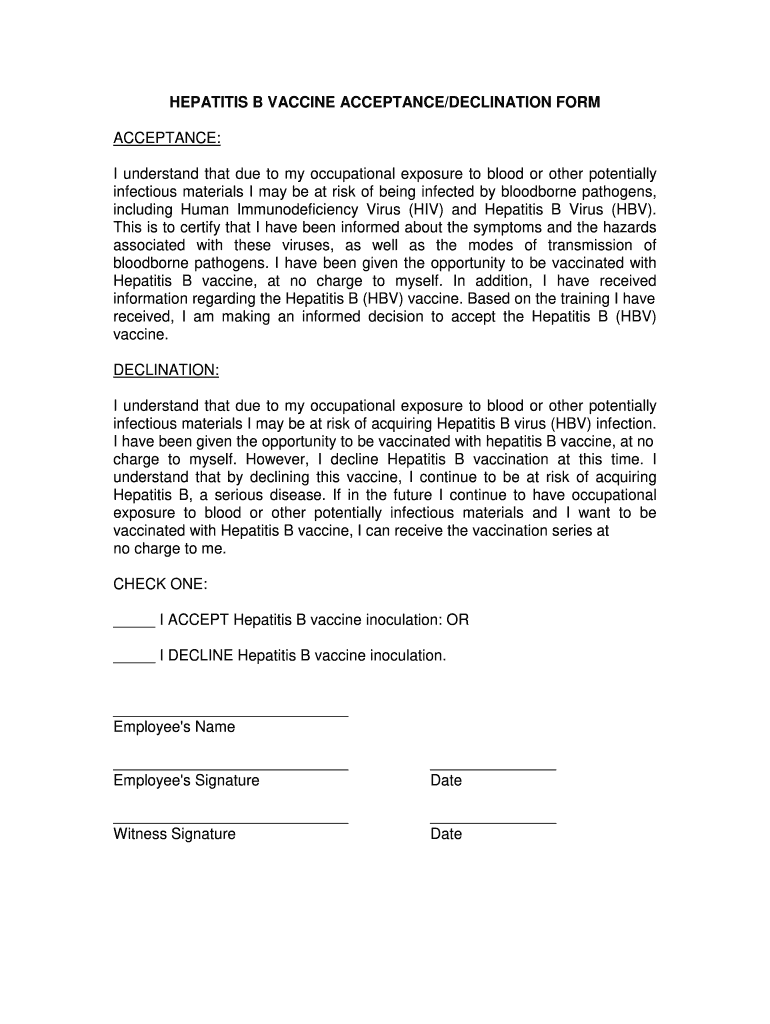
The hepatitis B declination form is a crucial document that allows individuals, particularly employees in certain occupational settings, to formally decline the hepatitis B vaccination. This form plays an essential role in health and safety compliance, especially for those who may be at risk of exposure to bloodborne pathogens, including hepatitis B and HIV. By signing the form, employees acknowledge their understanding of the risks associated with potential exposure and confirm their choice to decline the vaccine, emphasizing their awareness of available prevention methods.
Importance of Compliance with OSHA Regulations
Compliance with the Occupational Safety and Health Administration (OSHA) regulations is vital for workplaces, especially in healthcare and related industries. The hepatitis B declination form is a key requirement under OSHA’s Bloodborne Pathogens Standard. This standard mandates employers to offer the hepatitis B vaccine to employees who are at risk and to ensure proper documentation of employee choices regarding vaccination. Failure to comply can lead to significant penalties and increased liability for employers.
- OSHA's Role: OSHA sets forth guidelines that protect employees against health risks.
- Legal implications: Non-compliance can result in legal actions and fines.
- Documentation: Accurate record-keeping of declinations ensures regulatory adherence.
How to Complete the Hepatitis B Declination Form
Completing the hepatitis B declination form requires careful attention to detail. The employee must read the instructions and understand the implications of their choice.
- Personal Information: Fill in essential personal details, including name, job title, and department.
- Vaccination Status: Acknowledge if you have received the hepatitis B vaccine previously.
- Reason for Declination: Some forms may include a section for employees to specify their reason for declining the vaccine, although this may not be mandatory.
- Signature and Date: Sign and date the form to indicate understanding and acceptance of the information.
This structured process helps ensure that all pertinent details are captured and that the decision to decline the vaccine is made consciously and responsibly.
Key Elements Found in the Form
The hepatitis B declination form typically includes several important elements:
- Vaccine Information: Details about the hepatitis B vaccine, its benefits, and associated risks.
- Employee Rights: Information about the right to receive the vaccination at no cost.
- Acknowledgment Section: Employees must acknowledge understanding of their risk for hepatitis B through occupational exposure.
- Contact Information for Further Questions: Usually includes details for health and safety officers or representatives within the organization.
These elements ensure clarity and transparency regarding the vaccination process and the associated health risks.
Variants and Templates for the Hepatitis B Declination Form
Different organizations may have their own versions or templates for the hepatitis B declination form, yet all must comply with OSHA regulations. Common variants include:
- CDC Hepatitis B Declination Form Template: A standardized version from the Centers for Disease Control and Prevention that provides clear guidance.
- OSHA Hepatitis B Vaccination Declination Form PDF: A downloadable and printable format often utilized for workplace settings.
- Custom Templates: Organizations may customize forms to fit their specific needs while ensuring compliance with regulatory standards.
Using approved templates can aid in maintaining uniformity across documentation and facilitate easier legal compliance.
Consequences of Declining the Vaccine
Understanding the consequences of declining the hepatitis B vaccine is essential for making an informed decision.
- Health Risks: Employees who decline the vaccine put themselves at a higher risk of contracting hepatitis B, especially in environments where exposure is possible.
- Employer Liability: Employers may face increased liability and responsibility for any health complications that arise due to non-vaccination.
- Employment Implications: In certain fields, particularly healthcare, declining the vaccine may affect employment eligibility or job duties.
Through informed decision-making and adequate understanding of the implications of the declination, employees can weigh their health risks against their personal choices.
Examples of Scenarios Involving the Declination Form
Employees may find themselves in varying situations regarding the hepatitis B declination form, such as:
- Healthcare Workers: A nurse working in a high-risk environment may choose to decline the vaccine but must understand the risks associated with patient care and blood exposure.
- Office Workers: An office employee in a healthcare facility may opt out of vaccination but will still need to be aware of any potential exposure risks related to their work environment.
- New Hires: New employees may encounter the hepatitis B declination form during onboarding, allowing for immediate understanding of vaccination options and potential risks in their new roles.
These examples illustrate the varying contexts in which the form is applicable, emphasizing the importance of the decision-making process across different job functions.