







Definition & Meaning
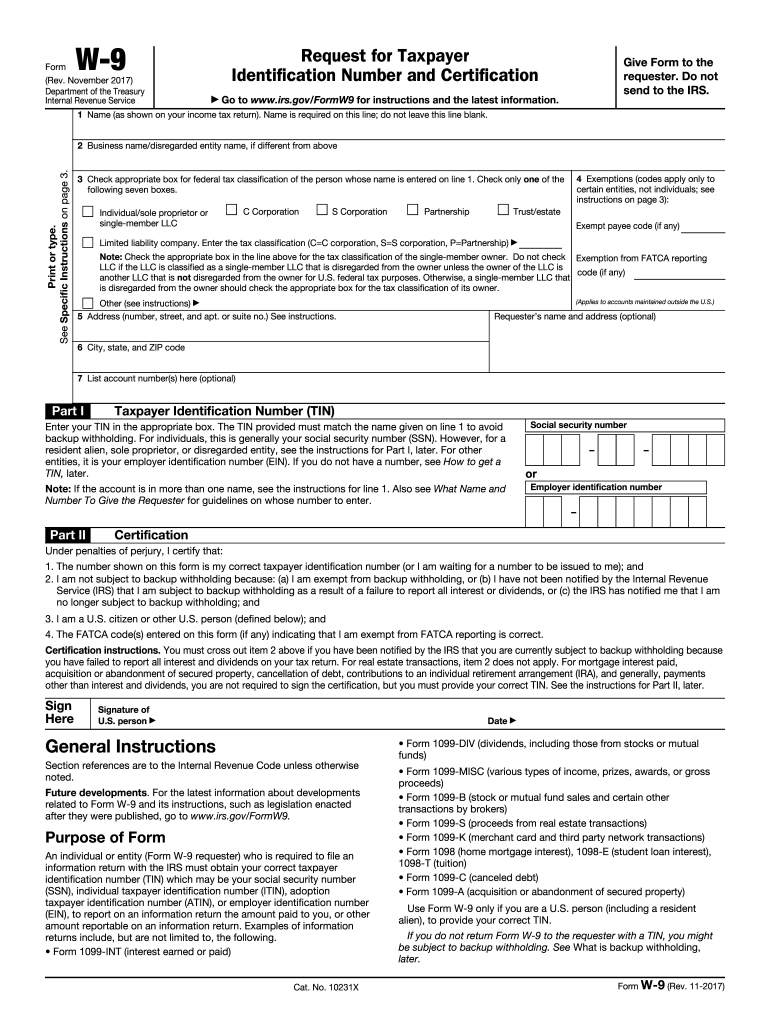
The W-9 form is a Request for Taxpayer Identification Number and Certification managed by the IRS. It plays a crucial role in the U.S. tax system by allowing individuals or businesses to provide their correct taxpayer identification number (TIN) to entities that require it for filing information returns. The TIN could either be a Social Security Number (SSN) or an Employer Identification Number (EIN). This form is essential in ensuring tax compliance and processing transactions that involve reportable income.
How to Use the Online W-9 2017 Form
Using the online W-9 2017 form involves accessing it through platforms like DocHub, which allows for easy editing and electronic submissions. Users can complete the form by entering required information such as their name, business entity if applicable, and TIN. Once the form is filled out, it can be digitally signed and securely shared with the requesting party. The online format helps streamline the data entry process, reducing the likelihood of errors and ensuring quick access to tax-related records.
Steps to Complete the Online W-9 2017 Form
- Access the Form: Download the W-9 2017 form from a trusted source or open it in a document management platform like DocHub.
- Fill Out Personal Information: Enter your full name and choose your tax classification, such as individual/sole proprietor, corporation, or partnership.
- Provide TIN: Input your taxpayer identification number, which can be your SSN or EIN.
- Certification: Read and agree to the certifications, which confirm that the information provided is correct and that you are not subject to backup withholding.
- Sign the Form: Use an electronic signature to authenticate the document.
- Submit the Form: Send the completed form to the requester, typically electronically.
Key Elements of the Online W-9 2017 Form
- Taxpayer Identification Number: Either SSN or EIN.
- Personal Details: Name, business name, and address.
- Tax Classification: Identifies your status, e.g., individual or corporation.
- Certification: Confirms the information is accurate and the user is not subject to backup withholding.
- Signature: An electronic or handwritten signature confirming the certification.
Who Typically Uses the Online W-9 2017 Form
The form is commonly used by freelancers, independent contractors, and small business owners in the U.S. who need to provide their TIN to companies or clients for whom they perform services. It is critical for anyone who receives income that may be subject to tax withholding, helping both parties ensure tax obligations are accurately reported and fulfilled.


Legal Use of the Online W-9 2017 Form
The W-9 form is legally required for purposes that include reporting various forms of income, such as dividends and royalties, to the IRS. The form helps prevent the occurrence of backup withholding by certifying that the taxpayer is not subject to such penalties unless indicated. Filling out the form correctly protects both parties from potential legal issues arising from incorrect or inaccurate tax filings.
IRS Guidelines
The IRS guidelines for the W-9 form stress the importance of providing accurate information to avoid penalties. The guidelines also highlight the necessity of submitting the form in a timely manner to the requesting entity, ensuring they can report income and other related transactions in their tax filings. Guidelines also address privacy concerns by specifying how the information should be handled and protected.
Penalties for Non-Compliance
Non-compliance with the requirements of providing a completed W-9 form may result in penalties, including backup withholding at a current rate of 24% on the income payable to the taxpayer. The IRS may also levy fines for providing false or fraudulent information. These deterrents encourage accurate and truthful completion and submission of the form to prevent tax evasion or inaccuracies.


