
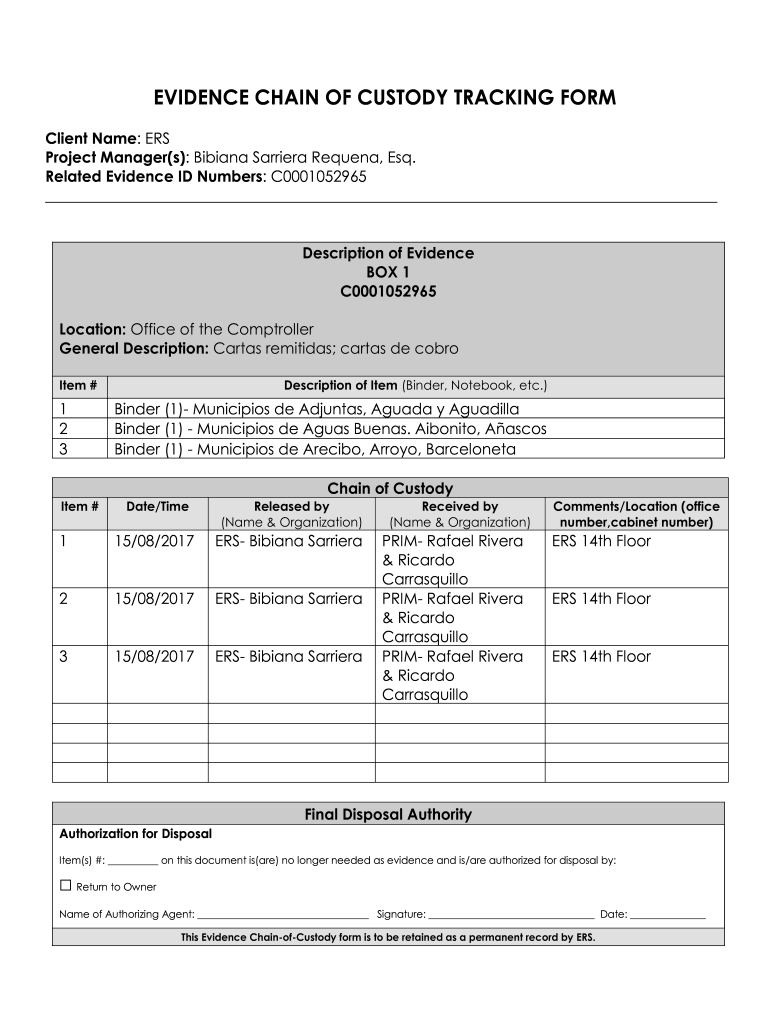







Definition and Significance of the Evidence Custody Document
The evidence custody document plays a crucial role in ensuring a proper chain of custody for evidence, particularly in legal contexts. This documentation records key details about the handling and storage of evidence material, which is vital for establishing its integrity and authenticity throughout any legal proceedings. By maintaining a comprehensive record from the point of collection to its presentation in court, this document helps uphold the chain of custody, which can significantly influence the outcome of criminal and civil cases.
The process of managing evidence correctly begins with thorough documentation. An effective evidence custody document includes specific details such as:
- Item Description: Clear descriptions of each piece of evidence, including its condition and any identifiers.
- Custody Information: Records of who collected, handled, or transferred the evidence at every stage.
- Dates: Exact timestamps for each event, such as collection, storage, and transfer.
- Signatures: Required signatures at each point of custody change to verify the accountability of each person involved in managing the evidence.
Steps to Complete the Evidence Custody Document
Filling out an evidence custody document requires careful attention to detail to ensure that it meets legal standards and retains its effectiveness. To complete this document, follow these steps systematically:
- Collect Evidence Information: Gather all relevant details regarding the evidence, including descriptions, arrival times, locations, and any unique identifiers.
- Identify Custody Chain: List all individuals who handle the evidence, including their roles and the time periods during which they maintained custody.
- Document Condition: Clearly state the condition of the evidence at various points in the chain. This can include any damages or additional notes that might affect the evidence's reliability.
- Include Signatures: Ensure that each person who handles the evidence signs the document to confirm their involvement. This includes the initial collector and anyone else who passes the evidence along.
- Review for Accuracy: Cross-check all entries before finalizing the document to ensure that there are no discrepancies, which could jeopardize its credibility in a court setting.
By following these steps, you can ensure that the evidence custody document is thorough and reliable, minimizing the risk of challenges related to the integrity of the evidence.
Important Terms Related to Evidence Custody Document
Understanding the terminology associated with the evidence custody document is essential for any legal or law enforcement professional dealing with evidence management. Here are some critical terms often encountered:
- Chain of Custody: The chronological documentation that records everyone who handled the evidence, ensuring its integrity and authenticity.
- Evidence Identifier: A unique number or code assigned to each piece of evidence that helps track its location and status through various stages.
- Custodian: The individual responsible for holding and maintaining the evidence, ensuring its security and proper handling at all times.
- Transfer of Custody: The process of transferring evidence from one custodian to another, which must be documented thoroughly to preserve the chain of custody.
Familiarity with these terms will enhance understanding and efficiency when completing or reviewing an evidence custody document.
Legal Use of the Evidence Custody Document
In legal contexts, the evidence custody document serves multiple purposes. Primarily, it acts as a legal safeguard to protect the admissibility of evidence in court by ensuring a documented chain of custody. Here's how its legal use manifests:
- Admissibility: Courts require robust proof that evidence presented has not been altered or tampered with. This document serves to validate that requirement by providing a history of custody changes.
- Court Proceedings: During trials, attorneys can use the evidence custody document to raise or refute questions regarding the integrity of the evidence. This can be pivotal in criminal defense and prosecution strategies.
- Accountability: The signatures and timestamps create a clear accountability structure, detailing who is responsible for the evidence at various points. This aspect is critical in case of disputes or challenges regarding the evidence's handling.
By complying with legal standards surrounding the use of evidence custody documents, professionals can enhance the reliability of evidence and contribute to a fair judicial process.
Who Typically Uses the Evidence Custody Document
The evidence custody document is employed across various sectors, primarily in law enforcement and legal fields. Typical users include:
- Law Enforcement Agencies: Officers and detectives use this document when collecting and managing evidence during investigations, ensuring that it is preserved for court proceedings.
- Legal Professionals: Attorneys and paralegals often rely on the evidence custody document to support their cases by demonstrating the integrity of the evidence presented during trials.
- Forensic Experts: Involved in examining and analyzing evidence, forensic professionals utilize the custody document to ensure they accurately track the evidence's condition and movements for reliable results.
- Judicial Personnel: Judges may refer to the evidence custody document to verify that all procedural standards have been met regarding evidence handling and preservation.
Understanding the diverse users of the evidence custody document helps underscore its importance in maintaining legal integrity and the enforcement of justice.






