Type text, add images, blackout confidential details, add comments, highlights and more.

02. Sign it in a few clicks
Draw your signature, type it, upload its image, or use your mobile device as a signature pad.

03. Share your form with others
Send importer self assessment program via email, link, or fax. You can also download it, export it or print it out.

How to use or fill out importer self assessment handbook with our platform
Ease of Setup
DocHub User Ratings on G2
Ease of Use
DocHub User Ratings on G2
Click ‘Get Form’ to open the importer self assessment handbook in the editor.
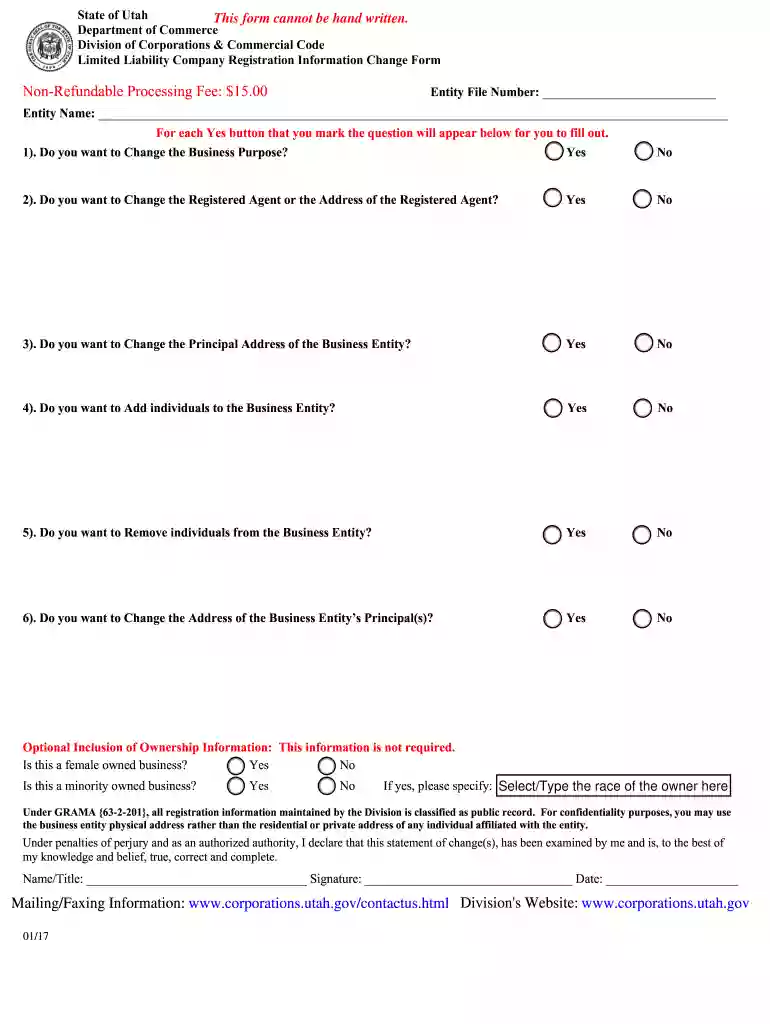
Begin by entering your Entity File Number and Entity Name at the top of the form. Ensure that all information is accurate as it will be used for processing.
For each question, select 'Yes' or 'No'. If you select 'Yes', additional fields will appear for you to provide further details, such as new business purpose or registered agent information.
Fill in the required addresses where prompted. Remember, a Utah street address is mandatory; PO Boxes can be included afterward.
If adding or removing individuals from the business entity, provide their names, positions, and addresses as required. Ensure all entries are complete for processing.
Review optional sections regarding ownership information if applicable. This includes questions about female or minority ownership.
Finally, sign and date the form before submitting it through our platform for processing.
Start using our platform today to streamline your document editing and submission process for free!
Fill out importer self assessment handbook online It's free
See more importer self assessment handbook versions
We've got more versions of the importer self assessment handbook form. Select the right importer self assessment handbook version from the list and start editing it straight away!
The Importer Self-Assessment (ISA) program was developed by U.S. Customs and Border Protection (CBP) in 2002. The ISA program enables importers to check their internal compliance procedures and processes with CBP laws and regulation.
What is self-assessment and what does it do?
A self-assessment is a process through which you can learn more about yourself and measure your growth. You can perform self-assessments according to a variety of criteria, including development, skills and relationships.
What is the customs self-assessment program for importers?
What is the Canadian CSA Program? The Customs Self-Assessment (CSA) program is designed for low-risk, pre-approved importers, carriers, and registered drivers. To take advantage of the program, CSA-approved importers and carriers must use a registered driver to carry CSA-eligible goods into Canada.
What is self-assessment in customs?
Self-Assessment‟ in Customs has been implemented w.e.f. 8.4. 2011 vide Finance Act, 2011 by suitable changes to Sections 17, 18, 46 and 50 of the Customs Act, 1962. Self-Assessment interalia requires importers / exporters to correctly declare value, classification, description of goods, exemption notifications etc.
How do I know if I am the importer of records?
The importer of record number is a unique identifier assigned by the customs authority of the importing country to importers of record. In other words, the importer number is the SSN of any importing entity.
The ISA program is built on the knowledge, trust, and willingness to maintain an ongoing. CBP/importer relationship that is mutually beneficial to both parties.
To ensure ongoing success in the labor compliance program, each Supplier shall establish a compliance committee on site to administer self-assessments using the
Cookie consent notice
This site uses cookies to enhance site navigation and personalize your experience.
By using this site you agree to our use of cookies as described in our Privacy Notice.
You can modify your selections by visiting our Cookie and Advertising Notice.