




Here's how it works
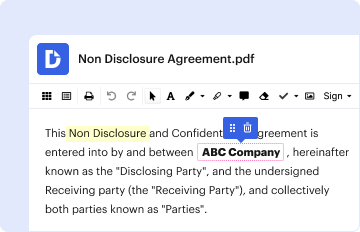
01. Edit your weld procedure template online
Type text, add images, blackout confidential details, add comments, highlights and more.
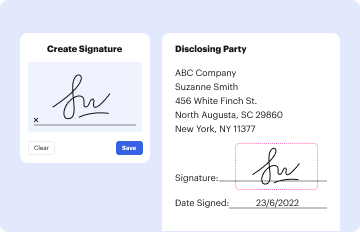
02. Sign it in a few clicks
Draw your signature, type it, upload its image, or use your mobile device as a signature pad.

03. Share your form with others
Send welding procedure specification format in word via email, link, or fax. You can also download it, export it or print it out.
How to use or fill out blank welding procedure specification form with DocHub

- Click ‘Get Form’ to open the blank welding procedure specification form in our editor.
- Begin by entering your company name and WPS number at the top of the form. This identifies your specific welding procedure.
- Fill in the authorized by section, ensuring that the individual responsible for the WPS is clearly indicated.
- In the base metals section, specify the type or grade of base metal along with its AWS group number and thickness. This information is crucial for compliance.
- Detail joint specifics including groove type, angle, and root opening. Use the sketch area to visually represent these details for clarity.
- Complete the post-weld heat treatment section by noting temperature and time requirements, which are essential for material integrity.
- Finally, fill out the procedure section with all relevant parameters such as weld layers, filler metal specifications, and electrical characteristics to ensure a comprehensive WPS.
Start using our platform today to easily complete your welding procedure specification form online for free!
Fill out blank welding procedure specification form online
It's free
It's free
See more blank welding procedure specification form versions
We've got more versions of the blank welding procedure specification form form. Select the right blank welding procedure specification form version from the list and start editing it straight away!
| Versions | Form popularity | Fillable & printable |
|---|---|---|
| 2013 | 4.8 Satisfied (110 Votes) |
Got questions?
We have answers to the most popular questions from our customers. If you can't find an answer to your question, please contact us.
Contact us
What is welding procedure specification sheets?
A welding procedure specification (WPS) is a document that describes how welding should be performed for a given application. It provides details such as materials, joint configuration, welding process parameters, and qualifications needed. WPSs help ensure welds are of acceptable quality and meet code requirements.
How to write a welding procedure specification?
What are WPSs? Information in brief: All the important information about how to weld: Joints: Details of the joint design, such as the distance between the roots and the backing (if the joint needs it and the backing material). Base and filler metals: Additional details: Characteristics of electricity: Technique:
What is welding procedure specification ASME IX?
A Welding Procedure Specification (WPS) is the formal written document describing welding procedures, which provides direction to the welder or welding operators for making sound and quality production welds as per the code requirements.
What does ASME 9 mean?
A Procedure Qualification Record (PQR) is the record of the actual weld test parameters used.It is the founding document as far as procedures are concerned and is used to produce welding procedure specification sheets (WPS) for production welds. It is company dependent and never expires.
What is the standard welding procedure specification?
The Welding Procedure Specification (WPS) is a document that outlines the specific welding procedures that are to be used for a particular welding job. The Procedure Qualification Record (PQR) is a document that certifies that a particular welding procedure has been qualified to meet the required codes and standards.
Security and compliance
At DocHub, your data security is our priority. We follow HIPAA, SOC2, GDPR, and other standards, so you can work on your documents with confidence.
Learn more


People also ask
What is the welding procedure specification?
ASME welding certification means the product was made in a facility that adheres to the industrys highest quality and safety standards, no matter where the facility operates. The company is committed to continued compliance.
What is the ASME standard for welding?
ASME Section IX is a part of the ASME Boiler and Pressure Vessel Code (BPVC), primarily concerned with the qualification of welders, welding operators, brazers, brazing operators, and fusing operators.