







Definition and Importance of the Iowa Contractor’s Statement
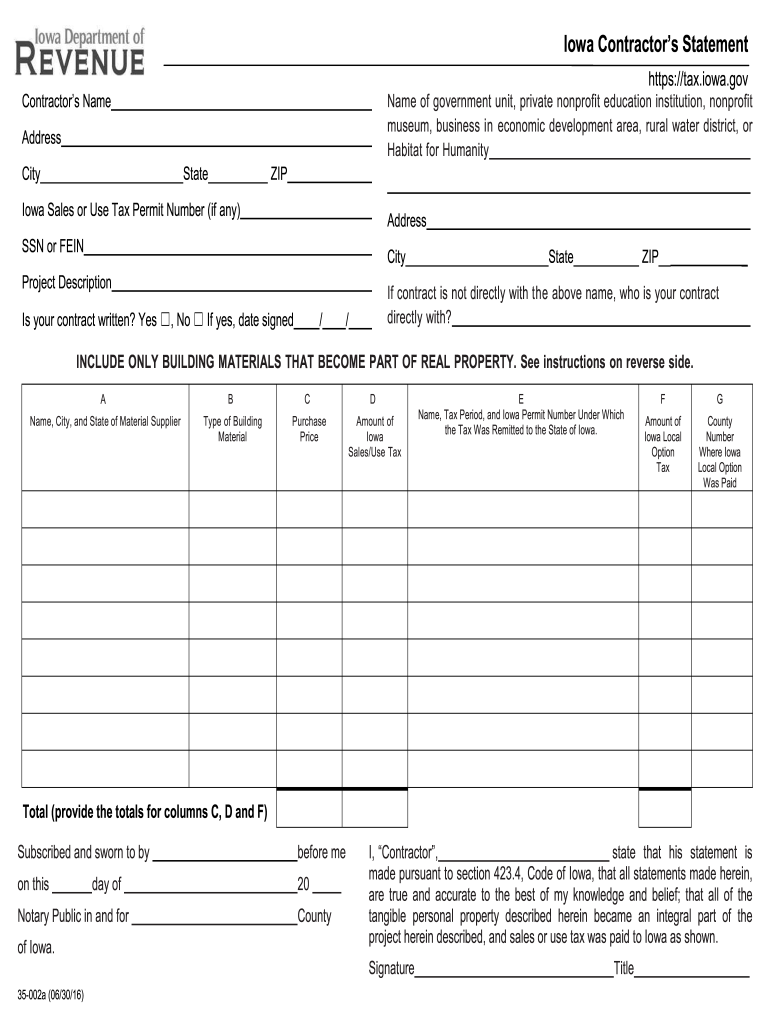
The Iowa Contractor’s Statement is a critical form required for contractors working on projects sponsored by governmental and nonprofit entities in Iowa. This statement serves multiple purposes, primarily focusing on issuing claims for sales tax refunds with the Iowa Department of Revenue. By capturing essential details about the contractor, the project, and the building materials used, this form plays a vital role in ensuring compliance with state tax regulations.
Key Components of the Iowa Contractor’s Statement
Several critical elements must be included in the Iowa Contractor’s Statement:
- Contractor Information: This section requires the contractor's name, address, and contact information, establishing their identity and ensuring accountability.
- Project Description: Details about the project, including its location and scope, provide context and specificity to the form.
- Building Materials: Only building materials that become a permanent part of the real property must be documented, ensuring compliance with tax exemption statutes.
- Tax Paid: The contractor must detail any sales tax paid on the materials, which is essential for refund procedures.
These components not only maintain transparency but also serve as a legal declaration, sworn to by the contractor about the accuracy of the contained information.
Steps to Complete the Iowa Contractor’s Statement
Filling out the Iowa Contractor’s Statement involves specific steps to ensure accurate and complete submission.
- Gather Required Information: Collect documents that outline your contractor details, project specifics, and materials involved.
- Complete Each Section: Carefully fill out each part of the form, paying close attention to detail. Ensure clarity in listing materials and tax information.
- Review for Accuracy: After completion, review the form for any errors or omissions. Double-check that all information aligns with retained project documents.
- Sign and Date the Form: The contractor must sign the form, affirming that all stated information is correct and truthful.
- Submit to the Appropriate Authority: Depending on the type of project, submit the form to the relevant governmental or nonprofit entity managing the project.
These steps ensure that the form is filled out correctly, minimizing the risk of delays or complications in processing.
Contextual Use of the Iowa Contractor’s Statement
The Iowa Contractor’s Statement is essential for various stakeholders, particularly in construction scenarios involving government contracts. Understanding who typically uses this form can illuminate its relevance:
- General Contractors: Engaged in larger projects that may involve multiple subcontractors.
- Specialty Contractors: Those focusing on specific areas such as electrical, plumbing, or HVAC often need to document their materials and procurement processes.
- Nonprofit Organizations: They may require contractors to complete this form to document sales tax recovery processes effectively.
This form serves as an integral tool for maintaining compliance and achieving financial efficiency in state-funded projects.
Relevant Legal Considerations
Understanding the legal implications of the Iowa Contractor’s Statement is vital for contractors and organizations:
- ESIGN Act Compliance: Electronic submissions must comply with the ESIGN Act, affirming that electronic signatures are as binding as physical signatures.
- State Tax Law Adherence: The form must be completed with rigorous adherence to Iowa state tax laws, particularly in correctly identifying which materials are subject to exemptions.
- Potential Legal Ramifications: Falsifying information on the Contractor’s Statement can lead to legal penalties and jeopardize future bidding opportunities with governmental entities.
Awareness of these legal aspects helps contractors avoid issues that could arise from non-compliance.
Common Mistakes in Filling Out the Iowa Contractor’s Statement
Many contractors encounter pitfalls when completing the Iowa Contractor’s Statement. Being aware of these common mistakes can mitigate potential challenges:
- Incomplete or Incorrect Information: Missing details, such as contractor names or project descriptions, can lead to processing delays.
- Misclassification of Materials: Contractors should ensure that only eligible materials are listed, as misclassification can affect tax refund eligibility.
- Failing to Review Before Submission: Not reviewing the completed statement can result in overlooked errors, impacting the statute's validity.
Preventing these mistakes supports the efficient processing of tax refund claims and enhances compliance.
State-Specific Guidelines for the Iowa Contractor’s Statement
Iowa has specific guidelines that affect the completion of the Contractor’s Statement. Recognizing these rules ensures correct usage:
- Sales Tax Exemption Certificate: Contractors must understand how the Iowa construction sales tax exemption certificate interacts with the Contractor’s Statement. This exemption certificate is vital for qualifying materials.
- Submission Deadlines: Contractors should be aware of any deadlines related to the project and ensure timely submission to avoid complications.
- Project Type Considerations: Certain projects may have unique reporting requirements, emphasizing the need for contractors to understand the specifics involved in their contracts.
These guidelines emphasize the importance of staying informed and compliant with local regulations affecting project execution.
Examples of Practical Applications
Real-world scenarios showcase how the Iowa Contractor’s Statement functions in various situations:
-
Public School Renovation: A contractor engaged in renovating a public school must fill out the Iowa Contractor’s Statement to claim tax refunds on building materials purchased specifically for the project. The details accurately reflect the project’s scope and tax implications.
-
Nonprofit Facility Construction: When constructing a community center for a nonprofit, the contractor must complete this statement while ensuring all included materials directly contribute to the building’s structure.
-
Government Infrastructure Projects: For a road construction project sponsored by the city, contractors need to provide the Contractor’s Statement, detailing materials and tax paid, to recover costs effectively.
These examples highlight the diverse applications and importance of accurate documentation in various contracting scenarios within Iowa.




