
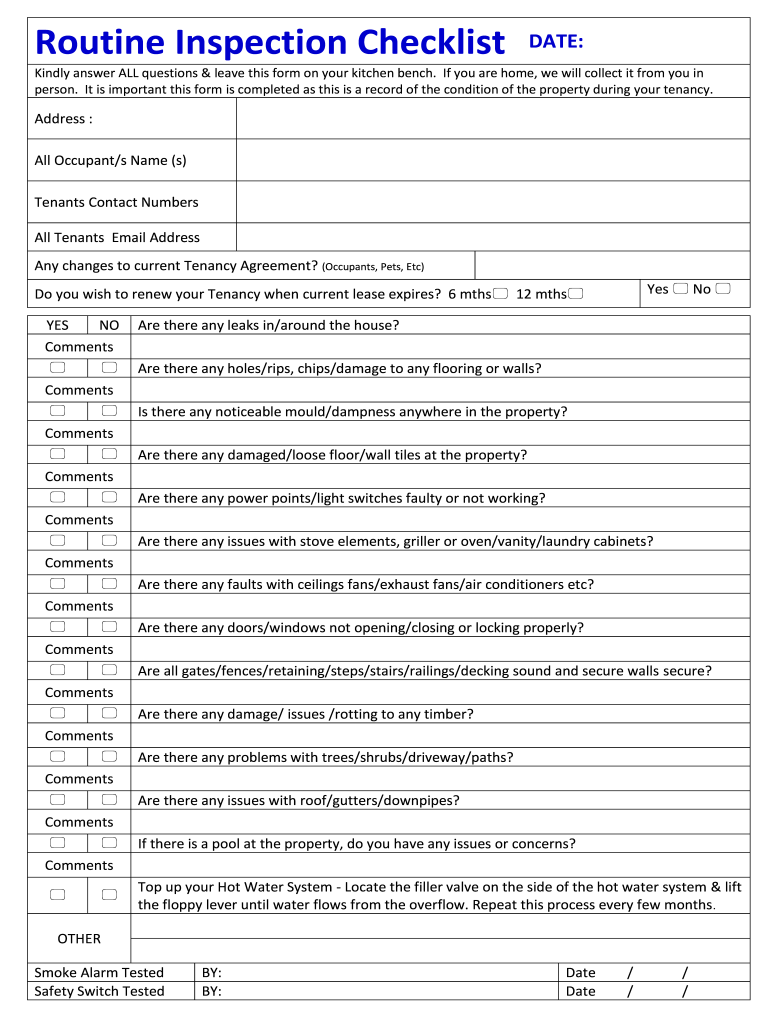







Definition & Overview of Routine Inspection Checklists
A routine inspection checklist is a structured document that serves as a guide for individuals or property managers to assess and document the condition of rental properties. This checklist typically includes various components such as tenant information, comprehensive inspections of maintenance issues, and safety checks, ensuring that all necessary areas are examined thoroughly. The primary aim is to maintain property standards, address any concerns promptly, and uphold a safe living environment for tenants.
Routine inspection checklists are adaptable to various contexts and can be particularly beneficial for landlords, property managers, and tenants alike. They create a comprehensive record of the property's condition at specific intervals, which helps in dispute resolution and provides a reference for future inspections. Utilizing a routine inspection checklist can also help to identify trends in maintenance issues, improving overall property management efficiency.
Key Elements of a Routine Inspection Checklist
A well-structured routine inspection checklist includes several essential elements that guide users through the inspection process. These components help to standardize inspections and ensure all relevant aspects are covered:
-
Tenant Information: Includes the tenant's name, contact details, and the date of the inspection, providing context for the documentation.
-
Property Condition Assessment: Sections dedicated to various areas of the property, such as kitchens, bathrooms, living spaces, and outdoor areas. Each section prompts the inspector to note specific issues, such as leaks, damage, or wear and tear.
-
Maintenance Concerns: Space for tenants to report ongoing maintenance issues or repairs that need to be addressed, fostering communication between tenants and landlords.
-
Safety Checks: Includes verification of smoke alarms, carbon monoxide detectors, and safety switches, ensuring compliance with safety regulations and reducing liability risks.
-
Lease Renewal Intentions: A section where tenants can indicate their intentions regarding lease renewal, promoting transparency and proactive communication.
Steps to Complete the Routine Inspection Checklist
To maximize the effectiveness of a routine inspection checklist, following a systematic approach is essential. Here are the recommended steps to complete the checklist effectively:
-
Preparation: Gather necessary tools such as the checklist, a pen, and a camera for documentation of issues. Ensure to have a copy of the previous inspection report for reference.
-
Review Tenant Information: Confirm that the tenant's information is current and accurately recorded on the checklist.
-
Conduct a Walkthrough: Progress through each area of the property systematically. For each section, observe the condition and use the checklist to record findings explicitly.
-
Document Issues Thoroughly: Take detailed notes and photographs of any issues or areas needing attention. This documentation will be useful for future reference and action.
-
Discuss Findings with Tenants: If present, involve tenants in the discussion about the property condition. This collaborative approach can improve communication and address concerns effectively.
-
Follow Up with Required Actions: Post-inspection, ensure to address any reported issues with necessary repairs or follow-up actions and communicate related timelines to the tenant.
Importance of Conducting Routine Inspections
Regular inspections using a routine inspection checklist are crucial for various reasons:
-
Property Maintenance: They help identify maintenance needs before they escalate into larger, costlier issues, allowing proactive management of properties.
-
Tenant Communication: Regular inspections foster open lines of communication between landlords and tenants, building trust and transparency in the rental relationship.
-
Safety Compliance: Routine inspections ensure that properties remain compliant with safety regulations, thus protecting tenants and reducing legal risks for landlords.
-
Record Keeping: They provide a systematic record for both landlords and tenants, which can be vital for resolving disputes and documenting property conditions over time.
-
Lease Management: Understanding tenant intentions on lease renewals can inform property management strategies and tenant retention efforts.
Who Typically Uses the Routine Inspection Checklist
The routine inspection checklist sees broad utilization across various stakeholders in the rental and property management sectors:
-
Landlords: Individual property owners often use these checklists to maintain their properties and manage tenant relationships effectively.
-
Property Managers: Professionals tasked with managing multiple properties rely on routine inspection checklists to ensure consistency in inspections and property upkeep.
-
Tenants: Even tenants themselves can benefit from engaging with the checklist, as it provides them a platform to voice concerns regarding their living conditions.
-
Real Estate Agents: Agents who manage rental listings may utilize these checklists to prepare properties for new tenants or assess the condition of properties during listing evaluations.
-
Regulatory Bodies: Some governmental and regulatory organizations use standardized inspection checklists to ensure adherence to property management laws and safety standards.


Examples of Using a Routine Inspection Checklist
To understand the application of a routine inspection checklist better, consider these scenarios:
-
Single-Family Rental Inspection: A landlord conducts routine inspections every six months using the checklist. During an inspection, they discover a leaky faucet in the kitchen and a malfunctioning smoke detector. The landlord notes these findings, takes photos, and schedules necessary repairs immediately, ensuring the tenant's safety and satisfaction.
-
Apartment Complex Management: The management team of an apartment complex implements a digital routine inspection checklist for all units. Inspectors use the checklist during tenant move-ins and move-outs to document the condition of each apartment, ensuring a clear record that aids in security deposit disputes.
-
Commercial Property Assessment: A property manager utilizes a routine inspection checklist for a commercial building, focusing on elements such as plumbing, electrical systems, and compliance with fire safety regulations. Regular inspections lead to the identification of outdated electrical systems, prompting upgrades that enhance safety and operational efficiency.
These examples illustrate the checklist's practical role in maintaining properties and enhancing tenant relations while ensuring compliance with safety standards.


