







Definition & Meaning
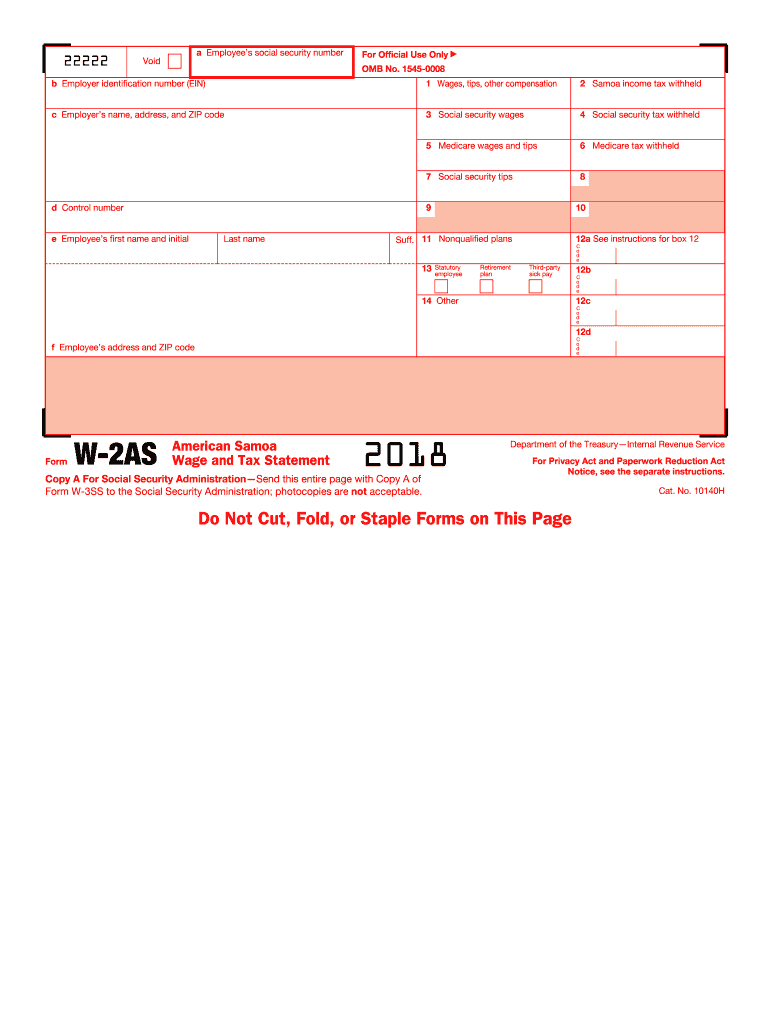
The 2018 W-2 Form, officially known as the Wage and Tax Statement, is an essential document for employees in the United States. It reports wages paid by an employer to an employee and the taxes withheld throughout the year. This form is crucial for preparing a complete and accurate tax return, as it details income received and taxes paid to federal, state, and local authorities. Employees typically receive a separate W-2 Form for each employer they worked for during the respective tax year.
Key Elements of the 2018 W-2 Form
-
Employer Information: The form includes the employer's name, address, and Employer Identification Number (EIN). This section is used for identification and record-keeping by the IRS.
-
Employee Details: Key employee information such as Social Security Number, name, and address is recorded. This information helps ensure that income is correctly attributed to the individual taxpayer.
-
Income Details: Wages, tips, and other forms of compensation for the year are listed in detail. This includes wages subject to Social Security, Medicare, and additional withholding categories.
-
Withholding Information: The form indicates federal income tax, Social Security tax, and Medicare tax withheld. These amounts affect tax liability calculations during tax preparation.
-
State and Local Income: Provides details on state-specific income and taxes withheld, essential for filing state and local tax returns.
How to Obtain the 2018 W-2 Form
Employers are required to furnish the W-2 Form to employees by January 31 following the end of the tax year. Employees can usually obtain the form through:
- Direct Mail: Traditional mailing directly to the employee's address.
- Online Access: Digital access through the employer or payroll provider's online portal, facilitating instant retrieval and archiving.
- Human Resources Department: Some companies allow employees to request forms in person or via email, handling distribution through human resources.
Steps to Complete the 2018 W-2 Form
-
Verify Personal Information: Ensure personal data such as name and Social Security Number are correct. Any discrepancies should be resolved early to prevent filing issues.
-
Review Income and Withholding: Cross-check wages and withheld taxes with your records, such as pay stubs, to ensure accuracy.
-
Check for Additional Income: Confirm the inclusion of any additional income types, e.g., bonuses or fringe benefits, are properly accounted for.
-
Clarify with Employer if Required: Address any inconsistencies or missing information by consulting your employer or payroll service.
IRS Guidelines
The IRS specifies guidelines for both the distribution and receipt of the W-2 Form, emphasizing the importance of timely filing and accurate reporting. The form must be included in both electronic and paper formats, must adhere to print quality criteria, and employers must keep copies for at least four years. Employees should refer to IRS regulations for precise information on filing requirements and correction procedures.
Filing Deadlines / Important Dates
Filing of the 2018 W-2 Form must comply with specific deadlines:
- Employee Distribution: January 31 is the deadline by which employees receive their W-2.
- IRS Submission: Employers must submit W-2s to the Social Security Administration by January 31.
- Tax Filing Deadline: Personal tax returns incorporating the W-2 are due by April 15, though extensions may apply.
Penalties for Non-Compliance
Employers and employees may face penalties for failure to issue, file, or report accurate W-2s. Penalties vary based on the timing of the correction and can be avoided by adhering to established procedures and deadlines. False information or late submissions can result in incremental fines per form, significantly impacting small to large business entities.
Digital vs. Paper Version
Digital W-2 Forms promote efficiency, accuracy, and timeliness, reducing reliance on paper versions. Accessibility through secure online systems supports quick amendments and seamless integration with tax preparation software like TurboTax or QuickBooks. However, some may prefer traditional paper forms for personal record-keeping or if digital access poses challenges. Both formats are legally recognized and should be used in accordance with employee preference and employer capability.




