




01. Edit your tenancy agreement england and wales pdf online
Type text, add images, blackout confidential details, add comments, highlights and more.

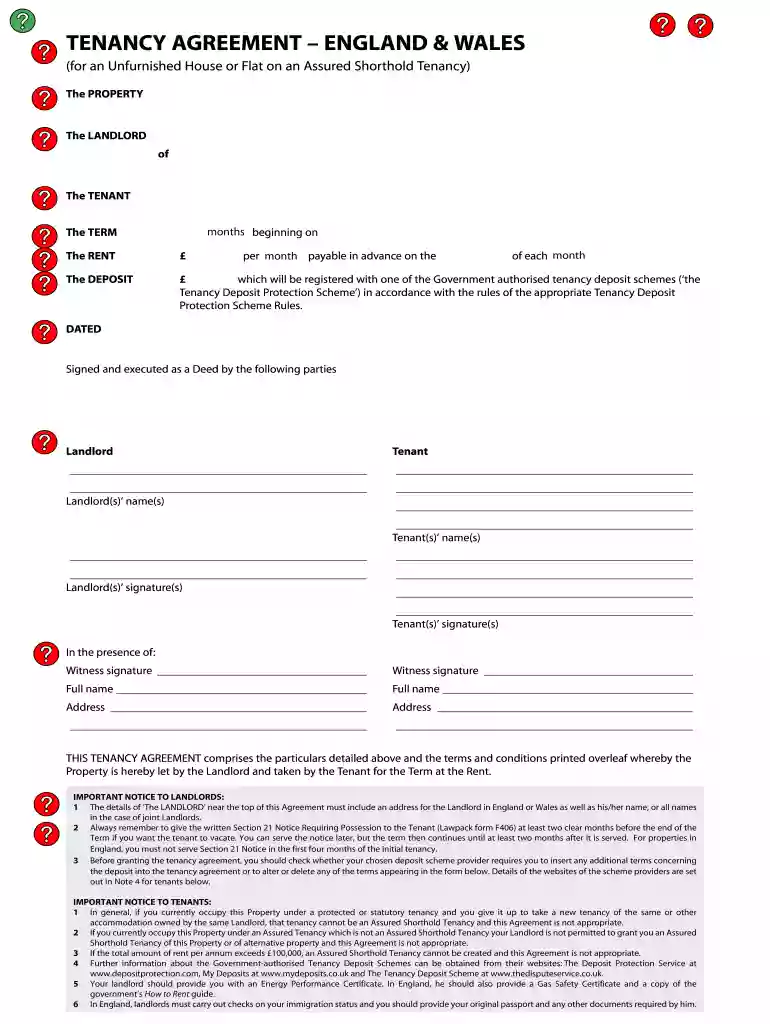
Type text, add images, blackout confidential details, add comments, highlights and more.

Draw your signature, type it, upload its image, or use your mobile device as a signature pad.

Send free printable tenancy agreement england and wales via email, link, or fax. You can also download it, export it or print it out.
A tenancy agreement is a legally binding contract between a landlord and a tenant, primarily governing the use of residential property. In England and Wales, two distinct types of tenancy agreements are the Assured Shorthold Tenancy (AST) and the Assured Tenancy. Assured Shorthold Tenancies are the most common and are typically used for renting private residential properties. They provide a flexible arrangement for both the landlord and tenant, allowing for termination after an initial fixed term or at a periodic interval.
The tenancy agreement outlines essential terms such as the rent amount, payment schedule, duration of the tenancy, and specific rights and obligations of both parties. It serves to protect the interests of both the landlord and tenant, ensuring compliance with housing laws and regulations. Key components often included in the agreement are:
Understanding the legal aspects of a tenancy agreement is important for both parties. Certain provisions are mandated by law, including:
In summary, a tenancy agreement in England and Wales is crucial for establishing clear expectations and protecting rights within a rental relationship.
Using a tenancy agreement involves a structured process that ensures compliance with legal regulations and mutual understanding between the landlord and tenant.
In essence, the tenancy agreement serves as a foundational document that sets clear guidelines for the rental relationship. A well-prepared agreement helps avoid potential conflicts and assures compliance with English and Welsh housing laws.
Acquiring a tenancy agreement can be accomplished through various means, depending on the requirements of the parties involved.
Online resources provide free printable tenancy agreements for England and Wales. These templates can be customized to fit specific rental situations and are frequently updated to reflect changes in housing regulations.
Landlords may choose to engage legal professionals to draft customized agreements. This approach provides assurance that all local laws and regulations are considered and adhered to. A lawyer can also address any unique stipulations that may be specific to the rental property or agreement.
There are digital platforms that offer automated services for creating tenancy agreements. These platforms often feature user-friendly interfaces that guide landlords through the process of tailoring an agreement to meet their needs.
Local councils or housing organizations often provide templates and guidance on tenancy agreements. These resources ensure compliance with regional laws and can highlight common practices in the area.
Overall, obtaining a tenancy agreement should be a straightforward process, with a focus on ensuring all necessary details are clearly captured to protect the interests of all parties involved.
Completing a tenancy agreement involves a series of systematic steps that help ensure the contract is valid and both parties are protected.
Select the Right Template: Start with an appropriate tenancy agreement template that reflects either an assured shorthold tenancy or another relevant type.
Fill in Property Details: Include the full address of the rental property and a clear description of the premises.
Detail the Tenant and Landlord Information: Enter the complete names and addresses of the landlord and tenant for identification.
Specify Rent and Payment Terms: Clearly outline the agreed-upon rent amount, payment method, and frequency of payment (monthly, weekly, etc.).
Define the Deposit Terms: State the amount of the security deposit and the conditions under which it will be returned.
Outline the Duration of the Tenancy: Specify whether the agreement is for a fixed term or periodic, including start and end dates.
Include Obligations and Rights: Clearly define the responsibilities of both parties regarding repairs, maintenance, and compliance with laws.
Signing the Agreement: Both landlord and tenant should review the agreement carefully before signing to ensure all information is correct.
Exchange Copies: After signing, provide each party with a copy of the signed document for their records.
Following these steps helps solidify the terms of the tenancy and provides a structured approach for resolving any disputes that may arise.
Familiarizing oneself with essential terms associated with tenancy agreements in England and Wales can be beneficial for both landlords and tenants.
Understanding these terms can help both parties navigate their rights and responsibilities effectively, fostering a smoother rental relationship.
Tenancy agreements in England and Wales must adhere to legal standards to ensure enforceability. Both landlords and tenants are required to comply with established regulations governing rental situations.
Understanding the legal framework surrounding tenancy agreements is essential for both parties to safeguard their rights and create a transparent rental relationship.
Several key elements are crucial within a tenancy agreement, ensuring clarity and compliance with laws.
Inclusion of these elements helps foster mutual understanding and establishes a formal contract that both the landlord and tenant can refer back to as needed.
At DocHub, your data security is our priority. We follow HIPAA, SOC2, GDPR, and other standards, so you can work on your documents with confidence.


