
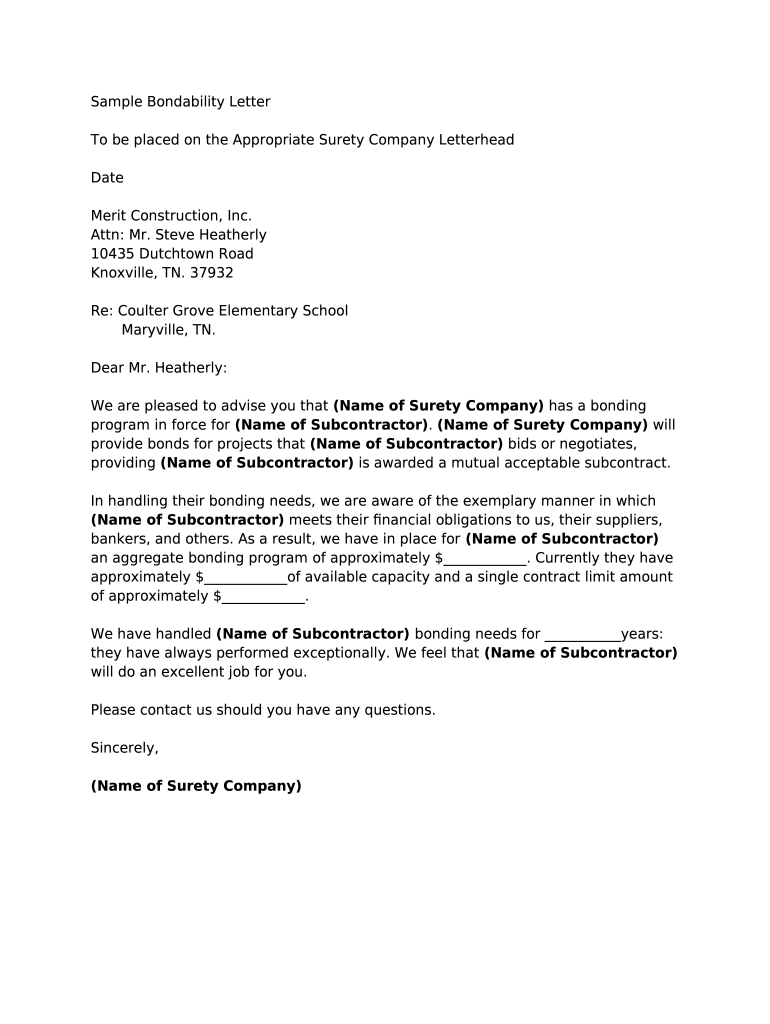







Understanding the Sample Bondability Letter
A Sample Bondability Letter serves as an essential document in the construction and contracting industries, confirming a subcontractor's eligibility for bonding through a surety company. This letter provides reassurance regarding a subcontractor's financial reliability while establishing their capacity to undertake specified projects.
Definition and Purpose of a Bondability Letter
The bondability letter, also referred to as a letter of bondability, is typically issued by a surety company to affirm that a subcontractor is eligible for performance and payment bonds. These letters play a crucial role in the tendering process, as they might be required by project owners or general contractors to demonstrate that the subcontractor has the necessary financial standing and bonding capabilities to complete the work.
- Confirming Bonding Capacity: This letter outlines the financial limits of the bonding capacity afforded to the subcontractor, including specifics on the types of bonds available.
- Enhancing Credibility: By providing documentation of bondability, subcontractors can strengthen their proposals and enhance their credibility with project owners.
Key Components of a Bondability Letter
When drafting a bondability letter, several critical elements should be included to ensure its effectiveness and compliance with industry standards:
- Identifying Information: Include the name, address, and contact information of both the surety company and the subcontractor. Relevant project details, including the project name and location, should also be specified.
- Financial Assessment: Summarize the subcontractor's financial strength, including revenue or cash flow insights that support the bonding capacity.
- Type and Size of Bonds Offered: Clearly specify the type of bonds being offered (performance bonds, payment bonds, etc.) and the total bonding capacity available for the subcontractor.
Steps to Create and Utilize a Bondability Letter
The process of obtaining a bondability letter typically involves the following steps:
- Initial Consultation with the Surety: Engage with the surety company to discuss bonding needs and provide necessary financial documents for evaluation.
- Assessment of Financial Health: The surety company conducts a thorough assessment of the subcontractor’s financial background, including credit ratings, cash flow statements, and project history.
- Issuance of the Letter: Once approved, the surety will issue a letter confirming the subcontractor's eligibility and bonding capacity.
- Submission with Bids: Integrate the bondability letter into bids or proposals submitted to project owners or general contractors to substantiate bonding capabilities.
Examples of Situations Necessitating a Bondability Letter
Various scenarios in the contracting landscape necessitate the submission of a bondability letter, including:
- Public Project Bidding: Many public contracts require bidders to demonstrate their bonding capacity through a bondability letter to ensure the contractor will complete the project if awarded.
- Large-Scale Private Contracts: Even within private contracts, large-scale jobs often prompt project owners to request proof of bonding ability to mitigate risks associated with project completion.
Common Formats and Templates for Bondability Letters
There are recognized formats for creating a bondability letter to ensure clarity and professionalism. Elements typically featured in these templates include:
- Letterhead: Use the surety company’s official letterhead to lend authority to the document.
- Date and Reference Number: Include the date of issuance and relevant reference numbers to aid in tracking.
- Signature and Title: Conclude the letter with the signature of an authorized representative from the surety company, along with their title.
Legal Considerations and Compliance
When engaging in bonding arrangements, both subcontractors and contractors must be aware of the legal implications associated with the bondability letter, including:
- ESIGN Act Compliance: Ensure that electronically signed letters comply with the ESIGN Act to uphold their legal validity.
- State-Specific Regulations: Be cognizant of variations in bonding requirements and regulations across different states, which can influence the content and approach to bondability letters.
Importance of Keeping Bondability Letters Updated
Since a subcontractor's financial status can fluctuate significantly, ensuring that bondability letters are current and reflect their latest financial standing is crucial:
- Regular Reassessment: Engage with your surety company annually or whenever there are significant changes in financial health.
- Updating Project Information: Revise the letter promptly if the subcontractor is applying for new projects or if their bonding capacity has changed.
By thoroughly understanding and effectively utilizing a Sample Bondability Letter, subcontractors can secure essential opportunities in the contracting industry while ensuring compliance with the expectations of project owners and general contractors.




