




01. Edit your employment verification consent form online
Type text, add images, blackout confidential details, add comments, highlights and more.

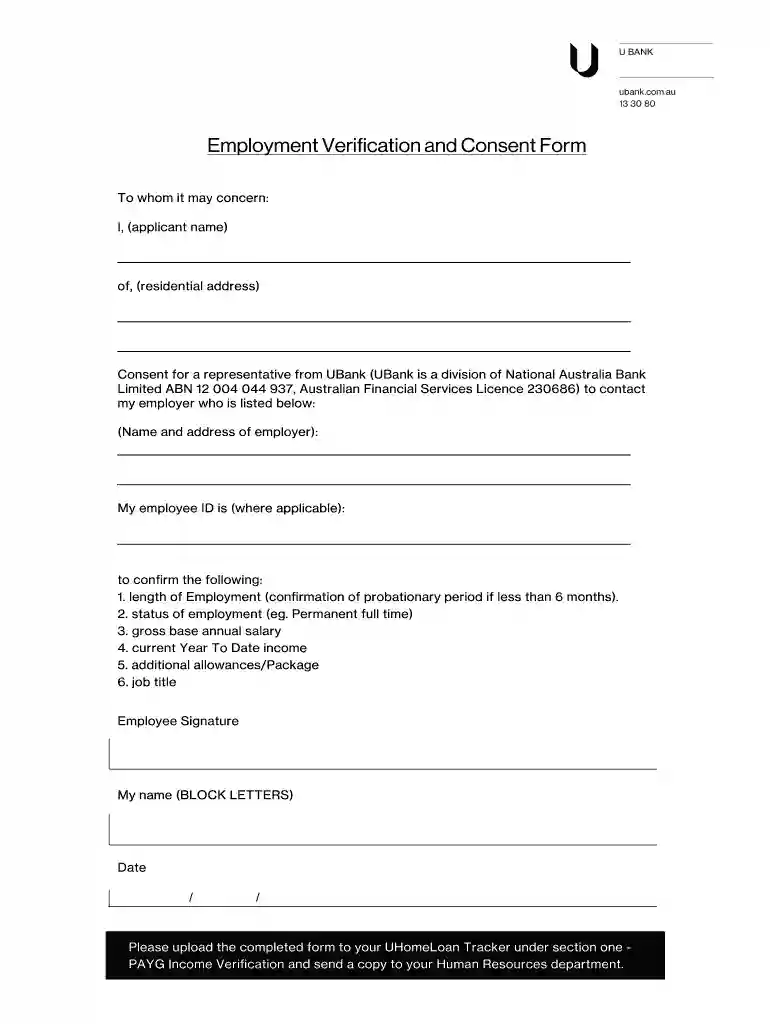
Type text, add images, blackout confidential details, add comments, highlights and more.

Draw your signature, type it, upload its image, or use your mobile device as a signature pad.

Send employment consent form via email, link, or fax. You can also download it, export it or print it out.
An employment verification consent form is a document used by employers to obtain permission from job applicants or employees to verify their employment history with previous employers. This form serves as an authorization tool, confirming to potential employers that they can legally retrieve information regarding the applicant's job title, length of employment, salary, and job responsibilities. By signing this form, the applicant demonstrates their understanding and acceptance of the verification process, which is essential for background checks or hiring purposes.
Filling out an employment verification consent form is a straightforward process, but it requires careful attention to detail to ensure all fields are accurately provided.
Employment verification consent forms are widely utilized in various contexts related to the hiring process. Understanding these use cases is essential for both applicants and employers.
Using an employment verification consent form involves critical legal obligations. Understanding these can safeguard both employers and employees throughout the verification process.
Implementing best practices when utilizing an employment verification consent form can streamline the process and ensure compliance.
The employment verification consent form is a vital component in today’s hiring landscape, serving essential functions for both employers and applicants. Understanding its purpose, requirements, and best practices can facilitate a smoother verification process while ensuring compliance with legal obligations.
We've got more versions of the employment verification consent form form. Select the right employment verification consent form version from the list and start editing it straight away!
At DocHub, your data security is our priority. We follow HIPAA, SOC2, GDPR, and other standards, so you can work on your documents with confidence.
Information obtained under this consent is limited to information that is no older than 12 months. There are circumstances which would require the owner toRead more
Human Resources will verify current or past employment information only when the request is accompanied by a signed consent form.Read more
Aug 1, 2013 The AFISwitch system makes it possible for companies to capture fingerprints of job applicants and know within 24-48 hours whether they have aRead more


