
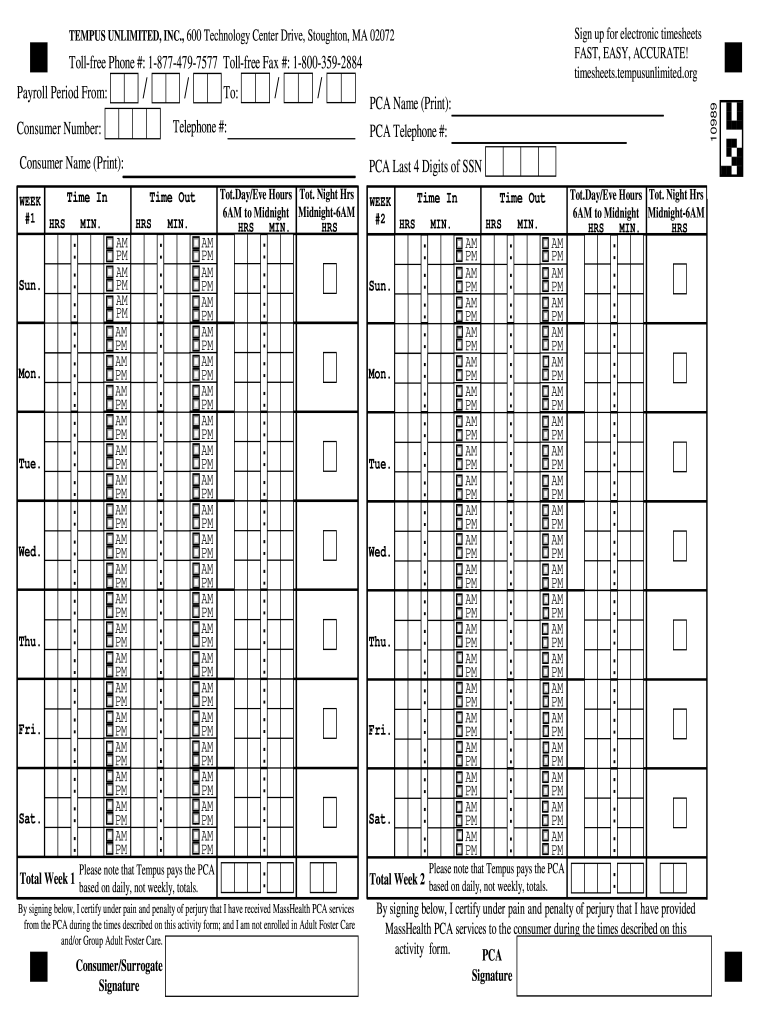







Definition and Meaning of Tempus Unlimited Timesheet
The Tempus Unlimited timesheet is a critical document used by Personal Care Attendants (PCAs) for documenting hours worked while serving clients under the MassHealth PCA program. This electronic timesheet allows PCAs to report their time accurately, ensuring that they are compensated for the services rendered. Each entry recorded within the timesheet holds significant weight in maintaining the integrity of service hours reported to MassHealth, which in turn supports reimbursement processes for the PCAs.
The purpose of the tempus unlimited timesheet goes beyond merely logging hours. It functions as a tool for accountability and transparency between the PCA, their employers, and the MassHealth system. By recording hours worked, service types provided, and consumer information, the timesheet aids in verifying that services align with approved plans of care and service authorizations.
Several key features define the Tempus Unlimited timesheet:
- Record Keeping: A structured format to capture essential details regarding services rendered.
- Compliance: Adherence to regulations governing the MassHealth PCA program, facilitating smoother audits.
- Electronic Submission: Allows for quick and efficient reporting, reducing the administrative burden on PCAs.
How to Use the Tempus Unlimited Timesheet
Using the Tempus Unlimited timesheet requires understanding the document's structure and the necessary steps for proper completion. PCAs should follow a detailed process to ensure accuracy in their submissions.
- Access the Timesheet: Log in to the Tempus Unlimited portal using the designated credentials to retrieve the electronic timesheet.
- Enter Consumer Information: Fill in essential details about the consumer receiving the services, including name, address, and PCA identification.
- Document Hours: Accurately record the hours worked each day on the designated lines. Be mindful of differentiating between regular and overtime hours to avoid discrepancies.
- Service Description: Provide a brief description of the services rendered. This might include personal care tasks such as bathing, grooming, or assistance with meal preparation.
- Weekly Submission: Submit the completed timesheet weekly, ensuring it aligns with the deadlines established by the MassHealth program.
By adhering to these steps, PCAs can ensure their timesheets are processed smoothly and accurately, minimizing the risk of payment delays.
Important Terms Related to Tempus Unlimited Timesheet
Understanding the terminology associated with the Tempus Unlimited timesheet can enhance comprehension and ensure accurate completion. Here are some essential terms to know:
- MassHealth: The Medicaid program in Massachusetts providing health care benefits, including funding for PCA services.
- Electronic Timesheet (e-timesheet): A digital version of the timesheet that allows for online submission and tracking of service hours worked.
- PCA (Personal Care Attendant): An individual providing personal care assistance to consumers with disabilities or health challenges.
- Hours Worked: The total time spent providing services, including regular hours and any overtime that applies.
- Service Type: The categorization of services provided (e.g., bathing, grooming, meal planning) recorded on the timesheet.
Familiarity with these terms can help PCAs navigate the completion and submission process more effectively.
Steps to Complete the Tempus Unlimited Timesheet
Completing the Tempus Unlimited timesheet accurately is essential for proper compensation. Follow these systematic steps to ensure thorough documentation:
-
Log in to Your Tempus Unlimited Account: Open the Tempus Unlimited portal and enter your login information.
-
Select the Correct Timesheet: Navigate to the "Timesheets" section and select the relevant month or week for which you are submitting hours.
-
Fill in Personal Information: Begin by entering consumer information, including the consumer's name, address, and contact details, ensuring that all information matches that on file.
-
Add Dates and Hours: For each day worked during the week, input the date and precise hours in the appropriate fields. Use a consistent format when entering times to avoid confusion.
-
Describe Services Provided: Include a brief description of the services rendered for each date, using clear, concise language that comprehensively conveys the work performed.
-
Review and Cross-Check: Before submission, double-check all entries for accuracy. Confirm that hours match any personal logs you may have kept and that service descriptions are complete.
-
Submit the Timesheet: Finalize the submission by clicking "Submit." Follow any prompts to ensure the document is sent correctly to the designated department.
-
Retain a Copy: Save or print a copy of the submitted timesheet for personal records. This is crucial for tracking your submissions and for any future inquiries.
Each step provides a pathway toward completing your timesheet accurately and efficiently while ensuring compliance with MassHealth regulations.
Legal Use of the Tempus Unlimited Timesheet
Legitimate use of the Tempus Unlimited timesheet is governed by strict guidelines to maintain the integrity of the MassHealth PCA program. Adhering to legal standards is paramount for both PCAs and consumers to ensure proper compliance with state regulations.
-
Accurate Reporting: All entries within the timesheet must accurately reflect the actual hours worked and the services provided. Misrepresentation or falsification can lead to severe penalties, including prosecution.
-
Record Retention: It is mandatory to retain copies of submitted timesheets and any supporting documentation for a designated period, often several years, in case of audits or reviews by MassHealth.
-
Consumer Authorization: PCAs must ensure that they have the necessary authorization to provide services; this can include signed agreements or verifications from consumers.
-
Privacy Protection: All personal and sensitive information must be handled according to HIPAA regulations to protect the privacy rights of consumers receiving care.
Understanding and following these legal stipulations can prevent non-compliance issues and ensure a smooth operational process for all parties involved.




