Reference form 2026

Get Form
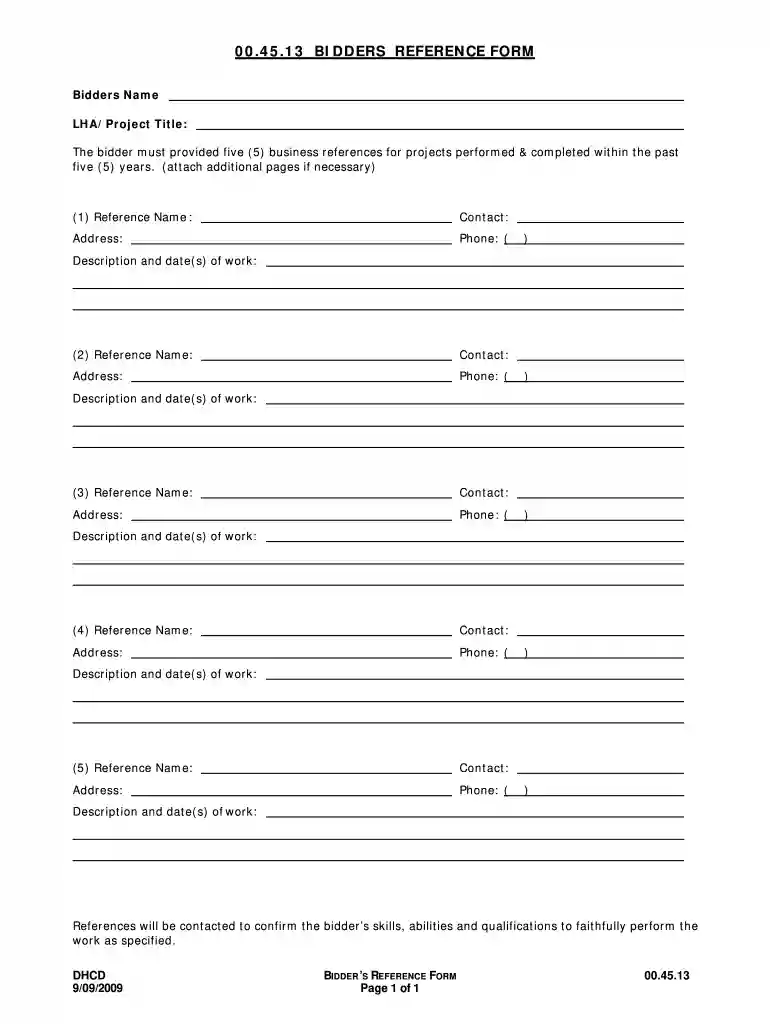
reference form Preview on Page 1

Here's how it works

01. Edit your reference form online
Type text, add images, blackout confidential details, add comments, highlights and more.

02. Sign it in a few clicks
Draw your signature, type it, upload its image, or use your mobile device as a signature pad.

03. Share your form with others
Send reference form pdf via email, link, or fax. You can also download it, export it or print it out.

Definition & Meaning of a Reference Form

A reference form is a document used to collect information about an individual or business from selected referees. It typically includes sections that prompt the referee to provide their contact details, the nature of their relationship with the applicant, and an assessment of the applicant's skills or qualifications. This form serves primarily to verify the applicant’s capabilities and experiences in professional or educational contexts. Standard uses involve job applications, professional licensing, and academic admissions.

  • Purpose: The primary purpose of a reference form is to allow potential employers, academic institutions, or agencies to evaluate an individual based on feedback from those who know them in a professional capacity.
  • Structure: The most common structure includes fields for the reference's name, title, organization, email, phone number, and specific comments regarding the candidate's qualifications or past experiences.

How to Use the Reference Form

Using a reference form involves several key steps to ensure it effectively serves its purpose. The process typically begins with educating the referees about the requirements.

  1. Select Appropriate Referees: Choose individuals who can provide a comprehensive view of your skills and experiences relevant to the position or program.
  2. Distribute the Form: Provide the reference form to each selected referee along with any pertinent context about the opportunity for which you are applying.
  3. Follow Up: After giving the referees sufficient time, follow up gently to ensure they received the form and ask if they need any additional information.
  4. Thank the Referees: Regardless of the outcome, express gratitude for their time and effort in filling out the form.

This systematic approach helps maintain professionalism and strengthens relationships.

Key Elements of the Reference Form

A well-structured reference form typically contains specific key elements which aid in gathering vital and standardized information from referees.

  • Contact Information: Essential to include the reference's name, job title, organization, phone number, and email address.
  • Relationship Description: A section where the referee can indicate how they know the applicant (e.g., supervisor, colleague) and for how long.
  • Performance Assessment: An open-ended section or a rating scale for evaluating the applicant's skills, reliability, teamwork, and overall suitability.
  • Signature: A line for the referee's signature or a statement certifying the truthfulness of the provided information.

Each element serves to create a comprehensive perspective that can be used by the entity evaluating the applicant.

Steps to Complete the Reference Form

Filling out a reference form requires clarity and honesty to convey an accurate and favorable depiction of the candidate. Here are detailed steps to follow:

  1. Read Instructions Carefully: Understand the specific requirements listed on the reference form, including any specific areas of focus the requester highlighted.
  2. Gather Information: Reflect on your time working with or knowing the candidate and prepare to provide concrete examples to support your feedback.
  3. Complete Contact Fields: Fill in all contact information accurately to ensure the requesting party can reach you if more information is needed.
  4. Assess the Candidate: Answer all questions candidly. Use specific instances to illustrate the candidate's abilities and strengths.
  5. Review and Sign: Once completed, review the form for any errors, ensure all sections are filled out completely, and sign where necessary.

Completing the reference form thoughtfully enhances the quality of feedback the candidate receives.

Legal Use of the Reference Form

Understanding the legal implications surrounding the use of reference forms is crucial for both referees and applicants.

  • Confidentiality: Ensure that any shared information is kept confidential, especially personal details about the candidate or the referee.
  • Bias and Fairness: The information presented should be unbiased and fair to avoid legal repercussions, particularly in employment decisions.
  • Authorization: It's advisable for candidates to obtain consent from referees before listing them as references, safeguarding against any potential privacy violations.

By adhering to these legal considerations, both parties minimize risks associated with misinformation or breaches of trust.

Important Terms Related to Reference Form

Familiarity with key terminology can enhance understanding and improve communication surrounding reference forms.

  • Referee: An individual who provides information about the applicant, often observed in a professional or educational context.
  • Applicant: The individual seeking a job, admission, or other opportunities who provides references as part of the application process.
  • Feedback: Critical information provided by the referee regarding the applicant’s skills, character, and qualifications.
  • Verification: The process of confirming the accuracy and validity of the information provided in the reference form.

Understanding these terms can facilitate smoother interactions and clearer expectations in the referencing process.

Who Typically Uses the Reference Form

Reference forms are commonly used across a variety of scenarios, serving multiple sectors and purposes, including but not limited to:

  • Employment Applications: Employers often seek references to gauge the reliability and performance history of candidates.
  • Academic Institutions: Colleges and universities require references as part of their admissions process to assess a student’s character and academic potential.
  • Professional Certifications: Many certification agencies ask for references to validate an applicant's experience and qualifications in a certain field.
  • Volunteering or Internships: Organizations may request references for individuals applying for volunteer or internship roles to ascertain their commitment and capabilities.

These varied applications demonstrate the flexibility and necessity of reference forms in professional and educational arenas.


decoration image ratings of Dochub

Examples of Using the Reference Form

Illustrating the utility of reference forms with practical examples can clarify their importance in real-life situations.

  • Job Application Reference: Consider a recent graduate applying for their first job. By including a reference from a professor who can speak to their academic achievements, the applicant strengthens their job candidacy.
  • Volunteer Position Reference: An individual seeking a volunteer role at a nonprofit organization might use a reference form to highlight experiences from prior volunteer work, showing commitment and reliability to potential organizations.
  • Graduate School Admission Reference: A candidate applying for graduate school may provide references from both an academic advisor and an employer to showcase their academic capabilities as well as work ethic.

These scenarios illustrate how references can significantly impact the opportunities available to applicants.

See more reference form versions

We've got more versions of the reference form form. Select the right reference form version from the list and start editing it straight away!
Versions Form popularity Fillable & printable
2009 4.8 Satisfied (262 Votes)
be ready to get more

Complete this form in 5 minutes or less

Get form

Security and compliance

At DocHub, your data security is our priority. We follow HIPAA, SOC2, GDPR, and other standards, so you can work on your documents with confidence.

Learn more
ccpa2
pci-dss
gdpr-compliance
hipaa
soc-compliance