




01. Edit your ada reasonable accommodation checklist online
Type text, add images, blackout confidential details, add comments, highlights and more.

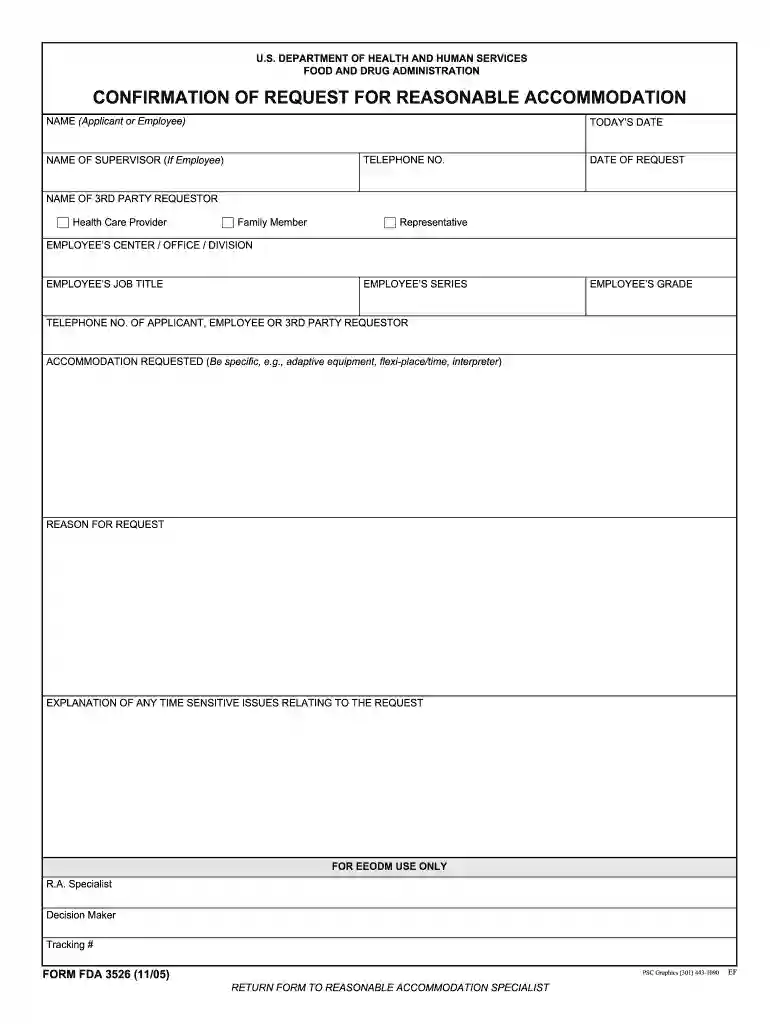
Type text, add images, blackout confidential details, add comments, highlights and more.

Draw your signature, type it, upload its image, or use your mobile device as a signature pad.

Send ada form for work via email, link, or fax. You can also download it, export it or print it out.
A confirmation request for reasonable accommodation pertains to the formal process by which employees or applicants notify their employers of the need for adjustments or modifications in the workplace due to a qualifying disability. This request is a crucial element of the Americans with Disabilities Act (ADA), which ensures that individuals with disabilities have equal opportunities in employment by allowing for necessary accommodations.
Reasonable accommodations can include a broad range of modifications, such as modifications to work schedules, accessible workspaces, or equipment like screen readers or ergonomic chairs. The purpose of this form is to ensure that the needs of individuals are recognized and addressed promptly, enabling them to perform essential job functions without hindrance.
The confirmation request serves not only as a communication tool but also as a means to initiate a dialogue between employees and employers. Both parties collaborate to find solutions that facilitate a productive work environment while adhering to legal requirements outlined under the ADA.
Completing a confirmation request for reasonable accommodation involves several key steps to ensure that your needs are clearly articulated and understood.
Identify Your Needs: Reflect on how your disability affects your ability to perform specific job functions. Consider what type of reasonable accommodation will help you fulfill your role effectively.
Gather Relevant Medical Documentation: Collect any necessary medical documents or notes from healthcare providers that outline your disability and the need for accommodation. This documentation will support your request and provide your employer with a clear understanding of your situation.
Complete the Confirmation Request Form: Fill out the official confirmation request for reasonable accommodation form. Be precise and detailed in describing the specific accommodations you are seeking as well as the reasons for your request.
Submit the Request to HR: Deliver your completed form to your company's Human Resources department or the designated individual responsible for processing accommodation requests. It’s advisable to keep a copy of your request for your records.
Engage in an Interactive Process: Be prepared for follow-up discussions with HR or management. This interactive dialogue is essential for clarifying your needs and exploring potential accommodations.
Await a Decision: Once your request has been reviewed, you will receive a response from your employer. Understand that the employer must act in good faith to explore possible options but is not obligated to grant every requested accommodation.
Document the Outcome: Whether your request is granted or denied, it’s vital to document the outcome and any agreements that are made regarding your accommodation.
The confirmation request for reasonable accommodation is utilized primarily by employees and applicants within the workforce who identify as having a disability as defined by the ADA. Specific user groups include:
Current Employees: Individuals already working for an organization who require adjustments to perform their job responsibilities effectively.
Job Applicants: Individuals seeking employment opportunities who wish to ensure that necessary accommodations will be available in the hiring process or workplace.
Human Resources Professionals: HR departments utilize the confirmation request process to facilitate and manage accommodation requests, ensuring compliance with ADA regulations.
Legal and Compliance Teams: These teams may review requests to verify that the organization adheres to legal standards and best practices when accommodating employees with disabilities.


Understanding the key elements of the confirmation request for reasonable accommodation assists in ensuring comprehensive and effective completion. These elements include:
Employee Information: Basic details such as name, contact information, and job title are necessary to identify the requester.
Nature of the Disability: A clear description of the disability, accompanied by medical documentation, may be necessary to substantiate the need for accommodation.
Requested Accommodations: Specific accommodations being sought should be articulated clearly, outlining how each will assist in meeting job requirements.
Impact on Work: An explanation of how the disability affects job performance fosters better understanding and consideration.
Proposed Timeline: Indicating any time-sensitive needs related to the accommodation (e.g., upcoming projects or deadlines) can help prioritize the request.
Familiarity with vital terms associated with reasonable accommodation requests enhances comprehension of the process:
ADA: The Americans with Disabilities Act, legislation that prohibits discrimination based on disability and mandates reasonable accommodations in the workplace.
Disability: A physical or mental impairment that substantially limits one or more major life activities.
Interactive Process: A collaborative dialogue between employees and employers aimed at finding effective accommodations.
Undue Hardship: A legal standard that refers to significant difficulty or expense incurred by the employer when accommodating an employee.
Essential Functions: The fundamental job duties that an employee must be able to perform, with or without reasonable accommodation.
Understanding these terms aids in navigating the reasonable accommodation request process more effectively, ensuring that employees are well-informed when advocating for their rights in the workplace.
We've got more versions of the ada reasonable accommodation checklist form. Select the right ada reasonable accommodation checklist version from the list and start editing it straight away!
| Versions | Form popularity | Fillable & printable |
|---|---|---|
| 2005 | 4.8 Satisfied (103 Votes) |
At DocHub, your data security is our priority. We follow HIPAA, SOC2, GDPR, and other standards, so you can work on your documents with confidence.
May 24, 2012 The Employment Equity Act restricted to the concept of reasonable accommodation to any modification or adjustment to a job or to the workingRead more
CONFIRMATION OF REASONABLE ACCOMMODATION REQUEST. PRIVACY ACT STATEMENT INSTRUCTIONS FOR COMPLETING THE CONFIRMATION OF REASONABLE ACCOMODATION REQUEST FORM.Read more
Requests are considered on a case-by-case basis. To request reasonable accommodations: Look at the vacancy announcement; Work directly with person arrangingRead more


