






Definition and Purpose of Form 1120-H
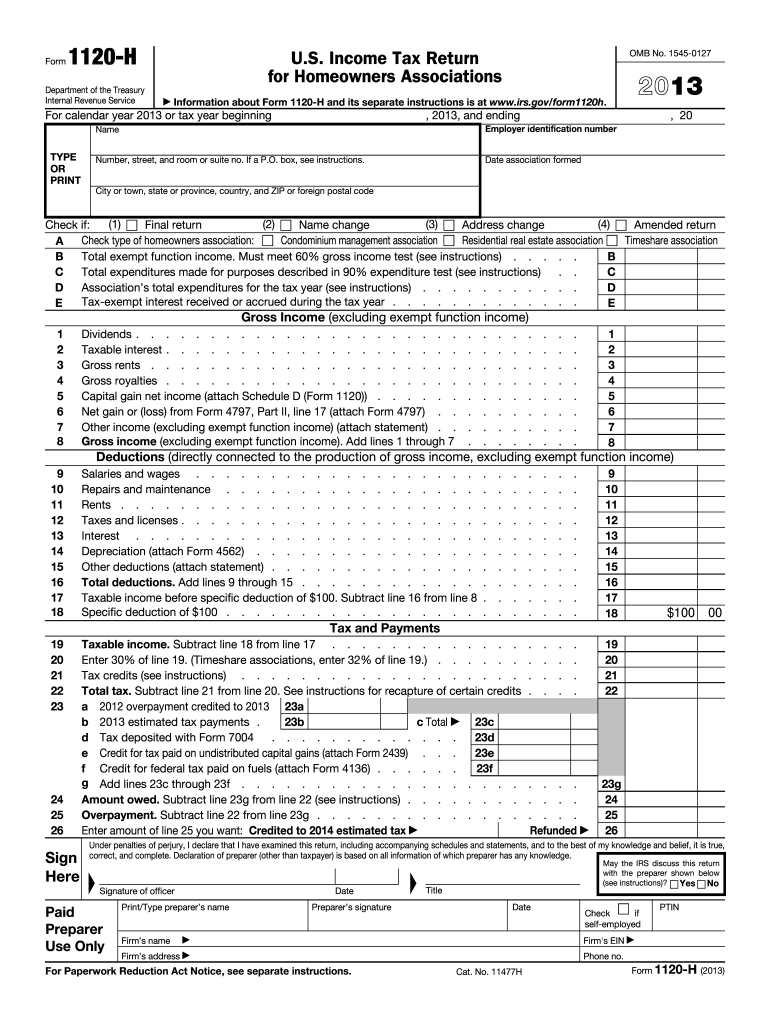
Form 1120-H serves as the U.S. Income Tax Return designed specifically for homeowners associations (HOAs). This form categorizes the income sources, expenditures, and tax liabilities pertinent to these organizations, which typically include entities like condominium management associations and residential real estate associations. The form is structured to determine taxable income, calculate the amount of tax due, and ensure compliance with federal tax obligations specific to HOAs. A homeowners association electing to file Form 1120-H can take advantage of certain tax benefits while adhering to specific criteria set forth by the IRS.
Obtaining the 2013 Form 1120-H
To obtain the 2013 version of Form 1120-H, you can access the PDF directly from the IRS website or request a physical copy by mailing a request to the IRS. Additionally, many tax preparation software platforms include past forms, providing an easy method for electronic download. It's essential to ensure that you are using the correct year’s form, as tax regulations and structures may differ from year to year.
Step-by-Step Guide to Completing Form 1120-H
-
Begin with Basic Information: Fill in the association’s legal name, address, and Employer Identification Number (EIN). Verify accuracy, as these details are crucial for identification purposes.
-
Income Reporting: Report the total income generated from exempt and non-exempt functions. This includes membership dues and assessments considered under "exempt function income."
-
Deductions: Document eligible expenses and losses applicable to the association’s activities. Include maintenance costs, repairs, and any capital expenditures.
-
Tax Calculation: Calculate the tax due by applying the 30% tax rate on taxable income over the $100 exemption allowed. Make use of IRS guidelines to ensure every step is calculated accurately.
-
Sign and Submit: Ensure the form is reviewed for accuracy before a designated officer signs it. The completed form should be submitted to the specified IRS address along with the payment, if applicable.
Eligibility Criteria for Filing Form 1120-H
An HOA must meet specific IRS criteria to file Form 1120-H. This includes being a homeowners association organized and operated to provide for the maintenance and management of association property. Additionally, at least 85% of its revenue should be from member assessments, and 60% should be spent on maintaining the communal areas.


IRS Guidelines for Form 1120-H
The IRS provides detailed instructions to assist in completing Form 1120-H accurately. These guidelines define key terms such as "exempt function income" and offer clarity on calculating deductions and understanding what constitutes as "ordinary income." For any questions or exceptional scenarios, consulting the IRS guidelines is essential to ensure compliance and benefit from permissible tax advantages.
Penalties for Non-Compliance
Failure to file Form 1120-H on time can result in penalties, potentially calculated as a percentage of unpaid taxes. If an HOA incorrectly reports its income or deductions, it may face additional scrutiny or fines. It’s crucial for associations to meticulously follow filing instructions and adhere to deadlines to avoid these penalties.
Filing Deadlines and Important Dates
For the 2013 tax year, Form 1120-H needed to be filed by the 15th day of the third month following the end of the association's tax year. Associations using a calendar year should have filed by March 15, 2014. Filing extensions could be requested but must be noted per IRS guidelines.
Submission Methods for Form 1120-H
Form 1120-H can be submitted to the IRS via mail or through electronic filing if the software used supports this form type. While electronic submission helps in faster processing and confirmation, traditional mail submissions are accepted, provided they are postmarked by the filing deadline.
Important Terms Related to Form 1120-H
- Exempt Function Income: Refers to member-generated revenue from activities connected to the association’s primary purpose, such as membership dues and assessments.
- Non-Exempt Income: Includes income from investment activities like interest or dividends that are subject to taxation.
- Taxable Income: The portion of income that exceeds operational exemptions and is subject to the 30% flat rate tax.
Business Types Benefiting from Form 1120-H
Primarily, homeowners associations and similar organizations managing communal residential spaces benefit from filing Form 1120-H. Non-profit status is not a requirement, but the entity must function under the association structures specified in IRS Code Section 528 to qualify.
State-Specific Considerations
Though Form 1120-H is federal, associations must also consider state-specific tax requirements, as state laws may impose additional filing obligations. It’s prudent to consult state tax guidelines to ensure full compliance with both federal and state-level taxation rules.