Understanding the Transfer My Stock Process
Transferring stock involves legally transferring ownership of shares from one individual or entity to another. This process is essential for various scenarios, such as selling shares, changing beneficiaries, or handling estate cases. The "transfer my stock" is utilized across different contexts, but understanding its components is crucial.
Steps to Complete the Stock Transfer
Gather Necessary Information
- Collect details about the stock being transferred, such as the stock certificate number and the number of shares.
- Obtain the recipient's name, address, and any relevant account numbers.
Complete the Required Forms
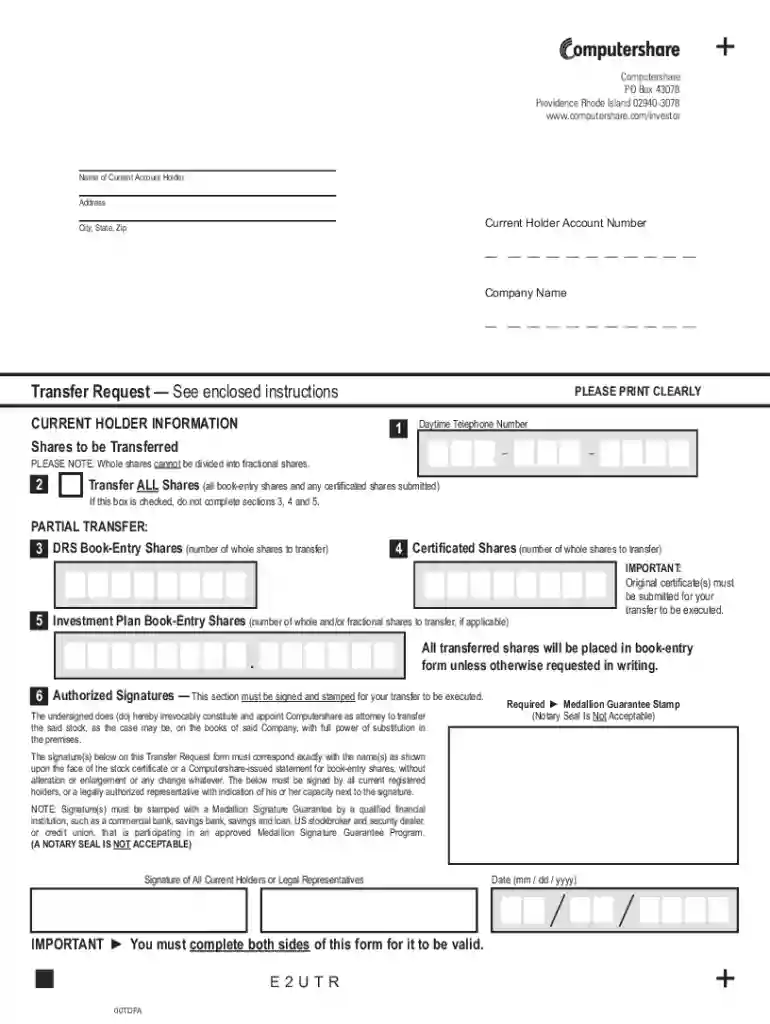
- Fill out the specific forms mandated by the stock transfer agent or registrar. This often includes a transfer request form.
- For Computershare, forms like the Computershare transfer request form may be necessary.
Get Required Signatures
- Ensure that all parties involved in the transfer—typically the current owner and the recipient—sign the necessary documents.
- In certain cases, a Medallion Signature Guarantee may be required to authenticate the signatures.
Submit the Forms
- Send the completed transfer forms to the designated agent or registrar. This can usually be done online or by mail, depending on the company’s policy.
- Some companies have specific portals for electronic submission, simplifying the process.
Confirmation and Follow-up
- Monitor the transfer status to ensure it is processed correctly. This often involves checking with the stock transfer agent or through their online system.
- Once finalized, both parties should receive confirmation of the transfer.
Legal Considerations for Stock Transfers
- Ownership Proof: Documentation proving ownership must be submitted to ensure accurate transfer records.
- Tax Implications: Transfers may result in tax consequences; understanding IRS guidelines regarding capital gains or losses associated with stock transfers is essential.
- Beneficiary Transfers: When transferring shares as part of an estate, specific legal forms may be required to establish the beneficiary’s right to the shares.
- Regulatory Compliance: Ensure that all transfers comply with SEC regulations and any relevant state laws.
Important Forms and Documentation
- Computershare Sale Request Form: This form is essential for initiating a sale of stocks held with Computershare.
- Transfer Request Form: A general form required for the completion of a stock transfer.
- IRS Guidelines: Familiarity with IRS guidelines will help avoid any potential tax-related issues resulting from the transfer.
Common Scenarios for Stock Transfers
- Selling Shares: Investors often want to sell shares they own, requiring them to fill out the sale request form and submit it.
- Transferring Upon Death: Shares held in an estate may need to be transferred to heirs, requiring specific forms and proof of death like a death certificate.
- Gifting Stocks: Individuals may wish to gift stock to family members. This involves submitting the relevant transfer forms and adhering to rules around gift taxes.
Resources and Support
- Computershare Customer Service: Utilize customer support to clarify any doubts regarding forms or the transfer process.
- Online Resources: Access online tutorials or guides specific to "transfer my stock" to understand varying company protocols better.
- Financial Advisors: Consulting a financial advisor can provide guidance on the implications and best practices for transferring stock.
Conclusion
Navigating the process of transferring stocks can seem daunting, but understanding the necessary steps and documentation simplifies the endeavor. Whether you're managing your investments, divesting, or addressing estate matters, clarity on the procedural aspects ensures compliance and efficiency in stock transfers.