




01. Edit your form online
Type text, add images, blackout confidential details, add comments, highlights and more.

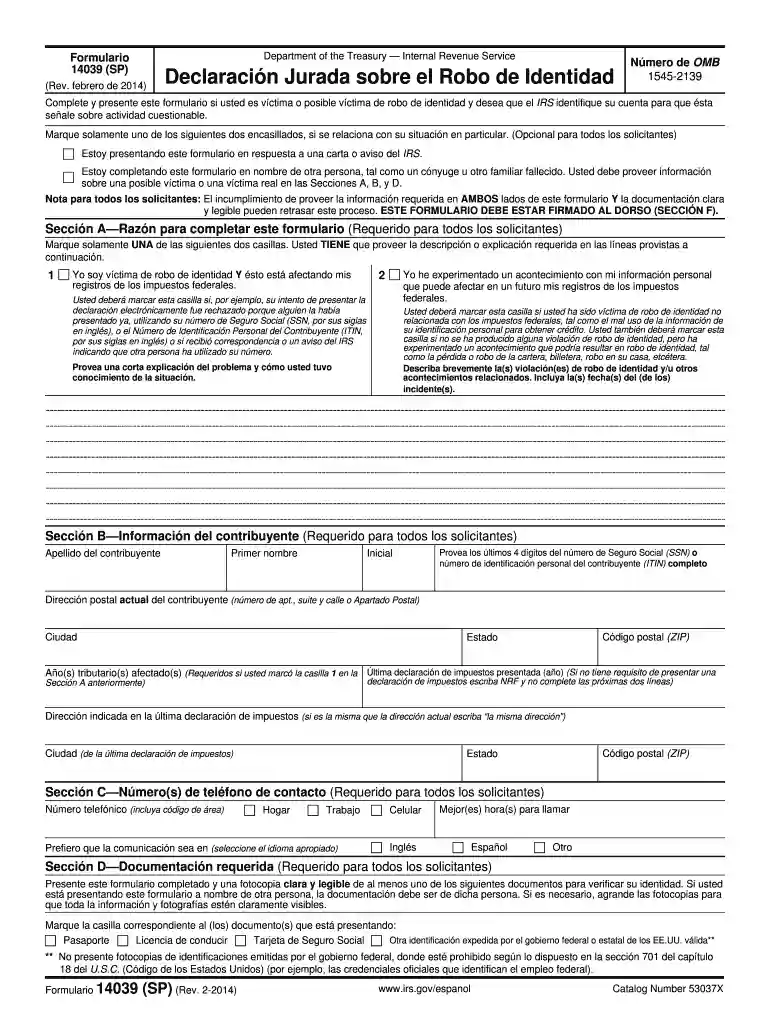
Type text, add images, blackout confidential details, add comments, highlights and more.

Draw your signature, type it, upload its image, or use your mobile device as a signature pad.

Send it via email, link, or fax. You can also download it, export it or print it out.
An affidavit form is a sworn written statement used in legal proceedings or for other authorized purposes. The "2014 affidavit form" refers to a specific template or format used in the year 2014 for executing an affidavit. While the form's fundamental function is to enable the declarant to affirm facts under oath, its specific layout and requirements can vary based on the context in which it's used. Affidavits are commonly utilized in court cases, legal documentation, or when notarized attestations are needed.
The 2014 affidavit form includes various essential components, which ensure the document's validity and adherence to legal standards:
Declarant Information: This section captures the personal details of the individual making the affidavit, including their full name, address, and contact information.
Statement of Facts: The main body of the affidavit where the declarant outlines the factual statements they are affirming under oath. These must be clearly articulated to avoid ambiguity.
Oath or Affirmation: A sworn statement wherein the declarant commits to the truthfulness of the contained information.
Notary Public Section: Includes a segment where a notary public verifies the identity of the declarant, witnessing their signature and applying a notarial seal.
Date and Signature: The document must be dated, and the declarant's signature is required to validate their oath. A notarial act also accompanies this process.
Utilizing the 2014 affidavit form involves specific steps to ensure all legal requirements are met:
Preparation: Gather all pertinent information and evidence that supports the statements you intend to include in the affidavit.
Drafting: Carefully fill out the affidavit form, ensuring that the facts are presented clearly and concisely. The language used should be straightforward without misrepresentations.
Notarization: The completed affidavit form must be taken to a notary public who will verify the declarant’s identity, witness their signature, and apply the necessary certification.
Affidavits serve critical legal functions:
Real-world scenarios demonstrate the use of a 2014 affidavit form:
Familiarity with related terminology enhances comprehension and proper use:
While affidavits are generally similar in structure, state-specific laws may influence their use:
Submitting the 2014 affidavit form can be accomplished in varied forms:
Gathering required supplementary documents ensures a comprehensive affidavit process:
Each element and procedure surrounding the 2014 affidavit form is purposed to authenticate the statement's validity and align with legal expectations, ensuring the document serves its intended legal utility effectively.
We've got more versions of the 2014 affidavit form form. Select the right 2014 affidavit form version from the list and start editing it straight away!
| Versions | Form popularity | Fillable & printable |
|---|---|---|
| 2023 | 4.4 Satisfied (55 Votes) | |
| 2022 | 4.4 Satisfied (24 Votes) | |
| 2022 | 4.7 Satisfied (26 Votes) | |
| 2021 | 4.8 Satisfied (91 Votes) | |
| 2020 | 4.3 Satisfied (84 Votes) | |
| 2017 | 4.4 Satisfied (241 Votes) | |
| 2016 | 4.4 Satisfied (245 Votes) | |
| 2014 | 4.4 Satisfied (1113 Votes) | |
| 2011 | 4 Satisfied (42 Votes) | |
| 2010 | 4.2 Satisfied (58 Votes) |
Managing your documents with DocHub this way is very easy once you have downloaded its extension for Google Chrome. Go to the Chrome Web Store and install DocHub - Sign PDF from Gmail to get it. Give our tool access to your Google account, and then open an email containing 2014 affidavit form as an attachment and point to the file with your cursor - the DocHub extension button will automatically appear there. Click on it to open your form in our editor. Make any essential modifications, fill out the blanks, and click Sign to create your legally-binding electronic signature.
If your go-to electronic mail service is Gmail, it is simple to integrate your DocHub editor into your work. Edit your 2014 affidavit form with DocHub instruments and connect it to your drafts in Gmail. See how straightforward it can be to exchange files and collaborate with a swift PDF editing solution at hand.
At DocHub, your data security is our priority. We follow HIPAA, SOC2, GDPR, and other standards, so you can work on your documents with confidence.


