




01. Edit your substitute form 1099 s online
Type text, add images, blackout confidential details, add comments, highlights and more.

Type text, add images, blackout confidential details, add comments, highlights and more.

Draw your signature, type it, upload its image, or use your mobile device as a signature pad.

Send substitute 1099 s via email, link, or fax. You can also download it, export it or print it out.
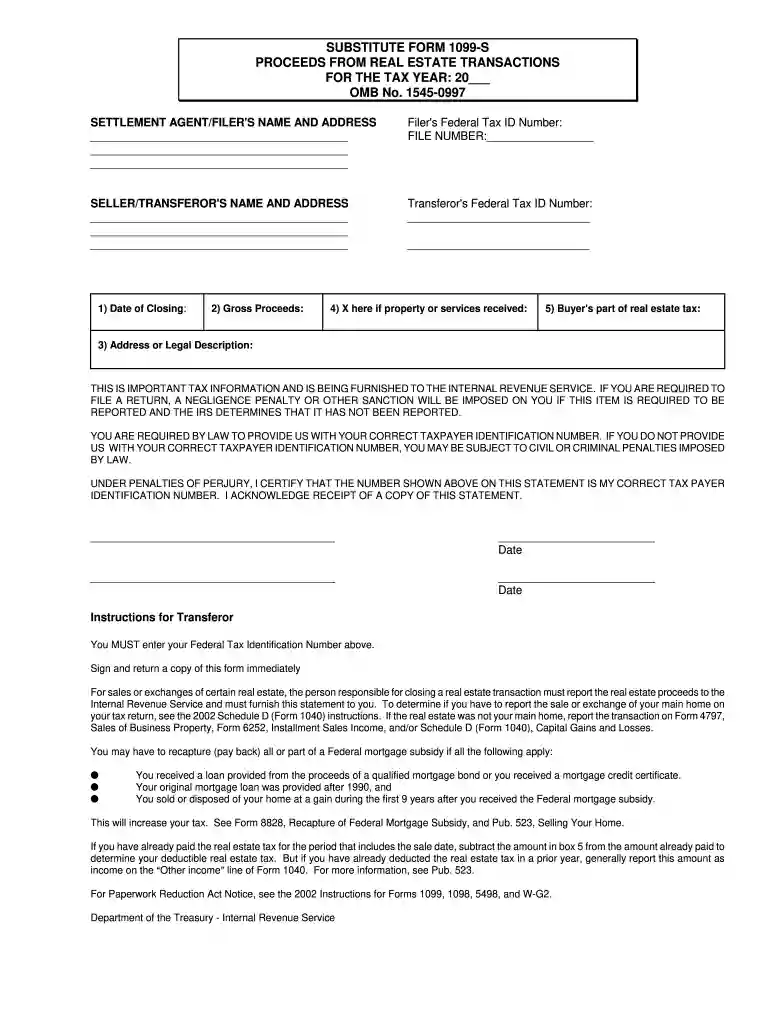
The Substitute Form 1099-S is a critical document used in real estate transactions in the United States to report proceeds associated with property sales. This form is a variant of the official IRS Form 1099-S, which is used to report financial transactions, primarily focusing on real estate. Both forms fulfill similar functions, emphasizing the collection of accurate transaction data for tax reporting. By using this substitute form, individuals and organizations ensure compliance with IRS regulations while facilitating a streamlined reporting process.
To effectively use the substitute form, first, ensure you have all the necessary details, such as the settlement agent's information, transaction date, and the gross proceeds from the sale. Typically, the form requires you to list the seller's TIN, legal name, and property address. After gathering this information, fill out each section according to the IRS guidelines to avoid common errors. Once completed, review the form for accuracy and submit it to both the IRS and the relevant parties involved in the transaction. Submitting incorrect information can result in penalties, so precision is paramount.
Gather Necessary Information: Obtain details regarding the seller, property, and transaction specifics.
Enter Seller Details: Include the full name of the seller, their TIN, and the property address involved in the transaction.
Fill in Transaction Information: Provide the date of closing, sales price, and any necessary details about the property.
Verify Settlement Agent Information: Ensure that the settlement agent’s full name and contact information are accurately recorded.
Review for Accuracy: Double-check all entries for typos or incorrect values.
Distribute as Required: Submit copies of the form to the IRS and any other applicable parties, like the seller, to stay compliant with regulatory obligations.
TIN: Taxpayer Identification Number, a crucial element that identifies individuals or entities within the IRS system.
Settlement Agent: The party responsible for the closing of the real estate transaction and for ensuring all relevant details are adequately processed.
Gross Proceeds: The total amount of money received from the sale before any deductions are applied.
Understanding these terms is essential for correctly filling out the form and avoiding misunderstandings that could lead to compliance issues.
The substitute form demands various critical pieces of information:
Seller’s TIN and Contact Information: Vital for tracking and reporting within IRS systems.
Transaction Date: Precisely indicates when the property was sold, impacting both tax reporting and liability periods.
Gross Proceeds from Sale: Reflects the total unadjusted proceeds acquired from the sale of the property.
These elements ensure that the form meets legal standards and provides comprehensive data for tax assessments.
Failing to accurately complete or timely file the substitute form 1099-S can lead to significant penalties. Minor mistakes may incur a fee for each incorrect form, adding up quickly if multiple errors are present. Severe discrepancies or intentional misinformation may result in larger fines and could trigger audits or further investigations by the IRS. Maintaining diligence in preparation and filing ensures the avoidance of these complications.
The IRS provides specific instructions to guide the preparation and filing of Substitute Form 1099-S. Following these guidelines helps ensure the form is correctly completed and submitted, minimizing the risk of non-compliance. The IRS emphasizes accurate data reporting, provision of necessary information about all parties involved, and adherence to deadlines to streamline its tax collection processes.
Typically, the form must be filed with the IRS by the end of February if submitted via paper or by the end of March if filed electronically. Set reminders to meet these crucial deadlines to avoid penalties. It is also crucial to adhere to the timeline for providing copies to sellers, which usually aligns with or precedes the IRS filing deadlines. Adhering to these dates ensures compliance and helps maintain a professional reputation.
At DocHub, your data security is our priority. We follow HIPAA, SOC2, GDPR, and other standards, so you can work on your documents with confidence.
List the organizations five current highest compensated employees (other than an officer, director, trustee, or key employee) who received reportableRead more
(ii) This requirement may be satisfied by furnishing to the transferor a copy of a completed Form 1099 (or substitute Form 1099 that complies with currentRead more
If you are required to file Form 1099-S, you must furnish a statement to the transferor. Furnish a copy of Form 1099-S or an acceptable substitute statement toRead more


