






Definition and Meaning of Form 1099-B
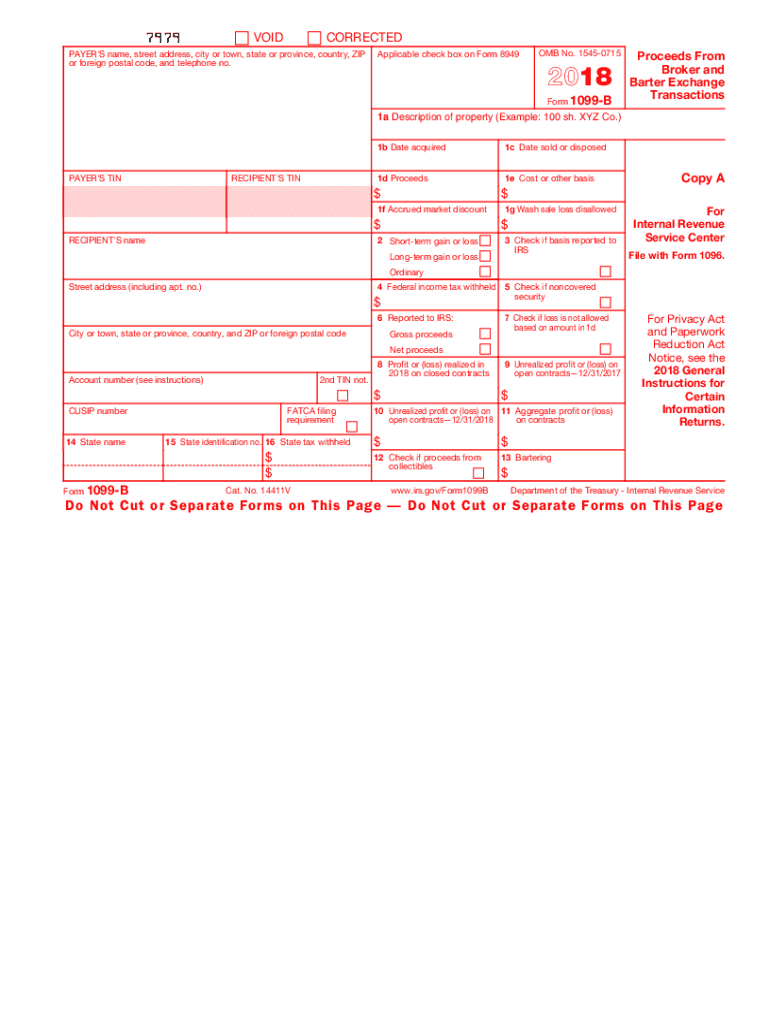
Form 1099-B is used by brokers and barter exchanges to report proceeds they handled during the year to the IRS. This form serves a vital role in capturing the details of taxable transactions, ensuring accurate tax reporting for both the filer and the taxpayer. It covers transactions such as stock sales and redemptions of securities. By reporting these transactions, the IRS uses this information to verify that the taxable income reflected on personal tax returns is complete and accurate.
Key Elements of Form 1099-B
Form 1099-B details various transactions that impact a taxpayer's capital gains or losses, which include essential data such as:
- Proceeds from Transactions: Captures total proceeds from sales or exchanges.
- Date of Transaction: Includes both purchase and sale dates important for capital gains calculations.
- Original Cost or Other Basis: This is necessary for determining capital gains or losses.
- Codes and Checkboxes: Indicate types of gains (long-term, short-term, or ordinary income) and specific covered transactions.
- Additional Information: Federal and state tax withholding information, if any, is also provided.
Steps to Complete Form 1099-B
Completing Form 1099-B requires careful attention to detail to ensure accurate reporting. Here are the steps involved:
- Gather Necessary Information: Collect all relevant details such as taxpayer identification numbers, transaction dates, costs, and proceeds.
- Fill Out Transaction Details: Enter each sale or exchange accurately, being mindful of distinguishing between short-term and long-term gains.
- Review Withholding and Adjustments: Verify any federal income tax withheld and any necessary adjustments or codes.
- Check for Accuracy: Ensure all entries are correct and consistent with broker records or transaction reports.
- Submit Copies Electronically or via Mail: Use IRS-approved methods for submission, ensuring the completed copy is also sent to the taxpayer.
Who Typically Uses Form 1099-B
Form 1099-B is predominantly used by:
- Brokers: Required to report transactions conducted on behalf of clients.
- Barter Exchanges: Record the exchange of goods or services that need taxation.
- Taxpayers: Individuals receiving the form as part of their tax documentation, helping to report income from investments correctly.
Filing Deadlines and Important Dates
Timeliness in filing Form 1099-B is crucial:
- Filing Deadline to IRS: Generally due by February 28 if paper filing or March 31 for electronic submissions.
- Delivery to Taxpayers: Must be furnished to taxpayers by February 15, giving ample time for inclusion in their tax returns.
- Extensions: Possible extensions for filing may be allowable under specific conditions, requiring form submission to request more time.
IRS Guidelines for Form 1099-B
The IRS offers clear guidance for Form 1099-B to ensure proper compliance:
- Accuracy: Emphasizes the need for precise reporting of all transaction elements to avoid discrepancies.
- Electronic Filing Requirements: Mandatory for firms issuing more than 250 forms, ensuring scalable reporting.
- Filing Correction Procedures: Instructions for correcting mistakes if errors are detected post-submission.
Important Terms Related to Form 1099-B
Understanding specific terms is vital for both filers and recipients:
- Proceeds: The gross amount received from transactions.
- Cost Basis: The original value of the security, adjusted for fees, dividends, and other criteria.
- Capital Gains: Profit from the sale that exceeds the cost basis, subject to taxation.
- Short-Term and Long-Term Holdings: Distinguish gains based on the holding period impacting tax treatment.
Penalties for Non-Compliance
Not adhering to Form 1099-B requirements can result in penalties:
- Failure to File or Furnish: Penalties are based on the size and timing of the errors.
- Inaccuracy Penalties: Misreporting due to negligence or willful deficiency invites punitive measures.
- Intentional Disregard: Refusal to file can lead to substantial fines, heightening the need for diligence.
Software Compatibility with Form 1099-B
To streamline the filing process, numerous accounting and tax software vendors offer support:
- TurboTax and QuickBooks: Provide functionality for inputting data from Form 1099-B, calculating tax implications of sales.
- Integration with DocHub: Enhances document management and collaboration related to Form 1099-B, allowing users to handle electronic forms effectively within the same environment.
State-Specific Rules for Form 1099-B
While Form 1099-B is federal, state rules can influence reporting:
- State Withholding: Some states may require additional information on withholdings.
- Taxation of Gains: Variabilities in how different states treat capital gains affect bottom-line tax accounts.
- State Filing Requirements: Consult specific state rules as they may entail separate filings or additional documentation.