







Understanding the Commitment Form Template
A commitment form template is a structured document designed to capture essential agreements and obligations between parties. This template serves as a vital tool for various contexts, including sponsorships, project agreements, and stakeholder commitments. It establishes a clear understanding of responsibilities, expectations, and terms.
Key Components of a Commitment Form Template
A well-crafted commitment form template typically includes several fundamental elements:
-
Participant Information: This section captures the full names, addresses, and contact details of all parties involved. Including this information ensures clarity about who is committing to what.
-
Commitment Details: Specific commitments should be clearly outlined. This could include the nature of the sponsorship, amount of funding, services provided, or other obligations as relevant to the agreement.
-
Terms and Conditions: Including a comprehensive list of terms is crucial for ensuring all parties understand their rights and responsibilities. This can cover payment timelines, conditions for fulfillment, and any penalties for non-compliance.
-
Signature Lines: Signature lines must be included for all parties involved, providing tangible evidence of agreement and acknowledgment. Digital signatures are becoming increasingly common and can be integrated with platforms like DocHub for ease of use.
Examples of Commitment Form Templates
Commitment forms can vary depending on their intended use. Here are a few examples:
-
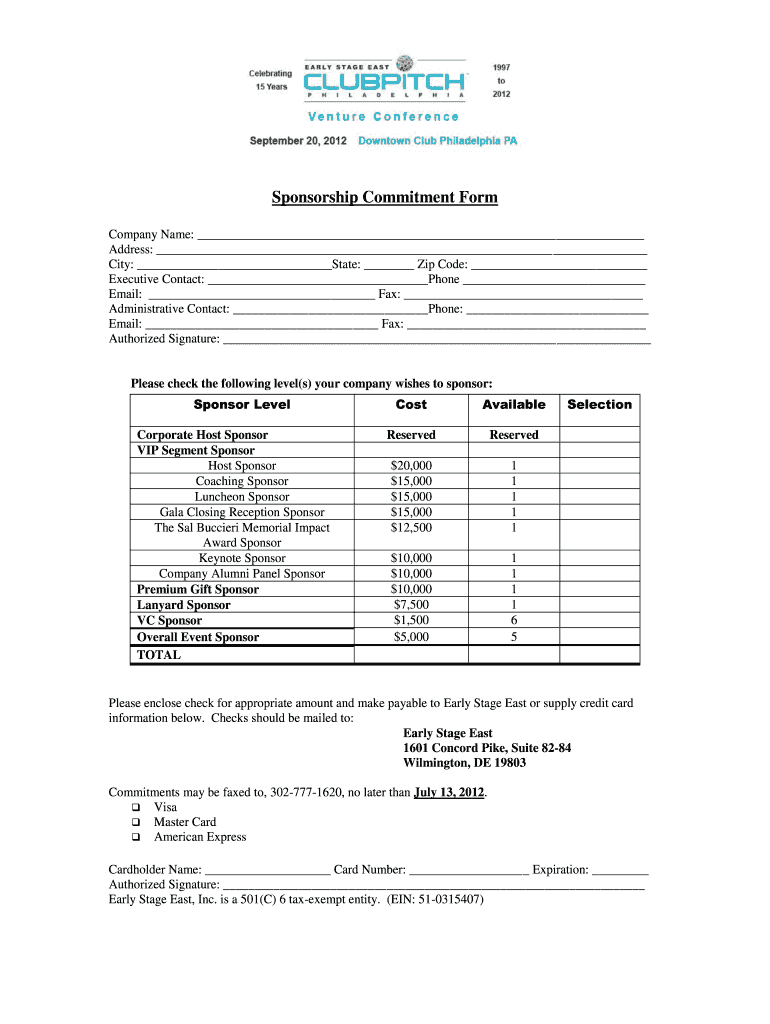
Sponsorship Commitment Form: This form may detail various sponsorship levels, associated costs, and exhibitor guidelines. It's essential for events where businesses commit to supporting activities in exchange for promotion and visibility.
-
Project Commitment Form: Used by teams to outline the obligations of each member within a project, this form will typically include timelines, deliverables, and shared responsibilities.
-
Commitment Form to Stakeholders: This type outlines commitments made by organizations to stakeholders, focusing on transparency and accountability, especially in public sectors or non-profit organizations.
Best Practices When Using a Commitment Form Template
To maximize the effectiveness of a commitment form template, consider the following best practices:
-
Clear Language: Use straightforward and unambiguous language to avoid misunderstandings. Legal jargon can complicate comprehension and lead to disputes.
-
Customization: Tailor the template to suit the particular needs of your agreement. Adding specific details relative to your project's scope or sponsorship will provide clarity.
-
Review and Revise: Before finalizing, have the document reviewed by all parties involved to ensure accuracy and consensus on the terms outlined.
Compliance with Legal Standards
A commitment form template must adhere to legal standards applicable in the United States. This includes:
-
Adherence to Contract Law: Ensure the commitments made are legally enforceable by including required legal elements such as offer, acceptance, and consideration.
-
Proper Formatting: Follow any specific regulatory or industry standards that may apply, particularly in fields related to finance or healthcare.
-
Retention of Records: Maintain copies of signed commitment forms as legal records. This practice is vital for accountability and may be necessary in the event of disputes.
Practical Scenarios for Using a Commitment Form Template
The application of a commitment form template can be illustrated through various scenarios:
-
Event Sponsorship: When a company decides to support an event, they can use a commitment form template to formalize their sponsorship level and associated contributions, ensuring both parties have clear expectations.
-
Collaborative Projects: In research collaborations, a commitment form can establish the roles and deliverables expected from each researcher or partnering institution, promoting accountability.
-
Vendor Agreements: For businesses engaging with vendors for goods or services, commitment forms can cement the terms of supply, payment schedules, and quality expectations, thereby streamlining procurement processes.
Common Challenges in Commitment Form Processes
When utilizing commitment forms, several challenges may arise:
-
Misinterpretation of Terms: If terms are not clearly defined, parties may interpret their commitments differently, leading to conflict.
-
Inadequate Representation: Sometimes forms may not adequately represent all necessary obligations, necessitating revisions and redrafting.
-
Document Management: With the increasing digitalization of forms, managing electronically signed commitment forms can be complex without proper systems in place.
Conclusion
A commitment form template serves as a crucial tool for establishing agreements and clarifying expectations among parties. By incorporating essential elements, adhering to best practices, and being aware of potential challenges, individuals and organizations can effectively utilize these forms to enhance their operational efficiency and legal compliance.




