




01. Edit your form online
Type text, add images, blackout confidential details, add comments, highlights and more.

Type text, add images, blackout confidential details, add comments, highlights and more.

Draw your signature, type it, upload its image, or use your mobile device as a signature pad.

Send it via email, link, or fax. You can also download it, export it or print it out.
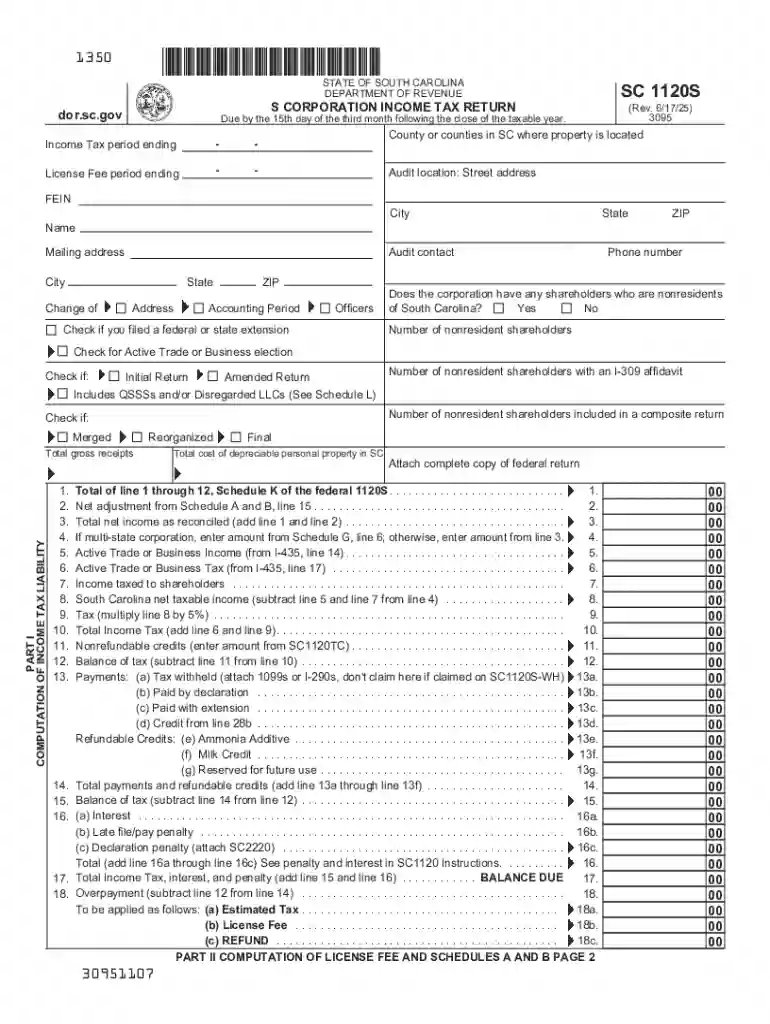
The SC 1120S form is a pivotal tax document utilized by corporations in South Carolina to report their income to the Department of Revenue. It is specifically used by S corporations, which are entities that elect to pass corporate income, losses, deductions, and credits through to their shareholders for federal tax purposes. By filing the SC 1120S, these businesses maintain compliance with state tax obligations and ensure accurate reporting of their financial activities.
Using the SC 1120S requires understanding its various sections and what specific information needs to be reported. Typically, this involves detailing the corporation's income, deductions, credits, and other relevant financial data. The form is structured to capture both the current financial standing of the business and any adjustments from previous periods. Businesses often use software tools to complete the form, ensuring accuracy and facilitating electronic submission to streamline the process.
Using the SC 1120S ensures that corporations comply with state requirements, avoiding penalties. Additionally, it facilitates accurate financial reporting and contributes to transparent shareholder communication about financial performance. Proper completion of this form is critical for strategic financial planning, tax planning, and securing a business's financial future by adhering to legal obligations.
The SC 1120S form is primarily used by S corporations operating within South Carolina. These entities include small to medium-sized businesses that wish to benefit from pass-through taxation. Shareholders of these corporations are directly affected, as the form details their respective shares of income, which impacts their individual tax returns.


Corporations must be mindful of key filing deadlines to avoid penalties. The SC 1120S is generally due on the 15th day of the third month after the end of the corporation’s fiscal year, commonly March 15th for calendar-year corporations. Extensions for filing can be requested, but any taxes owed must still be paid by the original deadline to avoid interest charges.
Failure to timely and accurately file the SC 1120S can result in significant penalties. These might include monetary fines based on the number of shareholders and duration of the delay. Additionally, interest may accrue on any unpaid taxes. Ensuring compliance through timely filing is crucial for maintaining the corporation’s good standing.
S corporations must provide extensive disclosure on the SC 1120S regarding their income sources, deductions, and shareholder information. These disclosures are critical for transparency and ensuring accurate taxation. Inadequate disclosure can lead to audits and further scrutiny from the Department of Revenue, emphasizing the importance of meticulous documentation.
We've got more versions of the Sc 1120s 's' - the South Carolina Department of Revenue form. Select the right Sc 1120s 's' - the South Carolina Department of Revenue version from the list and start editing it straight away!
| Versions | Form popularity | Fillable & printable |
|---|---|---|
| 2025 | 4.8 Satisfied (24 Votes) | |
| 2024 | 4.9 Satisfied (36 Votes) | |
| 2023 | 4.3 Satisfied (59 Votes) | |
| 2022 | 4.6 Satisfied (22 Votes) | |
| 2021 | 4.8 Satisfied (57 Votes) | |
| 2020 | 4.3 Satisfied (83 Votes) | |
| 2019 | 4.4 Satisfied (73 Votes) | |
| 2018 | 4 Satisfied (40 Votes) | |
| 2017 | 4.3 Satisfied (144 Votes) | |
| 2016 | 4.3 Satisfied (96 Votes) | |
| 2015 | 4 Satisfied (32 Votes) | |
| 2014 | 4 Satisfied (57 Votes) | |
| 2010 | 4.2 Satisfied (67 Votes) | |
| 2008 | 4.6 Satisfied (59 Votes) | |
| 2007 | 4 Satisfied (43 Votes) |
At DocHub, your data security is our priority. We follow HIPAA, SOC2, GDPR, and other standards, so you can work on your documents with confidence.




Sep 3, 2008 nNEW CORPORATE ELECTRONIC FILING Taxpayers can file their South Carolina 1120/1120S (along with their federal corporate returns) electronically
List each Qualified Subchapter S Subsidiary (QSSS) doing business in South Carolina or registered with the SCSOS. List each disregarded Limited LiabilityRead more
Registrants telephone number, including area code (610) 535-5000. Securities registered pursuant to Section 12(b) of the Act: Title of Each Class.Read more


