






Definition & Meaning
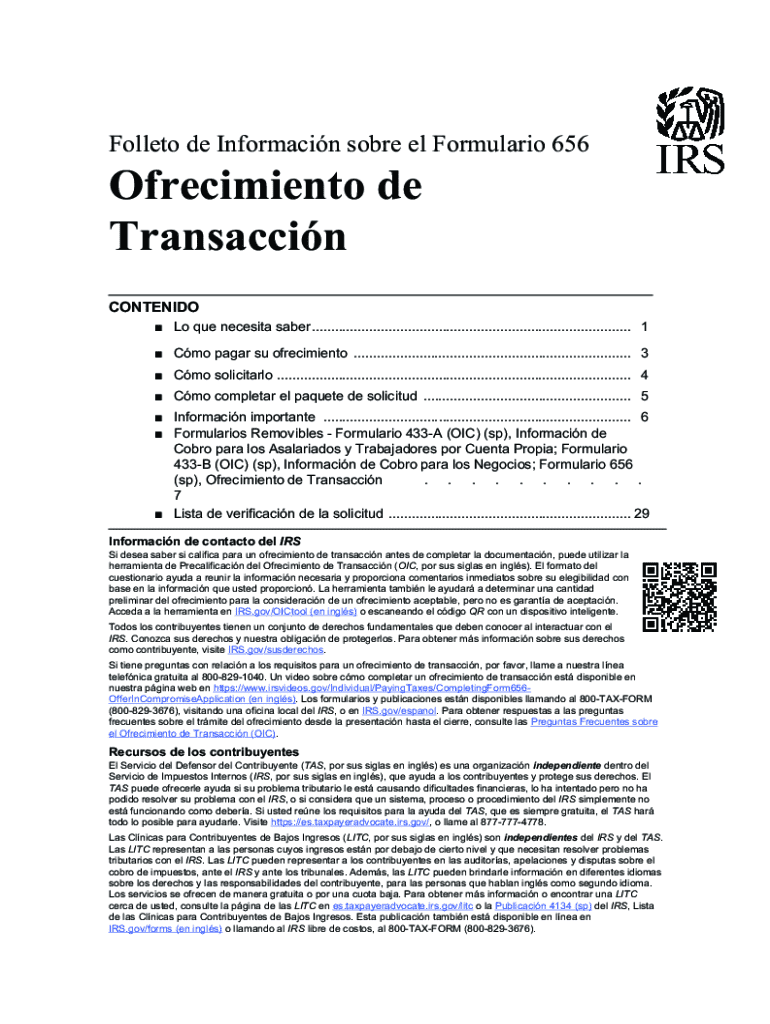
The "Folleto de Información sobre el Formulario 656" is an informational guide provided by the IRS, explaining the Offer in Compromise (OIC) process. This form is primarily used to propose a settlement to the IRS for a tax debt that is less than the full amount owed. The guide helps taxpayers understand eligibility criteria, how to submit an acceptable offer, and the implications of an approved offer.
Understanding Offer in Compromise (OIC)
- Eligibility: Taxpayers must demonstrate financial inability to pay the full tax debt.
- Criteria: Evaluation is based on income, expenses, asset equity, and overall financial situation.
- Outcome: Approval results in reduced tax liability, offering financial relief.
Steps to Complete the Folleto de Información sobre el Formulario 656
Gathering Necessary Information
- Financial Disclosure: Collect comprehensive financial documentation, including income, expenses, and assets.
- IRS Forms: Complete Form 433-A (OIC) for individuals or Form 433-B (OIC) for businesses.
- Supporting Documents: Compile bank statements, pay stubs, and other verification documents.
Completing the Offer in Compromise
- Filling the Form: Use the folio as a step-by-step guide to complete Form 656 accurately.
- Payment Process: Submit a non-refundable $205 application fee, unless exempt due to low income.
Eligibility Criteria


Financial Assessment
- Income Limitations: Potential acceptance hinges on the inability to meet tax obligations fully.
- Asset Valuation: A fair assessment of assets ensures an honest offer.
Offer Evaluation
- Realistic Proposal: The offer must reflect what the IRS can reasonably expect to collect.
- Future Income: Consideration of future earning potential and associated taxes.
Important Terms Related to Folleto de Información sobre el Formulario 656
Key Definitions
- Doubt as to Collectibility: Refers to situations where the taxpayer's assets and income are insufficient to pay the full tax liability.
- Effective Tax Administration: Personal circumstances that warrant a concession for fair tax administration purposes, despite ability to pay.
Potential Misunderstandings
- Application Misfiling: Correctly identify reasons for proposing an offer, to avoid errors in submission.
- Non-Refundability: Understand the non-refundable nature of upfront payments and fees.
IRS Guidelines
Compliance and Instructions
- Adherence: Detailed instructions on correctly filling out and submitting forms to avoid delays.
- Review Process: Expect an extensive IRS review, which may include requests for additional information.
Appeal Rights
- Rejection Protocol: A guide to understanding when and how to appeal a rejected offer.
Filing Deadlines / Important Dates
Timing Elements
- Submission Deadline: Offers can be submitted at any time when financial hardship is demonstrated.
- Response Expectation: Typically, a response from the IRS may take six to nine months.
Required Documents
Comprehensive Submission Package
- Financial Documentation: Include proof of income, expenses, and any relevant financial data.
- Identification Verification: Ensure all personal identification documentation is current.
Specific Case Considerations
- Unique Financial Situations: Tailor the documentation to reflect individual financial hardships convincingly.
Penalties for Non-Compliance
Consequences of Incorrect Submission
- Sanctions: Misrepresentation or failure to comply can result in offer rejection and continued interest accrual.
- Renewed Debt Pursuit: The IRS retains the right to revisit full debt collection if offers are made in bad faith.
Form Submission Methods
Options for Delivering the Offer
- Mail Submission: Send all documents via certified mail to ensure tracking and receipt.
- Digital Submission: Discuss the future potential of electronic submissions to simplify the process.
How to Use the Folleto de Información sobre el Formulario 656
Practical Application
- Guidance Utilization: Step-by-step explanation of relevant sections, ensuring readers fully leverage the form's elements.
- Clarification: Address common confusions, providing definitive answers based on IRS guidelines.
Business Entity Types that Benefit Most
Applicable Business Structures
-
LLC and Partnerships: Often suitable for businesses with fluctuating incomes or temporary financial distress.
-
Sole Proprietorships: Particularly beneficial for self-employed individuals with unpredictable earnings.
-
Detailed exploration of each business type ensures tailored advice for unique financial situations.
Through the comprehensive exploration of the "Folleto de Información sobre el Formulario 656," taxpayers are empowered with the knowledge to address and settle tax liabilities efficiently. Whether an individual or a business entity, understanding the intricacies of this process is vital for achieving a favorable outcome with the IRS.