






Definition & Meaning
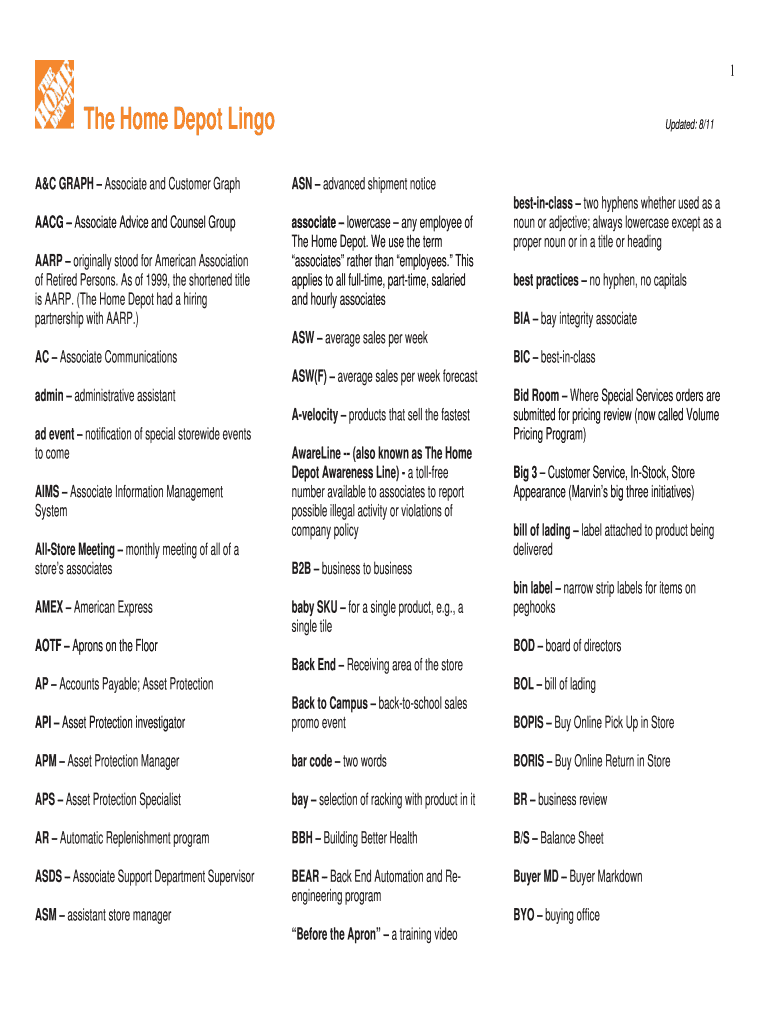
The term "The Home Depot Lingo" refers to the specific terminology and jargon used within The Home Depot, a major home improvement retailer in the United States. This vernacular encompasses the language used by employees and management to communicate effectively regarding procedures, products, and internal processes. "The Home Depot Lingo" could include abbreviations and phrases specific to the company's operations and culture.
How to Use The Home Depot Lingo
Understanding and using "The Home Depot Lingo" is crucial for effective communication within the store environment. Employees, both new and seasoned, utilize this lingo to coordinate tasks, help customers, and streamline operations. Familiarity with key terms can increase efficiency and ensure all staff members are aligned in their work. Commonly used terms might include phrases for inventory management, customer service protocols, and safety procedures.
- Inventory Terms: Employees might refer to product availability using terms like "in-stock" or "special order."
- Customer Service Phrases: Phrases such as "end cap" (merchandise display at the end of an aisle) help direct customers efficiently.
- Operational Shortcuts: Understanding terms like "SKU" (stock keeping unit) aids in product identification and management.
Important Terms Related to The Home Depot Lingo
Several terms are integral to navigating "The Home Depot Lingo." These words and abbreviations form the foundation of day-to-day operations and communication within the store. Familiarity with these can facilitate smoother interactions among employees and with customers.
- A&C GRAPH: Associate and Customer Graph, used for visualizing associate tasks and customer interactions.
- ASN: Advanced Shipment Notice, a notification regarding incoming shipments.
- DS-11: A shorthand reference possibly linked to a specific procedure or form within The Home Depot context.
Key Elements of The Home Depot Lingo
Key elements of "The Home Depot Lingo" include vocabulary that pertains specifically to store operations, employee roles, and customer service. These components serve as the building blocks for efficient communication within various teams and departments.
- Associate Roles: Understanding the hierarchy and roles within the store structure is essential.
- Product Handling and Merchandising: Terms related to stock and display arrangements are commonly used.
- Customer Interaction Protocols: Specific phrases guide customer service excellence.
Examples of Using The Home Depot Lingo
In practice, employees use "The Home Depot Lingo" to enhance service and operational effectiveness. Here are some real-world scenarios illustrating its application:
- Stocking Shelves: An employee might say, "The ASN should be here by tomorrow morning," conveying that an expected shipment will arrive soon.
- Customer Assistance: Another example could include, "Let's meet at the end cap for that item," directing a colleague or customer to a specific location.
Legally Permissible Uses
Using "The Home Depot Lingo" must align with legal and ethical standards. Employees are trained to ensure that their language complies with company policies and broader legal guidelines.
- Confidential Information: Certain terms should be used cautiously to avoid disclosing sensitive business information.
- Compliance with Regulations: Employees are trained to understand how industry regulations may influence communication practices.
Who Typically Uses The Home Depot Lingo
"The Home Depot Lingo" is primarily used by employees across various roles, including associates, managers, and administrative staff. It ensures uniformity in communication across the entire organization, accommodating everyone from new hires to seasoned professionals.
- Store Associates: Frontline employees directly interacting with customers.
- Managers: Overseeing store operations and coordinating between departments.
- Support Staff: Engaged in back-end processes involving logistics and administration.