




01. Edit your intake assessment form online
Type text, add images, blackout confidential details, add comments, highlights and more.

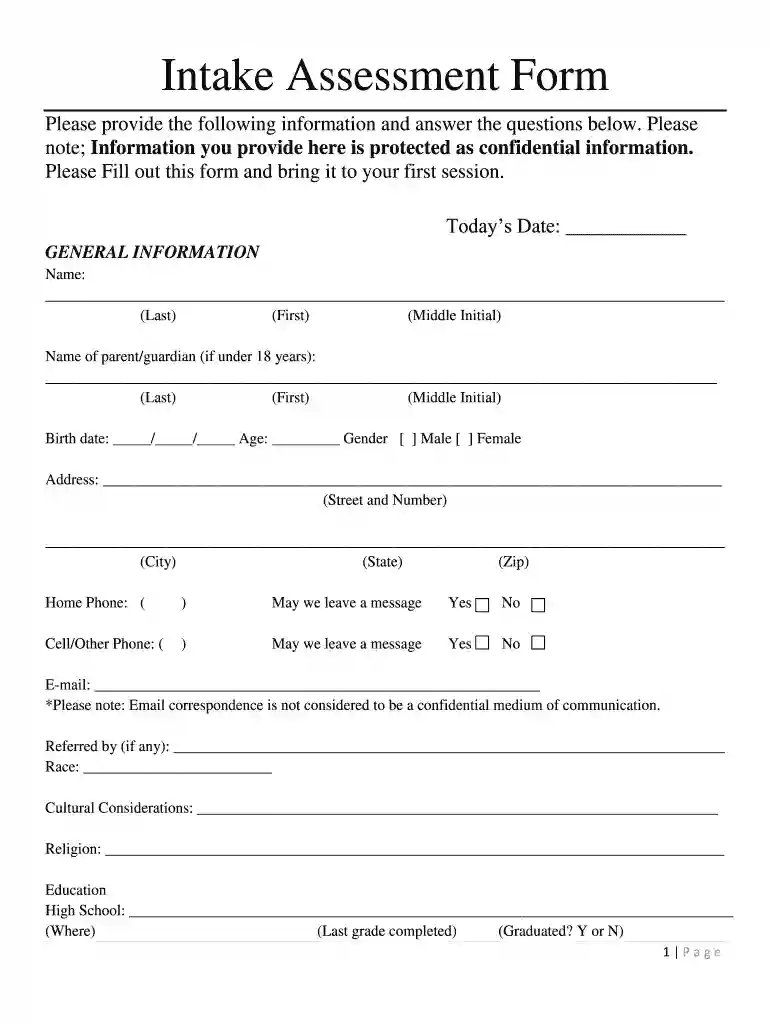
Type text, add images, blackout confidential details, add comments, highlights and more.

Draw your signature, type it, upload its image, or use your mobile device as a signature pad.

Send therapy intake assessment example via email, link, or fax. You can also download it, export it or print it out.
The intake assessment form is a vital document utilized by mental health professionals, healthcare providers, social workers, and various organizations to gather essential information from individuals before initiating services. This form serves several crucial purposes:
Comprehensive Data Collection: It captures a wide range of information, including personal details, health history, social and economic backgrounds, and mental health status. This helps service providers understand the individual’s needs and history.
Facilitating the Therapeutic Process: By collecting relevant data upfront, the intake assessment form aids in tailoring services to meet the unique needs of each client. It sets the foundation for an effective therapeutic relationship and allows professionals to create personalized treatment plans.
Ensuring Informed Consent: The intake assessment process often includes information regarding confidentiality, service options, and the treatment process, thereby ensuring clients understand their rights and responsibilities.
An effective intake assessment form typically contains several key elements to optimize data collection and enhance client-provider interactions:
Personal Information: This section includes the client's name, date of birth, contact information, and demographic details such as gender and ethnicity.
Health History: This portion gathers information on past and present medical conditions, mental health diagnoses, and any treatments the client has previously received, which is critical for understanding their current situation.
Substance Use History: A section dedicated to drug and alcohol use helps identify potential addiction issues that may affect treatment.
Family and Social History: Information about family dynamics, living situations, and social support can impact the therapeutic process and outcomes.
Strengths and Weaknesses: Clients can identify personal strengths and areas for improvement, which can be used to encourage therapeutic outcomes and set goals.
Confidentiality Statement: An outline of how the collected information will be used, ensuring clients' privacy and fostering trust.
Completing the intake assessment form can be a straightforward process when following these steps:
Gather Necessary Information: Clients should prepare by collecting personal documents, medical records, and any relevant history related to their mental health or physical health.
Fill Out Personal Information Sections: Start by accurately completing personal demographic details, which are foundational for the form.
Complete Health and Background Questions: Respond to each question honestly to provide health professionals with a comprehensive understanding of your history.
Reflect on Strengths and Areas for Improvement: Clients should thoughtfully assess their personal strengths and weaknesses, which may be supportive during therapeutic discussions.
Review and Sign: Before submitting the form, clients should carefully review all information for accuracy and completeness, then sign the document to indicate informed consent.
The intake assessment form plays a critical role in providing effective and personalized care. Here are critical reasons for its importance:
Foundation for Therapeutic Relationships: This initial document helps establish rapport between the client and the provider, fostering a trusting environment where clients feel comfortable sharing sensitive information.
Guide for Treatment Planning: The information gathered aids professionals in identifying appropriate treatment approaches and resources while considering the client’s specific needs and circumstances.
Compliance and Documentation: For organizations, maintaining thorough documentation through intake forms is often a legal requirement and a standard best practice in healthcare.
Various scenarios illustrate how the intake assessment form is utilized:
Mental Health Counseling: A therapist may use the intake form to evaluate a client's previous therapy experiences and current mental health concerns to create a customized treatment plan.
Healthcare Services: In a medical setting, a primary care physician may rely on the form to obtain relevant medical history and any medications the client is currently taking, ensuring safe treatment.
Social Services: Social workers employ intake forms to assess clients’ needs holistically, addressing both immediate issues and long-term goals while planning interventions.
When using an intake assessment form, certain legal aspects must be respected:
Confidentiality: All personal information obtained through the form is protected under confidentiality laws, including regulations outlined by the Health Insurance Portability and Accountability Act (HIPAA) in the U.S.
Informed Consent: Clients must provide informed consent for their information to be collected and used. This ensures they understand what information will be documented and how it may influence the services provided.
Record Keeping: Organizations must retain intake forms according to legal guidelines, including maintaining accurate records for potential audits or legal inquiries.
The intake assessment form is adaptable and may take various forms depending on specific fields or populations served:
Telehealth Evaluation Form: Used in virtual settings, this variant facilitates information sharing over digital platforms without physical paperwork.
Client Intake Form for Substance Abuse Treatment: This specialized version gathers more focused information regarding addiction history, cravings, and past treatment efforts to better address substance use issues.
Social Work Specific Intake Forms: These may include sections that focus more on social dynamics and community resources, adapting the standard assessment to fit the unique challenges faced by social service clients.
The intake assessment form is an essential tool in various professional settings, allowing for comprehensive data collection that informs the services offered and enhances the caring relationship between providers and clients. Its various components, legal implications, and adaptations illustrate its importance in facilitating effective and personalized care for diverse populations.
At DocHub, your data security is our priority. We follow HIPAA, SOC2, GDPR, and other standards, so you can work on your documents with confidence.
Dietary intake modeling typical for ecological risk assessments is the recommended approach for an evaluation of potential risks to wildlife species where
Intake Assessment Forms. The forms on this page are printable. For fillable forms that can be filled out on the computer, check the Fillable Forms page. IntakeRead more


