






Definition & Meaning
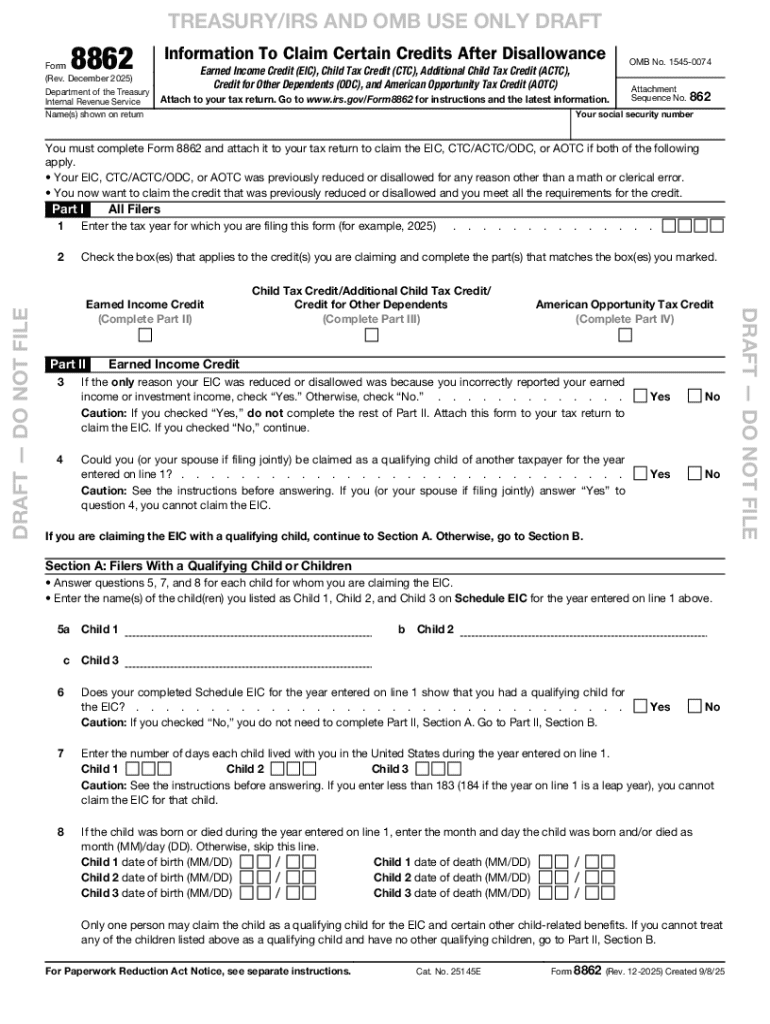
Form 8862, known as the "Information To Claim Certain Refundable Credits After Disallowance," is a document used by taxpayers to reclaim eligibility for refundable tax credits previously denied. Specifically, this form pertains to credits like the Earned Income Tax Credit (EITC), Child Tax Credit (CTC), Additional Child Tax Credit (ACTC), Credit for Other Dependents, and American Opportunity Credit (AOTC). When a credit is disallowed, completing the Form 8862 is a way for taxpayers to demonstrate that they now meet the eligibility requirements for the specified credits.
How to Obtain the Form 8862 (Rev December 2025)
To access Form 8862 (Rev December 2025), the IRS website offers a downloadable PDF version, which can be printed and filled manually. Taxpayers can also utilize tax preparation software compatible with IRS forms, allowing them to complete the form electronically. Additionally, physical copies may be available at local IRS offices and public libraries offering government forms.
Steps to Complete the Form 8862 (Rev December 2025)
-
Taxpayer Information: Provide your full name, Social Security Number (SSN), and any relevant identification numbers.
-
Disallowed Credit Details: Indicate the tax year in which the credit was disallowed, ensuring to specify the specific credit type that was denied.
-
Credit Eligibility Verification: Provide documentation indicating that the conditions causing the previous disallowance no longer exist. This might include proofs of income changes, dependent status documentation, or revised tax returns.
-
Submission of Completed Form: Attach the completed Form 8862 to your current tax return. Submission can be done electronically if filing online, or mailed with a paper return to the appropriate IRS office.
-
Retain Copies: Keep a copy for personal records, as further checks may require the data provided.
Eligibility Criteria
The eligibility to use Form 8862 applies to individuals who have had one of the specified refundable credits disallowed in an earlier tax year, generally due to errors, misrepresentations, or insufficient documentation. Eligibility reclaims depend on rectifying previous issues and meeting existing IRS credit requirements. For example, earning qualifications for the EITC must fall within prescribed income thresholds, while maintenance of enrolled dependent records is verified for education credits.


Key Elements of the Form 8862 (Rev December 2025)
-
Personal Data Section: This includes taxpayer and dependents' identification details.
-
Credit Disallowance History: Exhibits past disallowed credits, stating adjustments to comply with IRS standards.
-
Current Eligibility Claims: It's crucial to state reasons and documentation that now qualify the taxpayer for credits once disallowed.
-
Signature Box: Provides formal acknowledgment and truthfulness of the contents by the taxpayer.
IRS Guidelines
The IRS maintains specific instructions for completing Form 8862, including detailed criteria for form requirements, explanations of valid documentation, and instructions for electronic and paper submissions. Adherence to IRS instructions ensures that reclaims of disallowed credits are processed without delay or denial. It's pivotal to review the IRS publication relevant to the disallowed credit for precise details.
Filing Deadlines / Important Dates
Form 8862 must be filed with the tax return for the year in which you are reclaiming the credit. Taxpayers usually file by April 15, the annual tax deadline, unless an extension is granted. If filing late, ensure penalties do not apply by confirming eligibility and extension rules. Keeping abreast of IRS announcements can provide notification of any changes to filing dates.
Penalties for Non-Compliance
Failure to correctly complete Form 8862, provide truthful information, or file without corrective measures involves risks. Underreporting can lead to penalties, denial of future claims, and interests accruement on owed taxes. Taxpayers demonstrating negligent patterns may face harsher fines and a longer period of disallowance. Engaging a tax professional ensures compliance with IRS norms and prevents repeat errors.
Taxpayer Scenarios
Different scenarios necessitate Form 8862 usage, including:
-
Simple Error Corrections: Direct discrepancies in earlier filings that lead to credit disallowance.
-
Income Changes: When income fell out of original qualifying ranges but now meets stipulations.
-
Status Updates: Primarily for dependents or marital status changes affecting credit eligibility.
Other real-world cases may include life events like moving to a new state or altering employment status impacting tax credits.
Fulfilling the requirement to submit Form 8862 ensures taxpayers realign with IRS standards, facilitating the reclamation of disallowed credits. Emphasis on accurate reporting and understanding stipulated guidelines minimizes audit risks and maximizes successful reclaim outcomes.