




01. Edit your form online
Type text, add images, blackout confidential details, add comments, highlights and more.

Type text, add images, blackout confidential details, add comments, highlights and more.

Draw your signature, type it, upload its image, or use your mobile device as a signature pad.

Send it via email, link, or fax. You can also download it, export it or print it out.
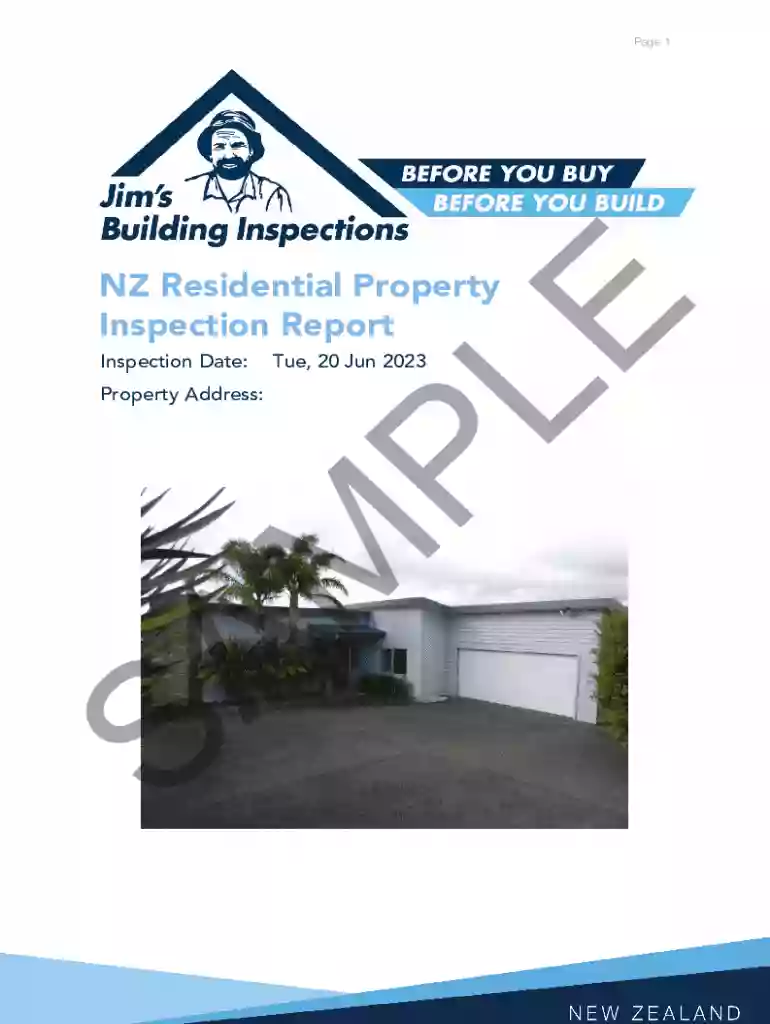
The NZ Residential Property Inspection Report by Jim's Building Inspections is an essential document in real estate transactions. It provides a detailed assessment of a property's condition, pointing out both existing and potential issues. This report helps buyers, sellers, and property managers make informed decisions regarding properties in New Zealand. By systematically examining the structural integrity and functional components of a home, the report ensures transparency in property dealings.
Understanding the terminologies used in the report is crucial. Terms related to construction, legal compliance, and safety standards can impact the interpretation of the findings. Familiarity with these terms ensures that stakeholders accurately grasp the implications of the report's findings.
The inspection report is composed of several key elements designed to offer a comprehensive view of the property's condition.
A critical part of the report is the detailed documentation of any defects. This section not only lists observed issues like gutter problems or non-operational appliances but also provides photographs and explanations to guide necessary corrective actions.
Various stakeholders utilize this report for different purposes.


Prospective homeowners rely on this report to understand the true condition of the property before finalizing their purchase. It empowers them to negotiate better terms or request repairs prior to closing.
Sellers and agents use the report to prepare properties for sale, ensuring any visible or potential problems are addressed, enhancing the property's marketability.
Property managers and investors leverage these reports for ongoing maintenance and investment planning to preserve and enhance asset value.
Utilizing this report effectively involves several steps.
Carefully review each section to identify areas of concern. Pay attention to both minor defects and major structural issues that might require immediate attention.
Use the report's recommendations to plan and budget for necessary repairs or preventative maintenance. Engaging professional contractors to address the highlighted issues is advisable.
The information within the report serves as a foundation for making informed decisions about property acquisition, renovations, or sales.
Acquiring the inspection report requires a straightforward process.
Ensure that all areas of the property are accessible and that any specific concerns are communicated to the inspector in advance.
Completing and interpreting the report with professional assistance ensures its effectiveness.
The inspection report serves various legal purposes, including ensuring compliance with local building regulations.
The report can act as formal documentation that a property complies with health and safety standards or highlights areas where it falls short.
In transactions, the report may be used as evidence to validate the property's worth or dictate necessary disclosures, influencing legal agreements.
Familiarity with certain terms is crucial for interpreting the report effectively.
At DocHub, your data security is our priority. We follow HIPAA, SOC2, GDPR, and other standards, so you can work on your documents with confidence.

The New Zealand Building Code aims to integrate automated compliance audits utilizing open standards like LegalDocML and LegalRuleML. Critical
Reports of inspections are retained for 2 years if no irregularities are Any report of inspection showing irregularity must be forwarded to NA
Oct 23, 2025 Floody is the preparer of the inspection by Alpha Home . 318. Commercial Building Inspection. This was part of the home inspection report.


