



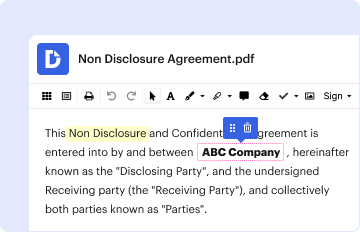
01. Edit your beneficial ownership declaration format in word online
Type text, add images, blackout confidential details, add comments, highlights and more.

Type text, add images, blackout confidential details, add comments, highlights and more.
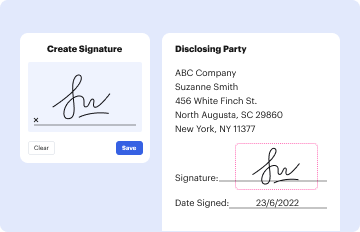
Draw your signature, type it, upload its image, or use your mobile device as a signature pad.

Send beneficial ownership mandate template word via email, link, or fax. You can also download it, export it or print it out.
The beneficial ownership declaration format in Word serves as a formal document that enterprises use to disclose the identity of individuals who exercise significant control over the entity. This declaration is designed to enhance transparency regarding ownership structures and help financial institutions and regulatory bodies in evaluating risks related to money laundering or illicit financial activities. In this context, a beneficial owner is typically defined as a natural person who ultimately owns or controls more than twenty-five percent of the company or exercises significant influence over its management.
This declaration format is essential for ensuring compliance with various legal obligations, including the Bank Secrecy Act and the anti-money laundering regulations, which require entities to identify and verify the beneficial owners of their businesses. Utilizing this format helps maintain trust and integrity in financial transactions by making ownership information accessible to relevant stakeholders.
A beneficial ownership declaration format typically contains several critical components:
These elements collectively ensure the document serves its purpose effectively by providing a clear and accurate account of the ownership structure within the organization.
Following a structured methodology is crucial to ensure that the beneficial ownership declaration is completed accurately. Here’s a breakdown of the steps:
Each of these steps outlines an important aspect of the completion process and ensures that the necessary information is accurately represented in the declaration format.
The legal implications surrounding the beneficial ownership declaration format are significant. By utilizing this document, companies can demonstrate compliance with various regulatory frameworks governing corporate transparency. Such frameworks include:
Failure to utilize this declaration properly can lead to severe legal consequences, including hefty fines and restrictions on business operations. Thus, it plays a pivotal role in ensuring legal compliance and fostering accountability within business practices.
The beneficial ownership declaration format is commonly utilized by:
Understanding the primary users of this format underscores its importance in various sectors, particularly among entities involved in financial transactions and regulatory compliance.


Several essential terms are associated with the beneficial ownership declaration that may provide clarity and context:
Acquainting oneself with these terms facilitates better comprehension of the declarations and their legal and regulatory implications.
Practical examples illustrate how the beneficial ownership declaration works in real-world applications:
These examples highlight the versatility and necessity of the beneficial ownership declaration format in diverse business contexts.
We've got more versions of the beneficial ownership declaration format in word form. Select the right beneficial ownership declaration format in word version from the list and start editing it straight away!
At DocHub, your data security is our priority. We follow HIPAA, SOC2, GDPR, and other standards, so you can work on your documents with confidence.
Entity wholly owned by exempt beneficial owners. Complete Part XVI. Territory financial institution. Complete Part XVII. Excepted nonfinancial group entity.Read more
Nov 9, 2015 Create an administrative reference file of all documents related to the project, such as correspondence, memoranda, transmittals, meetingRead more
Mar 26, 2025 Beneficial ownership information reporting requirements are now back in effect, with a new deadline of March 21, 2025, for most companies.


