




Here's how it works
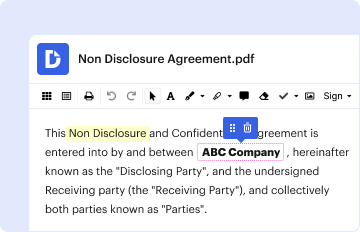
01. Edit your form online
Type text, add images, blackout confidential details, add comments, highlights and more.
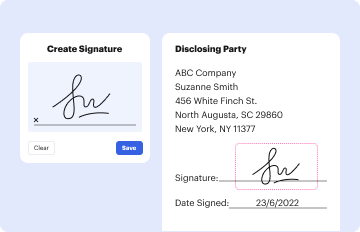
02. Sign it in a few clicks
Draw your signature, type it, upload its image, or use your mobile device as a signature pad.
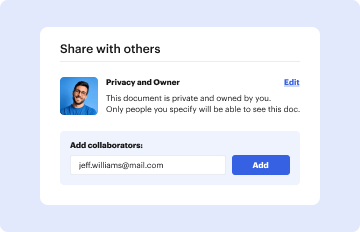
03. Share your form with others
Send it via email, link, or fax. You can also download it, export it or print it out.
How to use or fill out Schedule A US Department of Housing Monthly Report for with our platform

- Click ‘Get Form’ to open the Schedule A document in the editor.
- Begin by entering the Project Number and Month Covered at the top of the form. This sets the context for your report.
- In Section 1, input your Cash On-Hand and in the Bank at the beginning of the month. Ensure accuracy as this is crucial for financial tracking.
- For Section 2, list all amounts received during the month, including tenant rents and subsidies. Be thorough to reflect total receipts accurately.
- In Section 3, detail disbursements made during the month. Include necessary operating expenses and ensure each entry is clear and justified.
- Calculate your Cash On-Hand at the end of the month in Section 4 by adding Line 1 and Line 2, then subtracting Line 3.
- Complete Sections 5 through 10 by providing information on rent potential, accounts receivable, payables, and security deposits as required.
- Finally, certify your report by signing and dating it at the bottom before submitting it through our platform.
Start using our platform today to streamline your Schedule A reporting process for free!
Fill out Schedule A US Department of Housing Monthly Report for online
It's free
It's free
See more Schedule A US Department of Housing Monthly Report for versions
We've got more versions of the Schedule A US Department of Housing Monthly Report for form. Select the right Schedule A US Department of Housing Monthly Report for version from the list and start editing it straight away!
Got questions?
We have answers to the most popular questions from our customers. If you can't find an answer to your question, please contact us.
Contact us
Can I access my HUD account online?
The FHA Connection is a HUD website with direct, secure, online access to HUDs computer systems. The FHA Connection can be used to pay and monitor monthly (periodic) mortgage insurance payments, get pregenerated reports, and request online reports.
What is a monthly statement report?
DEFINITION. A Monthly Report is a comprehensive document prepared periodically, typically every month hence the name, to provide stakeholders with an update on the progress of a Capital Project (construction).
Where can I find my HUD form?
Printed forms can be ordered online through the Direct Distribution System or by telephone at (800) 767-7468. Forms for housing discrimination complaints are available online. For assistance using forms we provide information on program technical guidance below.
Where is my hud statement?
The fully completed HUD-1 Settlement Statement generally must be delivered or mailed to you at or before the settlement. In cases where there is no settlement meeting, the escrow agent will mail you the HUD-1 after settlement, and you have the right to inspect it one day before settlement.
What is the HUD report?
The HUD Reports were a series of studies in mass transit systems, funded by the Urban Mass Transportation Administration (UMTA) department of the United States Department of Housing and Urban Development (HUD).
Security and compliance
At DocHub, your data security is our priority. We follow HIPAA, SOC2, GDPR, and other standards, so you can work on your documents with confidence.
Learn more


People also ask
What are monthly reports for?
Monthly management reports are the financial statements and business performance reports prepared by internal stakeholders or external experts on a monthly basis. Monthly management reports are the reports that review and assess your companys financial and operational performance on a month to month basis.
Where can I find my settlement statement?
The settlement statement can be provided to the homebuyer and seller by the mortgage lender, a settlement agent, a title company or a real estate attorney.
Who provides the hud statement?
The use of the HUD-1 or HUD-1A is also exempted for open-end lines of credit (home-equity plans) covered by the Truth in Lending Act and Regulation Z. A HUD-1 or HUD-1A Settlement Statement is prepared by a creditor or, more typically, by the settlement agent who conducts the closing on the creditors behalf.