






Definition and Meaning
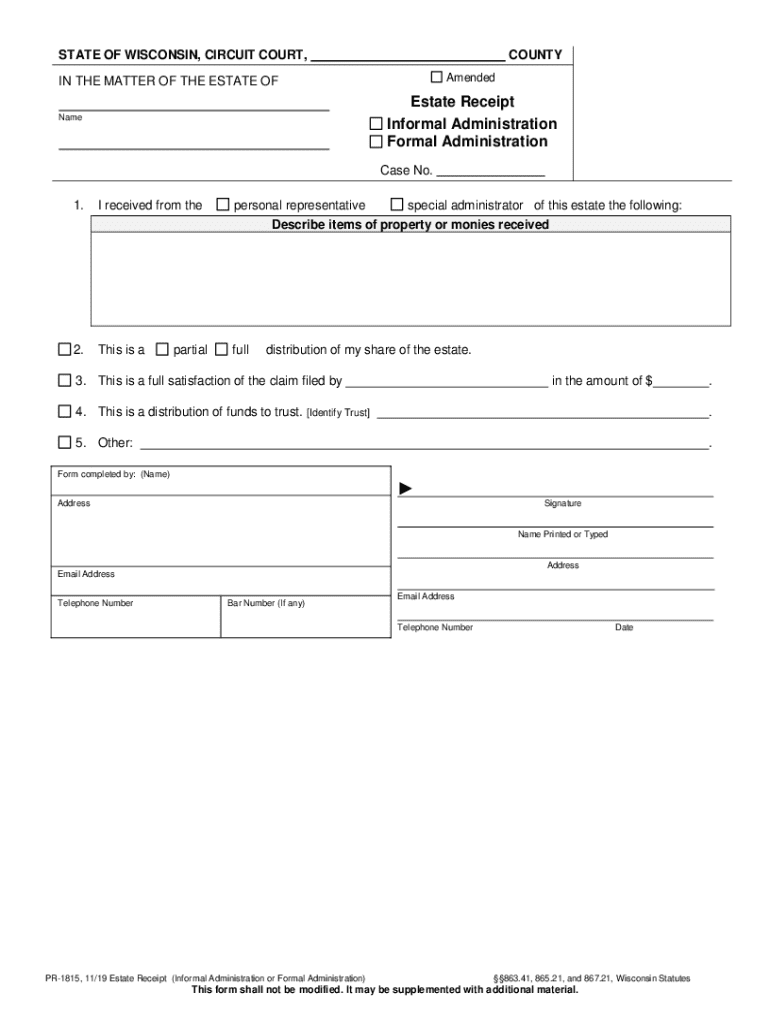
The PR-1815: Estate Receipt (Informal and Formal Administration) is a vital legal document used within the state of Wisconsin to acknowledge the receipt of money or property distributed from an estate. The form serves to formally document the transfer of assets from a personal representative or special administrator to the beneficiary. It indicates whether the receipt is part of a partial or complete distribution and includes sections to address claims against the estate and the distribution of any trust funds associated with it. This form is an essential component in estate administration, ensuring transparency and accountability in the distribution process.
How to Use the PR-1815: Estate Receipt
Using the PR-1815 form involves several steps to ensure accurate documentation and compliance with legal requirements:
-
Identify the Distribution Type: Determine if the distribution is partial or complete. This influences the information that must be reported on the form.
-
Complete Recipient Information: Fill in details about the receiving party, including their name, contact information, and relationship to the estate.
-
Describe the Assets Received: Clearly outline the type and amount of property or money received. Include any specific assets, like real estate, cash, or personal belongings.
-
Acknowledge Conditions: If any conditions or claims are attached to the distribution, these should be documented within the form.
-
Sign and Date: Both the personal representative and the recipient must sign and date the form to finalize the acknowledgment of the receipt.
The completed form becomes part of the estate records and is essential if disputes arise or for proving compliance with estate settlement laws.
How to Obtain the PR-1815 Form
The PR-1815 form can typically be obtained through the following methods:
- State Probate Court: Contact the probate court in Wisconsin to request the official PR-1815 form.
- Online Resources: Visit official state websites that provide downloadable forms related to estate administration.
- Legal Advisors: Consult with an attorney specializing in estate planning or probate law, who can supply and assist in completing the form.
Downloading the form online ensures ease of access and allows for preparation before initiating the distribution process.
Steps to Complete the PR-1815 Form
Completing the PR-1815 form involves several critical steps outlined below:
-
Access the Form: Obtain the form from a reliable source, such as the state court or a legal professional.
-
Read Instructions Carefully: Before filling out the form, read all instructions to comprehend the necessary sections required for completion.
-
Fill in Personal Information: Enter all relevant personal details of the recipient and the personal representative.
-
Describe the Distribution: Provide detailed information about the assets being distributed and clarify whether the distribution is partial or complete.
-
Review Conditions and Claims: Note any conditions or outstanding claims associated with the receipt of the estate.
-
Finalize with Signatures: Ensure all parties involved in the transaction sign the document, confirming agreement and understanding of the receipt details.
Who Typically Uses the PR-1815 Form
The PR-1815 form is commonly used by:
- Personal Representatives: Individuals appointed to oversee the distribution of an estate's assets.
- Estate Beneficiaries: Persons receiving assets or property from an estate settlement.
- Special Administrators: Court-appointed officials who manage the estate's distribution in specific cases.
- Legal Practitioners: Attorneys facilitating estate settlements for their clients.
Understanding who uses this form can help ensure all parties correctly fulfill their roles during estate administration.


Legal Use of the PR-1815 Form
The legal use of the PR-1815 form is fundamental to estate administration in Wisconsin:
- Documenting Asset Distribution: Legally records the distribution of assets, preventing future disputes.
- Ensuring Transparency: Provides a transparent account of assets received and details any conditions.
- Compliance with Probate Law: Ensures all distributions are executed in accordance with Wisconsin state probate laws.
The form's legal standing ensures all parties are protected under the law, with a documented trail of estate distribution activities.
Key Elements of the PR-1815 Form
The PR-1815 form contains several key elements:
- Personal Details: Information on both the recipient and the personal representative.
- Distribution Information: Comprehensive details of the assets or funds distributed.
- Conditions Section: Provisions for disclosure of any conditions or claims.
- Signature Lines: Spaces for required signatures to validate the completed form.
Each element contributes to the legal completeness and functionality of the document in estate management.
State-Specific Rules for the PR-1815 Form
The PR-1815 form is tailored to comply with Wisconsin-specific estate laws:
- Mandatory for Wisconsin Estates: Required for all estate distributions executed under Wisconsin jurisdiction.
- Compliance with State Provisions: Must adhere to Wisconsin probate codes and estate settlement protocols.
- Use in Both Formal and Informal Administration: Applicable for varied administrative procedures within the state.
Understanding state-specific rules ensures the proper application and legal protection when using this document.
Examples of Using the PR-1815 Form
Several scenarios illustrate practical uses of the PR-1815 form:
- Example 1: A personal representative distributing inherited funds to beneficiaries uses the form to confirm and document the transfer.
- Example 2: In the case of multiple property distributions, the form helps keep track of individual recipient allocations.
- Example 3: For estates involving trust distributions, the form ensures all conditions and allocations are duly noted and acknowledged by the recipient.
These examples underscore the form’s utility in various estate administration situations, emphasizing its role in maintaining clear records for legal purposes.