





Definition and Purpose of the EU/EEA Certificate
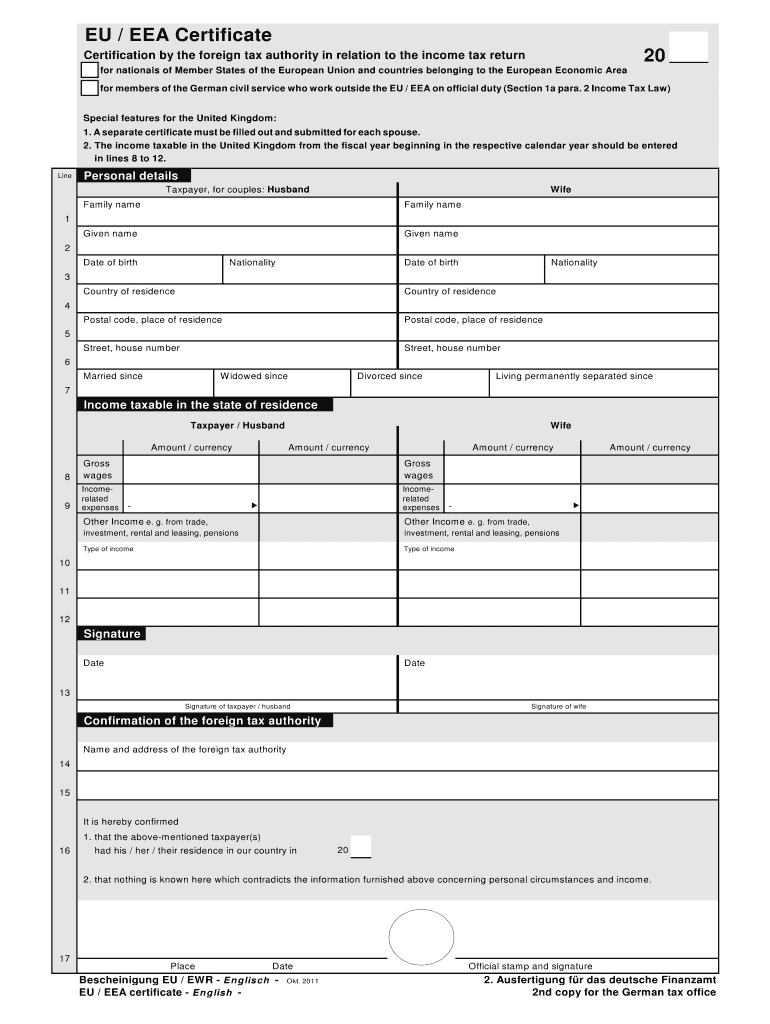
The EU/EEA Certificate is a crucial form used primarily by German civil servants working outside the European Union (EU) or European Economic Area (EEA). This certificate serves to certify income tax returns and confirms vital information such as residency and income details. It is particularly relevant for individuals who need to validate their status and ensure compliance with tax regulations in cross-border working scenarios. The document is verified by the relevant foreign tax authority, establishing the accuracy and authenticity of the supplied information.
Key Elements of the EU/EEA Certificate
- Taxpayer Information: Includes personal details like name, address, and tax identification number.
- Income Details: Specifics about the income earned by the taxpayer, essential for assessing tax obligations.
- Residency Confirmation: Verification of the taxpayer's residency status, which impacts tax liabilities.
- Spouse Information: Additional certificates may be required for spouses, particularly if they reside in a different country like the UK.
Steps to Obtain the EU/EEA Certificate
Obtaining the EU/EEA Certificate involves specific processes, depending on the country where the taxpayer works. Here are the generalized steps typically followed:
- Gather Necessary Documents: Collect all vital documents, including income records, residency proof, and identification.
- Contact Relevant Authorities: Reach out to the local tax office in Germany or the relevant foreign office.
- Complete the Application Form: Fill in all required fields accurately and truthfully on the application form.
- Submit to the Foreign Tax Authority: Send the completed application and documents to the foreign tax authority for verification.
- Receive Confirmation: The authority reviews the submission and returns the certificate, confirming the data provided.
How to Use the EU/EEA Certificate
Effectively using the EU/EEA Certificate involves understanding its application in tax filing and compliance:
- Submission with Tax Returns: Attach the certificate when filing income tax returns to substantiate claims about foreign income and residency.
- Verification During Audits: Use it as legitimate proof during tax audits to confirm reported financial details.
- Support for Tax Treaty Benefits: Present as documentation to claim benefits under international tax treaties that may reduce double taxation.
Legal Use of the EU/EEA Certificate
The use of the EU/EEA Certificate is governed by specific legal frameworks, ensuring tax compliance for individuals moving and working across borders:
- Adherence to International Treaties: The certificate helps taxpayers leverage benefits under double taxation agreements.
- Residency and Income Verification: Legally validates a person’s residency and financial status, aiding in accurate tax assessments.
- Official Approval: The form must be authenticated by a recognized tax authority to secure its legal standing.
Examples of Using the EU/EEA Certificate
Taxpayers and their employers often require real-world scenarios to comprehend the form's practical application:
- Dual-Residency Situations: A German national working partially in France and Germany can use this certificate to establish primary tax residency.
- Spousal Income Filing in the UK: A spouse living in the UK may need a separate certificate to appropriately report their income for UK tax purposes while ensuring alignment with the German taxpayer’s records.
Important Terms Related to the EU/EEA Certificate
Understanding terminologies associated with the EU/EEA Certificate enhances accurate comprehension and usage:
- Taxpayer Identification Number (TIN): A unique number required for the filing of tax documents.
- Double Taxation Treaty: Agreements between countries to prevent citizens from being taxed by both jurisdictions on the same income.
- Foreign Tax Authority: The equivalent of a country's IRS, responsible for verifying and processing cross-border tax documentation.
Required Documents for the EU/EEA Certificate
To apply for and use the EU/EEA Certificate, specific documentation must be in place:
- Proof of Identity: Such as a passport or national ID, establishing the applicant's citizenship and identity.
- Income Statements: Documents like pay slips or employer declarations that verify income levels.
- Residency Evidence: Utility bills or rental agreements supporting claims of residency in a specific location.
Penalties for Non-Compliance
Failure to comply with the requirements surrounding the EU/EEA Certificate can lead to significant consequences:
- Fines and Interest: Missing filing deadlines or inaccurate reporting can result in financial penalties.
- Legal Repercussions: Persistent non-compliance might attract legal proceedings from the tax authorities.
- Impact on Tax Filings: Non-compliance may result in higher taxation or loss of treaty benefits, affecting personal finances adversely.
By understanding these aspects of the EU/EEA Certificate, taxpayers can better navigate the complexities of international tax obligations and utilize the form effectively.