
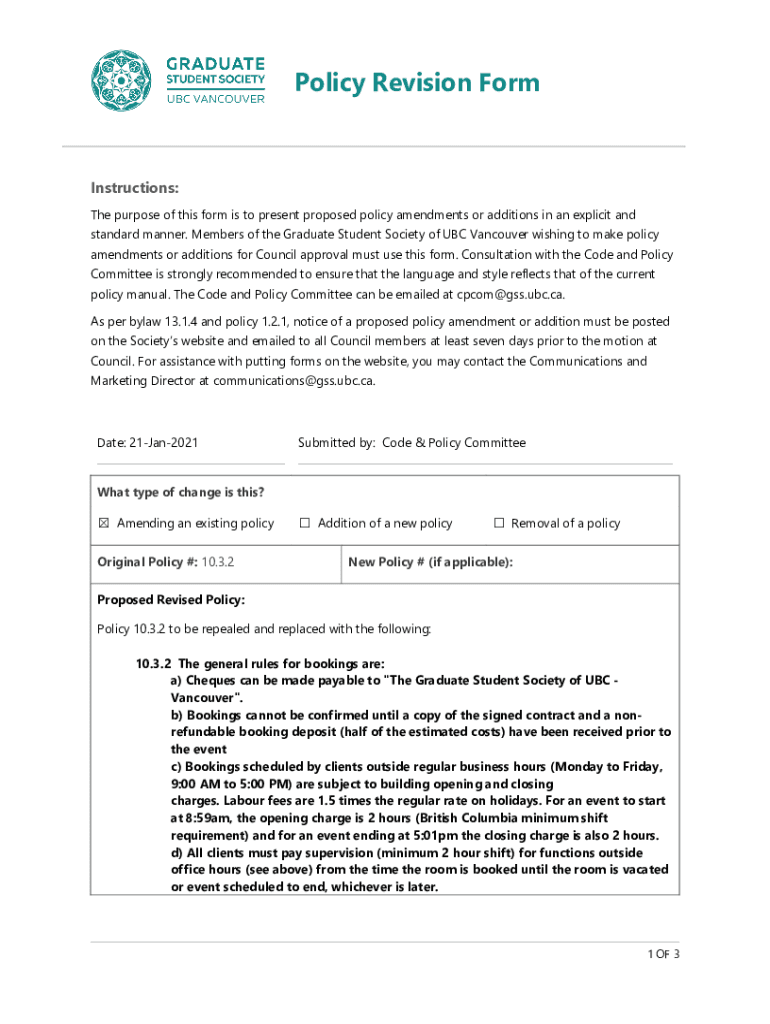







Definition & Purpose of the Policy Revision Form
The Policy Revision Form is an essential tool for documenting and proposing amendments to existing policies within an organization, such as a university or business. Primarily used by committees and administrative bodies, this form allows for a structured and formal approach to suggesting changes to policies. The form typically outlines the specific sections of the policy that require updates and provides a rationale for each proposed change. This ensures that all revisions align with current practices, regulations, or strategic goals. By using this form, organizations maintain clear records of policy changes and the reasons behind them, aiding in transparency and accountability.
Key Elements of the Policy Revision Form
A comprehensive Policy Revision Form includes several critical components to ensure effective communication and implementation of changes. These elements often involve:
- Identification Information: This section typically contains details about the individual or committee proposing the revision, including names and roles.
- Policy Reference: It outlines the specific policy number or title being revised.
- Proposed Amendments: A detailed description of the changes recommended, broken down into sections if necessary.
- Rationale for Changes: Justification for why each amendment is required, often citing current practices or legal mandates.
- Approval Signatures: Spaces for signatures from relevant authorities or board members, signifying agreement and consent.
Steps to Complete the Policy Revision Form
Completing the Policy Revision Form generally follows a systematic process:
- Review the Current Policy: Gain a thorough understanding of the existing guidelines to identify areas needing change.
- Draft Amendments: Clearly document the proposed changes, being specific about each modification.
- Rationale and Supporting Information: Provide a logical explanation for why each amendment is necessary, supported by data or references.
- Obtain Required Signatures: Collect approvals from committee members or stakeholders to validate the changes.
- Submit the Form for Approval: Follow the organization’s protocols for submitting the completed form to the governing body responsible for final approval.
Important Terms Related to the Policy Revision Form
Understanding the terminology associated with the Policy Revision Form is crucial for effective usage:
- Amendment: A formal change or addition proposed to an official document or policy.
- Rationale: The reasoning or justification behind a proposed policy amendment.
- Approval: The formal consent required from authorized individuals or bodies to legitimize the changes.
- Policy Number: A unique identifier associated with a specific policy document.
How to Obtain the Policy Revision Form
The process for obtaining a Policy Revision Form can vary depending on the institution:
- Internal Database: Many organizations store these forms within an internal online portal accessible to employees or members.
- Administrative Office: The form can often be requested from the organization’s administrative office.
- Official Website: Institutions frequently offer downloadable versions of the form on their official websites for ease of access.
Who Typically Uses the Policy Revision Form
This form is generally utilized by diverse groups within an organization:
- Committees: Often used by policy or governance committees tasked with overseeing and revising organizational policies.
- Administrators: Individuals in administrative roles who are responsible for maintaining and updating policy documents.
- Faculty and Staff: When existing policies impact their work, they may propose changes to streamline processes or adapt to new developments.


State-Specific Rules for the Policy Revision Form
While basic elements of the form remain consistent, certain state-specific regulations can influence its use:
- Legal Compliance: Some states have unique legal requirements that dictate how and when policies need to be revised.
- Sector Regulations: Different industries or sectors may need to adhere to regional standards that affect policy content and updates.
- Submission Guidelines: Variances in submission processes and deadlines can exist from one state to another, affecting how quickly amendments take effect.
Examples of Using the Policy Revision Form
Practical applications of the Policy Revision Form include:
- Academic Institutions: Universities utilize these forms to update policies about student conduct, examination procedures, or faculty responsibilities.
- Corporate Settings: Companies use the form to modify HR policies, such as workplace safety protocols or telecommuting guidelines.
- Non-profit Organizations: These entities may revise fundraising strategies, donor engagement rules, or volunteer procedures through structured amendments.
Legal Use of the Policy Revision Form
The Policy Revision Form helps ensure legal compliance by:
- Documenting adherence to regulatory changes.
- Serving as a record of the organization's commitment to keeping policies updated and relevant.
- Mitigating risks associated with outdated or non-compliant policies through proactive revisions.




