






Definition and Meaning
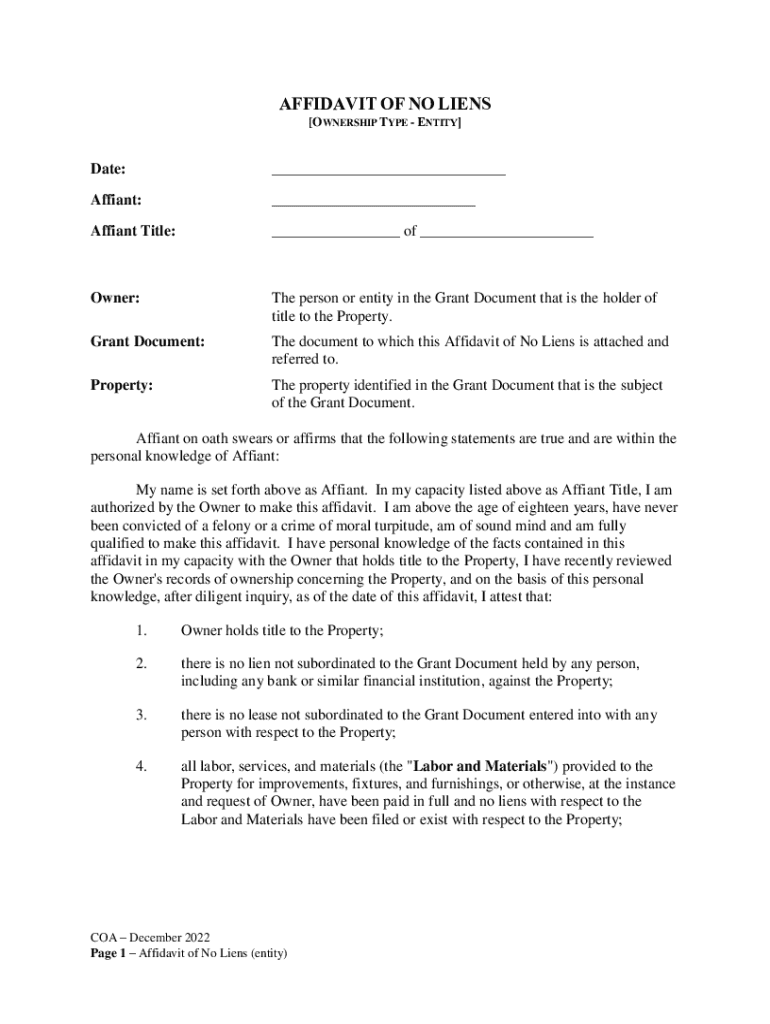
An Affidavit of No Liens is a legal document affirming that a property owner holds a clear title, free of any unpaid liens, leases, or legal claims. This affidavit is typically used in real estate transactions to assure potential buyers or financial institutions that there are no outstanding debts or encumbrances on the property that might hinder its sale or transfer. The affiant, often the property owner or an authorized representative, confirms this status after ensuring that all obligations, such as unpaid taxes or contractor fees, have been satisfied.
Components of the Affidavit
- Affiant Information: Details about the person making the affidavit, including name and contact information.
- Property Description: A precise description of the property in question, including its legal address and any identifying numbers.
- Lien Confirmation: A statement affirming the absence of liens or leases against the property.
- Declaration of No Pending Legal Issues: An assertion that there are no pending lawsuits or legal claims affecting the property.
- Notarization: A notary public must witness the signing of the affidavit to validate its authenticity.
Steps to Complete the Affidavit of No Liens
Completing an Affidavit of No Liens requires careful documentation to ensure its legal validity. Here is a step-by-step guide:
- Gather Necessary Information: Collect all relevant documents related to the property, including deeds, titles, and previous lien releases.
- Prepare the Affidavit: Use a standard template or consult legal guidance to draft the affidavit, ensuring all necessary components are included.
- Provide Accurate Details: Fill in the affiant’s information and a comprehensive description of the property.
- Include All Relevant Statements: Clearly assert that there are no liens or encumbrances on the property and no pending legal actions.
- Review and Edit: Carefully review the document for accuracy and completeness. It is advisable to have a legal expert review the affidavit.
Final Steps
- Notarization: Schedule a meeting with a notary public to officially sign the document.
- Secure Copies: Produce certified copies for your records and any parties involved in the transaction.
Why You Need an Affidavit of No Liens
The primary purpose of the Affidavit of No Liens is to provide assurance of clear property title status. This is crucial in several scenarios:
- Real Estate Transactions: Protects buyers by confirming that no unforeseen claims can disrupt the transaction.
- Financing and Refinance: Lenders often require it to ensure their interests are protected in case of default.
- Title Insurance: Facilitates the acquisition of title insurance by proving a clear ownership path.
Benefits of an Affidavit
- Peace of Mind: Provides legal proof and reassurance for all parties involved.
- Facilitates Smooth Transactions: Avoids delays caused by unresolved liens or legal claims.
- Legal Requirement Compliance: Ensures adherence to real estate transaction protocols.
Who Typically Uses the Affidavit of No Liens
Various parties may require or request an Affidavit of No Liens during a property transaction or legal process:
- Property Owners: To affirm no outstanding liens before selling or financing the property.
- Buyers: To ascertain the property's clear title before purchase.
- Lenders and Financial Institutions: For assurance before approving loans against the property.
- Real Estate Agents and Brokers: To facilitate transparent transactions.


Other Users
- Attorneys: In legal property disputes or estate settlements.
- Title Companies: To issue title insurance or finalize closings.
Key Elements of the Affidavit of No Liens
Several critical components define a valid Affidavit of No Liens. Understanding them ensures comprehensive coverage:
- Identification of Parties: Both the property owner details and any authorized representatives.
- Property Legal Information: Accurate legal description and address necessary for identification.
- No Liens Statement: Affirmative claim of the absence of liens, encumbrances, or claims.
- Legal Obligations Bracket: Statement ensuring all debts related to property improvements or taxes are settled.
Essential Provisions
- Disclosure of Pending Matters: Important for safeguarding against hidden liabilities.
- Notary Section: Compulsory for authenticating the affidavit's legality.
Legal Use of the Affidavit of No Liens
The Affidavit of No Liens serves as a legal document in various contexts, securing property transactions:
- Establishing Ownership Validity: Confirms uncontested ownership prior to a sale.
- Evidence in Legal Disputes: Provides evidence of clear ownership in litigation.
- Facilitating Loan Approvals: Required by banks for property financing clarity.
Legal Precautions
Ensure all statements in the affidavit are factual and verified, as inaccuracies can lead to legal penalties.
Examples of Using the Affidavit of No Liens
Here are practical scenarios illustrating how this affidavit is used:
- Selling a Home: A homeowner submits the affidavit to prove no hidden liabilities, smoothing the sale process.
- Refinancing a Mortgage: Loan officers demand the affidavit to confirm clear title before refinancing is approved.
Case Studies
- Real Estate Developer: Uses an affidavit to begin construction, ensuring lot's clear title.
- Resolving Inheritance Issues: Affiant confirms no claims on an estate property, enabling rightful heirs to secure assets.
State-Specific Rules for the Affidavit of No Liens
While the general form remains consistent, states may impose unique requirements or practices:
- California: May require additional certification from a licensed title agent.
- Florida: Specific language mandated in affidavits related to homestead properties.
- New York: Legal advice is recommended due to complex property laws and potential override provisions.
Adaptation to Local Laws
- Consult Local Legal Experts: Always advisable to consult or involve local legal professionals to ensure compliance.
- State-Approved Templates: Use regional templates that incorporate all state-specific nuances.
The accurate understanding and deployment of an Affidavit of No Liens is critical to establishing property title clarity, protecting all parties involved, and ensuring smooth real estate operations.