






Definition & Meaning
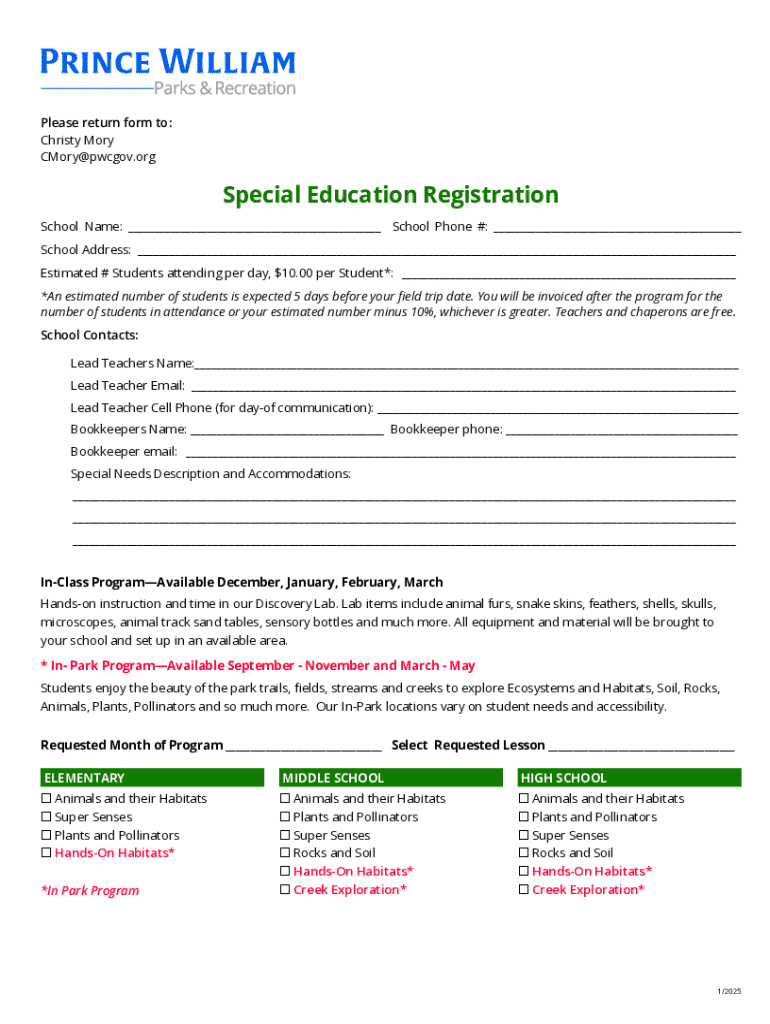
Special Education Registration is a formal process designed to enroll students with disabilities into special education programs. These programs provide personalized educational experiences that accommodate the unique learning needs of each student. By engaging in this registration process, schools can ensure adequate support services are available for students, ranging from specialized curricula to tailored instructional strategies. This is crucial for promoting equitable learning opportunities and helping students achieve their full potential.
How to Use the Special Education Registration
To use the Special Education Registration effectively, educators and parents must collaborate closely. The process typically begins with evaluating the student's educational requirements through assessments and reviews of existing documentation. Once the specific needs are identified, registration forms must be completed accurately to reflect these needs. The registration can include selecting the appropriate special education programs and services needed. Digital platforms or physical forms can facilitate this registration, depending on the district's preferred method. Often, collaboration with special education coordinators or administrators is needed to finalize arrangements and ensure required services are implemented.
Steps to Complete the Special Education Registration
-
Student Assessment: Begin with a comprehensive student assessment to determine specific educational needs and eligibility for special education services.
-
Compile Documentation: Gather necessary documents such as previous evaluations, medical reports, and individualized education program (IEP) plans.
-
Select Appropriate Programs: Choose suitable programs and services that align with the student's assessed needs.
-
Complete Forms: Fill out the Special Education Registration form accurately, ensuring all sections relating to student information and required services are completed.
-
Submit Registration: Submit the form online or in person, along with any supporting documentation, to the appropriate school or district office.
-
Confirmation & Review: Await confirmation of registration and participate in any required meetings or reviews with educators to finalize the plan.
Who Typically Uses the Special Education Registration
The primary users of Special Education Registration include:
- Parents and Guardians: Responsible for initiating and overseeing the registration process to secure appropriate educational resources for their children.
- Special Education Teachers: Utilize the registration forms to design and implement personalized instructional strategies and supports.
- School Administrators: Ensure compliance with educational regulations and coordinate resources effectively within the school system.
- Educational Psychologists and Counselors: Play a critical role in assessment and review processes to determine eligibility and recommend services.


Important Terms Related to Special Education Registration
-
Individualized Education Program (IEP): A documented plan developed for a student with disabilities, outlining specific educational goals and services.
-
Free Appropriate Public Education (FAPE): Ensures that students with disabilities receive necessary education services without cost to their families.
-
Least Restrictive Environment (LRE): Refers to the setting where students with disabilities can be educated alongside their non-disabled peers to the greatest extent appropriate.
-
504 Plan: A structured plan providing accommodations and support to students with disabilities, preventing discrimination and ensuring access to education.
Key Elements of the Special Education Registration
-
Eligibility Criteria: Standards and conditions a student must meet to qualify for special education services. These criteria often involve assessment results and professional evaluations.
-
Program Options: Varied educational settings and instructional programs available to meet the diverse needs of students, such as inclusive classrooms, resource rooms, or specialized schools.
-
Support Services: Additional services such as speech therapy, occupational therapy, and counseling that may be incorporated into the student's educational framework.
Required Documents
-
Educational Evaluations: Professional assessments conducted to ascertain the child's learning needs and determine eligibility for special services.
-
Medical Reports: Documents that provide insights into any medical conditions affecting the student's educational access.
-
Previous School Records: Academic records that help inform current academic standing and instructional needs.
Form Submission Methods
Special Education Registration forms can be submitted through various channels:
- Online Submission: Many school districts offer digital platforms where forms can be filled out and submitted electronically.
- In-Person Submission: Some parents may prefer or are required to submit completed registration forms in person at the school or district office.
- Mail-In Options: Mailing completed forms is still a viable option in certain districts, primarily for those preferring paper submissions.
Eligibility Criteria
Eligibility for special education services typically includes:
-
Diagnosed Disability: Confirmation of a disability or condition that significantly impacts the student's ability to learn.
-
Need for Specialized Instruction: Necessity for specially designed instruction and services that cannot be met through general education alone.
-
Evaluation Outcomes: Decisions informed by comprehensive evaluations conducted by educational professionals and psychologists.