
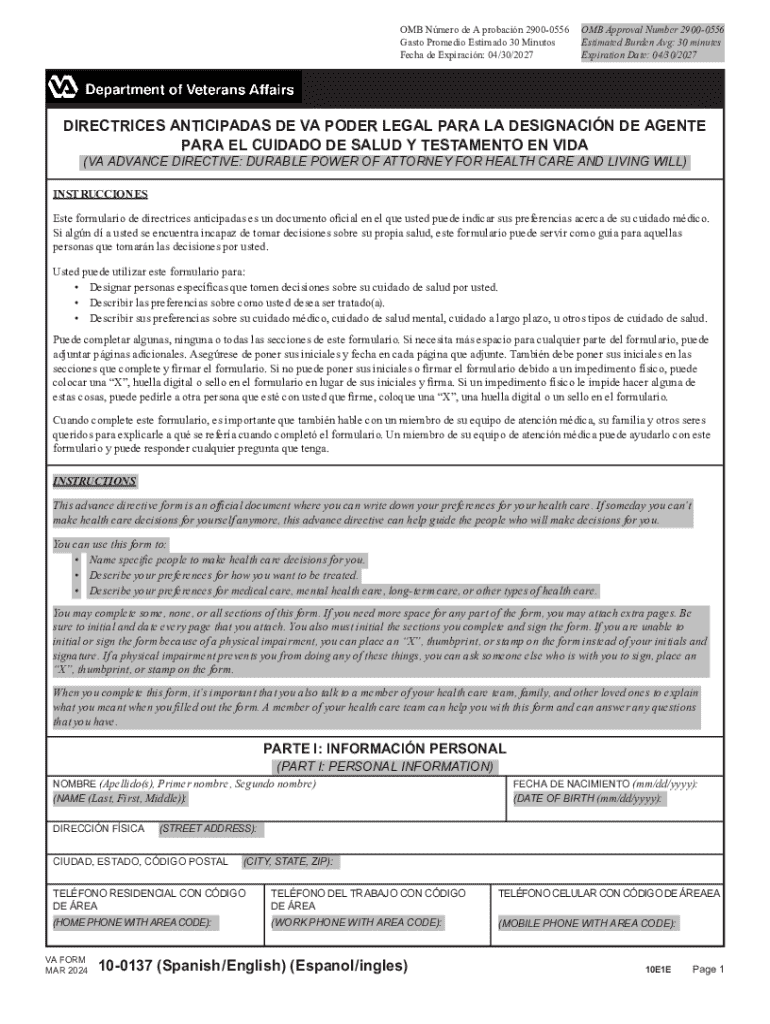







Definition and Meaning
A Durable Power of Attorney for Health Care and Living Will is a critical legal document that empowers an individual, known as the principal, to designate another person, the agent, to make health care decisions on their behalf. This document becomes especially vital when the principal is incapacitated and unable to communicate their healthcare preferences. While the Power of Attorney for Health Care appoints the agent, the Living Will outlines the specific medical treatments the principal desires or wishes to refuse in scenarios where they are unable to articulate these choices themselves.
Key Elements of the Durable Power of Attorney for Health Care and Living Will
This document comprises several crucial components that establish its validity and functionality:
- Principal and Agent Information: Essential personal details of the principal and appointed agent, ensuring clear identification.
- Scope of Authority: Explicitly defines the decisions the agent is authorized to make, which can range from consent to certain medical treatments to decisions about life-sustaining procedures.
- Living Will Provisions: Specifies medical interventions the principal does or does not want, such as resuscitation or mechanical ventilation.
- Duration of Power: Indicates when the agent's authority begins and under what circumstances it might terminate. Typically, this remains in effect until the principal revokes it or passes away.
- Signature and Witnessing Requirements: For legal standing, the document often requires the signatures of the principal and witnesses or a notary public, depending on state law.
Steps to Complete the Durable Power of Attorney for Health Care and Living Will
Creating this document involves several systematic steps to ensure it is legally binding and reflective of the principal's wishes:
- Choose an Agent: Select a trusted individual who understands your healthcare preferences and is willing and able to act on your behalf.
- Define the Authority: Clearly outline the scope of decision-making power granted to the agent.
- Express Health Care Preferences: Clearly articulate wishes concerning medical treatments and interventions.
- Consult Legal Standards: Ensure the document complies with state-specific requirements, which can vary significantly.
- Obtain Necessary Signatures: Secure the requisite signatures from the principal, witnesses or, in certain cases, a notary public.
Why You Need a Durable Power of Attorney for Health Care and Living Will
There are several compelling reasons to establish a Durable Power of Attorney for Health Care and Living Will:
- Ensures Medical Wishes Are Honored: Specifies preferences for medical treatment in situations where the individual cannot communicate.
- Relieves Burden on Family: Provides clarity and reduces stress for family members who might otherwise have to make difficult decisions without guidance.
- Prepares for Unexpected Situations: Offers peace of mind knowing healthcare decisions will be handled per the principal's wishes in the event of unforeseen circumstances.
- Legal Protection: Shields the principal and their family from potential legal disputes by having a clear, enforceable directive.
Who Typically Uses the Durable Power of Attorney for Health Care and Living Will
This legal instrument is generally utilized by various individuals who wish to plan ahead for medical decision-making, including:
- Older Adults: Often used by seniors to ensure their healthcare desires are respected as they age.
- Individuals with Chronic Health Conditions: Beneficial for those with ongoing medical issues to plan for potential future incapacity.
- High-Risk Occupations: Those in jobs with higher health risks may find it prudent to establish these documents early on.
- Proactive Planners: Individuals who prefer to set clear guidelines for their future health care and reduce uncertainty for their loved ones.


State-Specific Rules for the Durable Power of Attorney for Health Care and Living Will
Each state in the United States can have unique stipulations affecting the execution of these documents, including:
- Witnessing and Notarization Requirements: Some states necessitate witnessing of signatures, while others may require notarization.
- Agent Eligibility: Certain jurisdictions might impose restrictions on who can serve as an agent, such as prohibiting healthcare providers.
- Specific Form Language: States might mandate language or provisions to be included for the document to be valid.
- Revocation Process: Procedures for revoking or amending the document can differ significantly by state.
Examples of Using the Durable Power of Attorney for Health Care and Living Will in Practice
Consider these situations where these documents can be crucial:
- Sudden Onset of Illness: An individual unexpectedly falls unconscious due to an illness and is unable to communicate. The designated agent steps in to make critical medical decisions based on the Living Will.
- Progressive Diseases: For conditions like Alzheimer's, having a pre-structured document ensures that the patient's evolving preferences are followed as they lose the ability to make decisions.
- End-of-Life Decisions: When a patient is terminally ill, the document guides the healthcare team and family in making compassionate decisions in alignment with the patient’s wishes.
Legal Use of the Durable Power of Attorney for Health Care and Living Will
A Durable Power of Attorney for Health Care and Living Will provides legal authority in healthcare settings by:
- Authorizing Decision-Makers: Confirms who legally has the right to make health care decisions when the principal is incapacitated.
- Protecting Health Care Providers: Assures doctors and hospitals that they are following legal instructions, minimizing liability risks when delivering care in contentious scenarios.
- Facilitating Medical Ethic Compliance: Healthcare providers are ethically bound to respect patients' wishes, which this document essentially communicates.




