
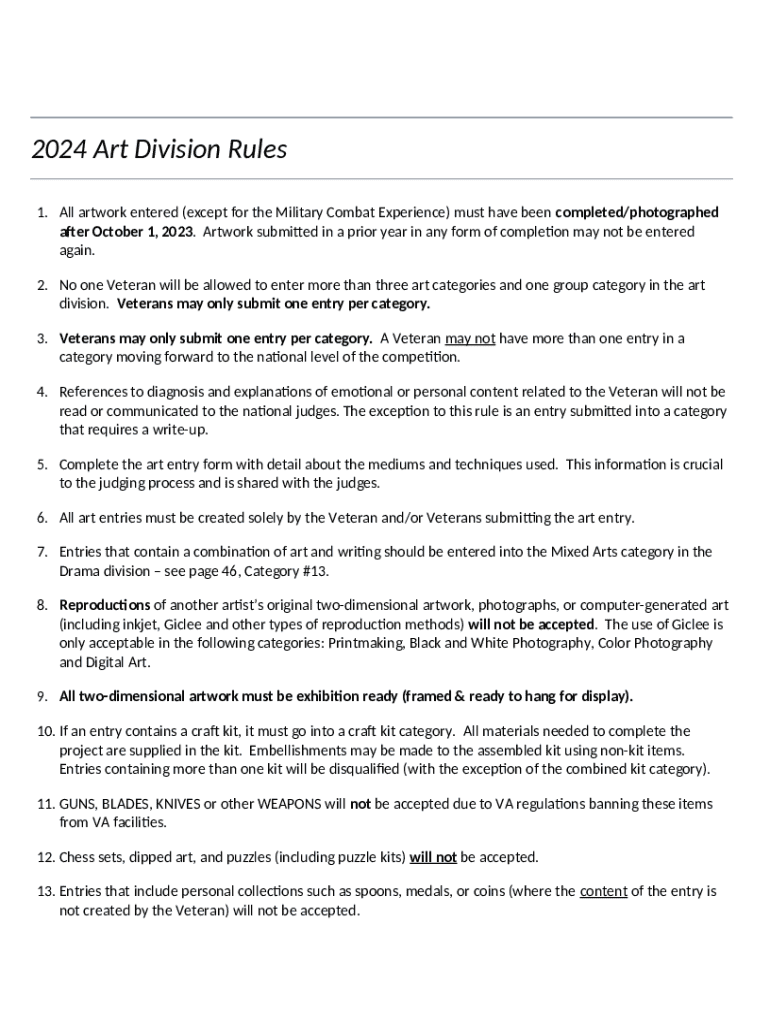







Definition and Meaning
The "Family and MWR Arts and Crafts History - Fort Campbell MWR" is an integral document associated with the Family and Morale, Welfare, and Recreation (MWR) programs at Fort Campbell. It pertains to the history and operations concerning arts and crafts, shedding light on its development and role within the military community. This document serves as a vital resource for understanding the evolution and impact of arts and crafts activities, promoting creativity and cultural enrichment among military families.
How to Use the Family and MWR Arts and Crafts History Document
Understanding and utilizing the Family and MWR Arts and Crafts History document involves:
-
Researching Historical Context: Providing insights into the establishment, changes, and milestones of arts and crafts programs over the years at Fort Campbell.
-
Informing Program Development: Guiding the creation and improvement of current arts and crafts programs based on historical success and community needs.
-
Educational Purposes: Serving as a resource for educators and program developers to teach the significance of arts and crafts in enhancing morale among military personnel and their families.
-
Policy Making: Assisting in formulating policies and strategies to expand and improve arts and crafts offerings within MWR programs.
Steps to Complete the Family and MWR Arts and Crafts History Document
When tasked with completing the document, the steps include:
-
Data Collection: Gather historical data about arts and crafts initiatives at Fort Campbell, including program changes, participant feedback, and awards or recognitions.
-
Documentation: Record essential information chronologically, ensuring all significant events and developments are represented accurately.
-
Verification: Cross-check historical data with official records or testimonies from long-time program participants or coordinators to ensure accuracy.
-
Review and Edit: Carefully review the document to correct any inaccuracies or inconsistencies and enhance clarity.
-
Submit for Approval: Present the completed document to relevant MWR officials for approval, ensuring alignment with current guidelines and regulations.
Key Elements of the Family and MWR Arts and Crafts History Document
The document comprises several key elements, including:
-
Timeline of Events: A chronological record of major developments, programs, and milestones in arts and crafts history at Fort Campbell.
-
Impact Analysis: Evaluation of the influence of arts and crafts on military families' morale, welfare, and cultural development.
-
Program Evolution: Details on how programs have adapted over the years to meet changing needs and interests.
-
Awards and Recognitions: Highlights of any recognitions received by the programs or participants.
Who Typically Uses the Family and MWR Arts and Crafts History Document
The document is primarily used by:
-
Program Developers: To design new arts and crafts activities and improve existing offerings.
-
Military Historians: For research into military community life and welfare services.
-
MWR Officials: For crafting policies and planning future programmatic initiatives to ensure they meet the needs of military families.


Important Terms Related to the Family and MWR Arts and Crafts History
Understanding specific jargon and terms within the document helps in comprehension:
-
MWR: Refers to Morale, Welfare, and Recreation, encompassing various support programs for military personnel.
-
Historical Milestones: Key events or periods that significantly impacted the development of arts and crafts programs.
-
Cultural Enrichment: Enhancements made to the community's cultural life through organized activities.
Examples of Using the Family and MWR Arts and Crafts History Document
Real-world applications of the document include:
-
Program Revival: Using historical success stories to rejuvenate dormant or underutilized arts and crafts programs.
-
Community Engagement: Encouraging broader participation by showcasing past successes and the cultural importance of arts and crafts.
-
Grant Applications: Supporting applications for additional funding or resources by demonstrating historical impact and community benefits.
Legal Use of the Family and MWR Arts and Crafts History Document
When utilizing the document for legal purposes:
-
Policy Development: Ensure compliance with military regulations for arts and crafts programs.
-
Grant Validation: Use documented history to validate claims in applications for government or private funding.
-
Intellectual Property: Protect creative works and program materials developed under the arts and crafts banner, ensuring recognition of creators and program originators.
Legal considerations ensure that the document supports both the cultural and operational mandates of Fort Campbell's MWR initiatives.




