
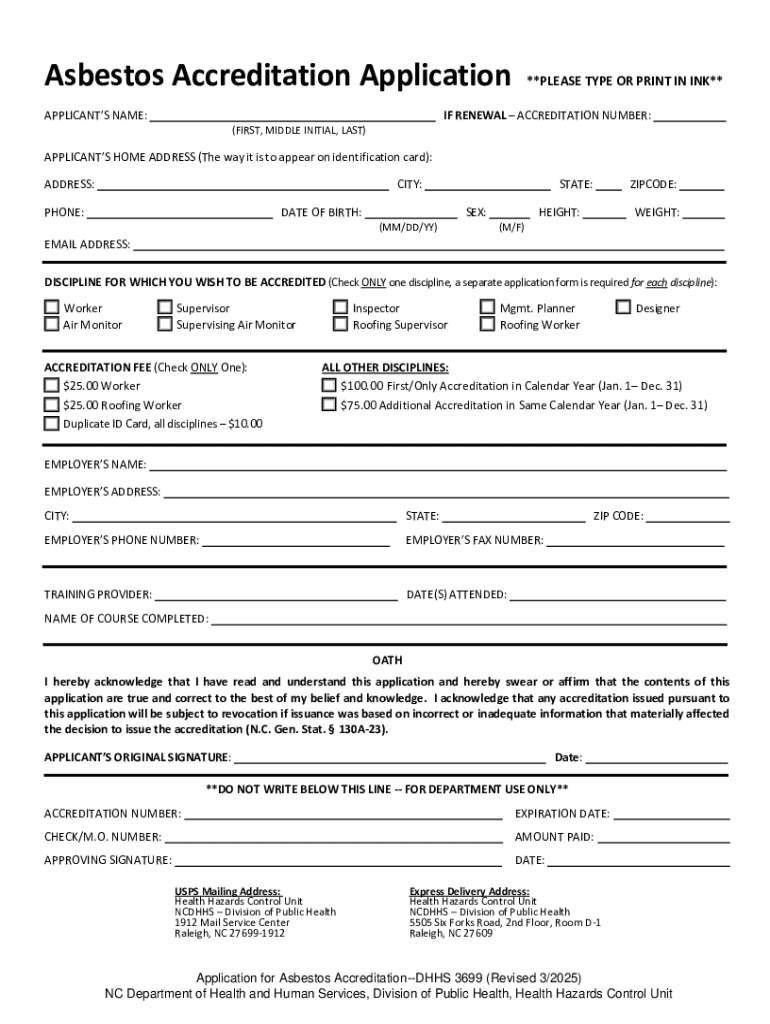







Understanding the Asbestos Accreditation Application
The Asbestos Accreditation Application is essential for individuals seeking accreditation in North Carolina for roles such as workers, supervisors, and inspectors involved in asbestos-related activities. Accreditation ensures compliance with state and federal regulations, safeguarding both workers and the public from asbestos hazards. The application provides a structured way to ensure candidates meet specific educational and experience requirements, contributing to informed and safe asbestos management practices.
How to Obtain the Asbestos Accreditation Application
Prospective applicants can access the Asbestos Accreditation Application from the North Carolina Department of Health and Human Services (NC DHHS). The application is downloadable from the Health Hazards Control Unit's official website. For those who prefer a physical copy, requests can be made via phone or email, ensuring accessibility to everyone regardless of their internet access or preferred medium.
Steps to Complete the Asbestos Accreditation Application
-
Gather Necessary Information: Ensure you have all personal information, including your Social Security Number, contact details, and work history.
-
Educational and Experience Documentation: Compile evidence of completed training courses relevant to asbestos work and document any prior related work experience.
-
Fill Out Personal and Professional Details: Accurately input all requested personal and professional information into the form, emphasizing previous asbestos-related roles.
-
Attach Supporting Documents: Include all relevant certificates, diplomas, and letters of experience. Ensure these documents support the qualifications and experience claimed in the application.
-
Review and Submit: Double-check all information for accuracy. Submit the completed application via mail, ensuring it reaches the NC DHHS by any specified deadlines for your desired accreditation period.
Eligibility Criteria for the Asbestos Accreditation Application
Applicants must meet specific educational requirements, typically completing state-approved training programs corresponding to the desired accreditation category. Additionally, practical work experience in the asbestos field is often required. The combination of training and experience ensures that applicants have the knowledge and skills necessary for responsible asbestos management.


Required Documents
- Proof of Education and Training: Certificates from accredited training courses are necessary.
- Experience Verification: Letters from employers or supervisors detailing the applicant's work history in asbestos handling or related fields.
- Identification Documents: A government-issued ID to verify the applicant's identity.
- Supplementary Attestations: Any additional documents that validate the applicant's qualifications, such as licenses or certifications from related disciplines.
Legal Responsibilities and Compliance
Accredited individuals must adhere to all relevant asbestos handling regulations, ensuring that all activities comply with state and federal laws. This may involve following specific guidelines for the transport, storage, and disposal of asbestos-containing materials (ACMs). The accreditation serves not only as a credential but also as a commitment to maintaining the safety standards required by regulatory bodies.
Application Process & Approval Time
After submission, the Health Hazards Control Unit will review the application to verify the applicant's qualifications and compliance with regulations. Approval timelines can vary, but applicants are usually notified within four to six weeks of submission. Potential delays could occur if documentation is incomplete or additional verification is required, underscoring the importance of thoroughness when completing the application.
Penalties for Non-Compliance
Non-compliance with asbestos accreditation requirements can result in severe penalties, including fines or revocation of accreditation. Engaging in asbestos-related activities without the proper accreditation can lead to both legal repercussions and potential risks to public health. It is essential for accredited personnel to remain vigilant and update their credentials as necessary to avoid such penalties and uphold safety standards.
Differences Between Digital and Paper Versions
The Asbestos Accreditation Application can be submitted either digitally or on paper, depending on the applicant's preference. The digital version provides convenience and faster submission, ideal for applicants comfortable with online processes. The paper version still holds its place for those who prefer traditional methods, ensuring all applicants have equitable options for submission.
Role of the NC Department of Health and Human Services
The NC DHHS is responsible for issuing the Asbestos Accreditation Application and overseeing the accreditation process. This department ensures that applicants meet the regulatory standards required to safely conduct asbestos-related activities. By maintaining stringent oversight, NC DHHS plays a crucial role in protecting public health and promoting safe practices in the industry.




