
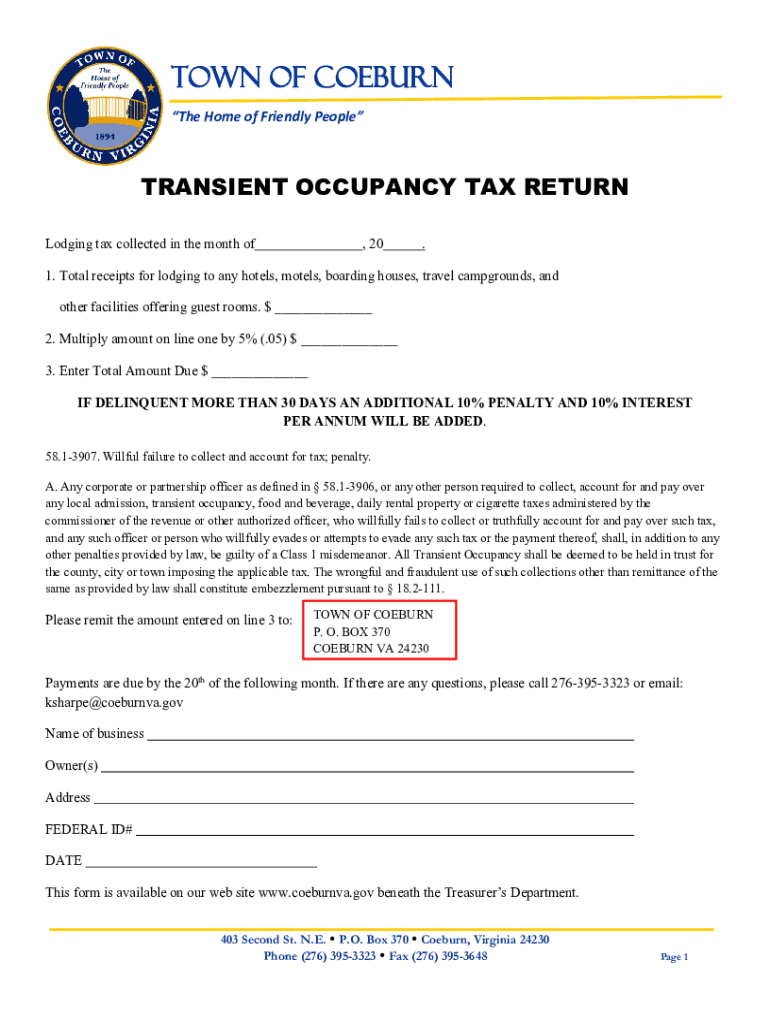







Definition and Meaning
The Transient Occupancy Tax Return form is used by businesses in the United States, primarily in the hospitality industry, to report and remit taxes collected on temporary lodging. This tax is levied on guests staying at hotels, motels, inns, and similar establishments for durations typically less than 30 days. The form ensures that the applicable local transient occupancy taxes, which vary by jurisdiction, are properly collected and submitted to the relevant authority. Understanding this form is crucial for compliance as it ties directly into local regulations and revenue requirements for municipalities.
How to Obtain the Transient Occupancy Tax Return
To procure a Transient Occupancy Tax Return form, businesses generally have several channel options. One typical method is through local tax offices, where the form can be requested in person or through mail. Many local governments also provide downloadable versions of the form on their official websites, offering both electronic and printable formats. Additionally, businesses might receive these forms via mail as part of regular communication from local tax authorities, particularly if they have previously filed similar returns. It's essential to check with the specific local jurisdiction for the correct procedure.
Steps to Complete the Transient Occupancy Tax Return
Completing the Transient Occupancy Tax Return form involves several detailed steps:
- Gather Required Information: Start by assembling all pertinent data, including the total amount of taxes collected from guests and the corresponding booking details.
- Calculate the Tax Due: Utilize local tax rates to compute the total amount owed. This often involves a simple multiplication of the total room revenue by the tax rate, adjusting for any exemptions.
- Fill Out the Form: Enter all necessary information on the form, ensuring accuracy in sections such as total revenue, deductions, and net taxable revenue.
- Review for Errors: Double-check all entries to prevent discrepancies that could lead to penalties.
- Submit the Form: Depending on local regulations, submit the completed form electronically, via mail, or in person, along with the payment, if applicable.
Important Terms Related to Transient Occupancy Tax Return
- Transient Occupancy Tax (TOT): A tax imposed on occupants of short-term lodging.
- Room Revenue: The total income generated from renting out rooms or lodging spaces.
- Exemptions: Certain types of stays or occupants might be exempt from this tax, depending on local laws.
- Net Taxable Revenue: The revenue amount subject to tax after accounting for applicable exemptions or deductions.
Legal Use of the Transient Occupancy Tax Return
Submitting the Transient Occupancy Tax Return is a legal obligation for businesses in the lodging sector. It ensures compliance with local revenue laws and prevents potential penalties. This requirement aids municipalities in generating funds to support local infrastructure and services. Businesses must maintain meticulous records to support their filings, as audits may be conducted to verify reported data.
Penalties for Non-Compliance
Failure to file the Transient Occupancy Tax Return accurately and on time can result in a range of penalties. These may include late fees, interest charges on unpaid taxes, and possibly further legal actions by local authorities. The specifics of penalties, including their amounts and application, vary by jurisdiction. Non-compliance not only leads to financial loss but might also damage business credibility and relations with local authorities.
State-Specific Rules for the Transient Occupancy Tax Return
Various states in the U.S. have different rules and regulations concerning the Transient Occupancy Tax Return. For instance, some states have stipulated exemptions for certain entities like government officials or long-term stays. Others may have different filing frequencies, such as monthly or quarterly, depending on the volume of business. It is critical for businesses to be aware of and comply with the state-specific rules to ensure proper filing and avoid penalties.
Filing Deadlines and Important Dates
Deadlines for submitting the Transient Occupancy Tax Return are typically determined by the local governing body that enacts the tax. Some require monthly filings, while others may allow quarterly submissions. It is vital to adhere strictly to these deadlines to avoid late fees. An entity should maintain a calendar or reminder system to ensure timely filing and can benefit from automated processes or services that help track due dates and notifications from tax authorities.
Software Compatibility for Filing
Modern technology offers businesses multiple avenues for completing and filing the Transient Occupancy Tax Return. Software like TurboTax, QuickBooks, and other accounting programs often support these forms, either via direct integration or through compatible format exports. Digital filing platforms provided by local jurisdictions may also have compatibility guidelines that allow seamless uploads using popular accounting software's output. This integration not only minimizes error but also streamlines the filing process, saving time and resources.




