
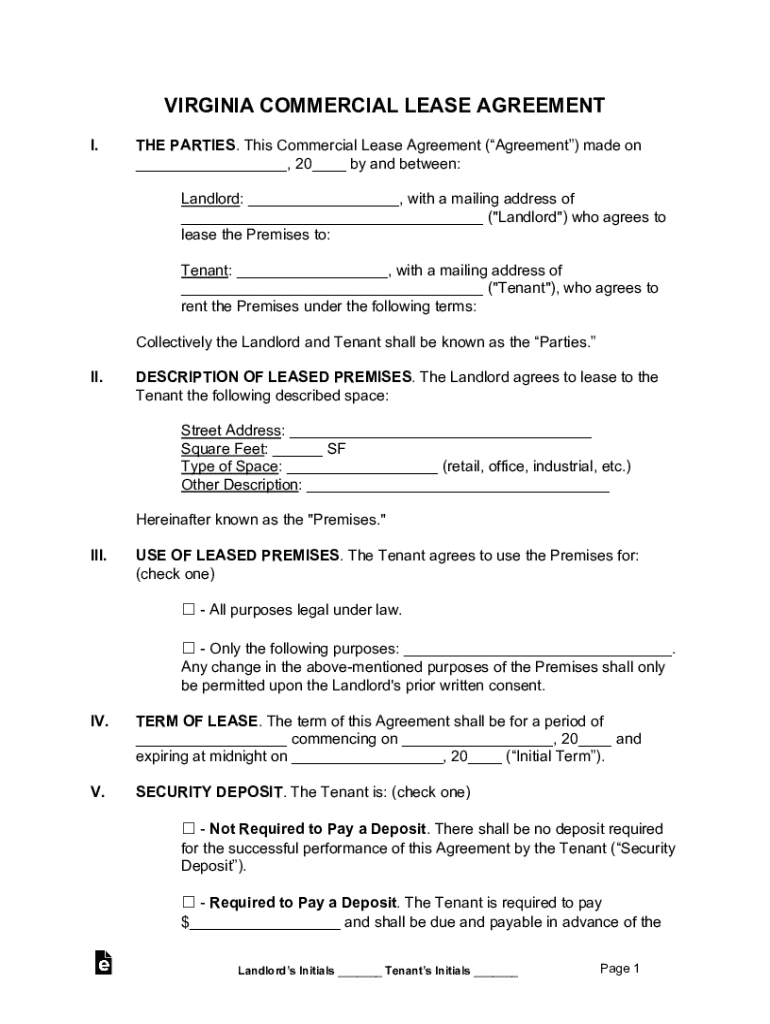







Definition & Meaning
The Virginia Commercial Lease Agreement is a legal document used to formalize the rental of commercial property by a landlord to a tenant in Virginia. This agreement outlines various terms and conditions that bind both parties, such as usage of the premises, duration of the lease, and financial responsibilities. The document serves as a mutual contract, establishing clear guidelines and rules to prevent disputes and ensure a transparent leasing process.
- Lease Terms: Specifies the length of the lease, renewal options, and conditions for termination.
- Rent Details: Clarifies the monthly rent amount, due dates, and acceptable payment methods.
- Property Usage: Defines permissible activities and operations conducted on the leased premises.
Key Elements of the VIRGINIA COMMERCIAL LEASE AGREEMENTeForms
The Virginia Commercial Lease Agreement includes several critical components that should be understood and agreed upon by both parties involved.
Description of Leased Premises
- Details Provided: Includes a comprehensive description of the commercial property, such as size, location, and any specific features or fixtures.
- Boundary Clarification: Establishes clear boundaries and shared spaces to avoid future disagreements.
Security Deposit
- Deposit Requirements: Outlines the security deposit amount, conditions for its return, and circumstances under which it may be forfeited.
- Protection Measures: Provides assurance for the landlord covering potential damages or unpaid rent.
Maintenance and Repairs
- Landlord vs. Tenant Responsibilities: Clearly divides maintenance duties between the landlord and the tenant, specifying who handles routine upkeep and emergency repairs.
- Standards for Repairs: Ensures repairs meet the agreed quality and timeliness.
Steps to Complete the VIRGINIA COMMERCIAL LEASE AGREEMENTeForms
Completing the Virginia Commercial Lease Agreement requires careful attention to detail. Each section should be filled with accurate and agreed-upon information.
- Identify Parties: Clearly state the full names and contact information of the landlord and tenant.
- Specify Lease Term: Enter the start and end dates of the lease along with renewal terms if applicable.
- Detail Rent Agreements: Include the rent amount, payment schedule, and penalties for late payment.
- Describe Premises: Accurately describe the location and features of the leased property.
- Finalize Signature Blocks: Ensure both parties sign the agreement to validate it legally.
Important Terms Related to VIRGINIA COMMERCIAL LEASE AGREEMENTeForms
Understanding key terms in the lease agreement is pivotal for both landlords and tenants.
- Permitted Use: Refers to the types of activities allowed on the leased property.
- Indemnification Clause: Protects one party from liability in certain situations caused by the other party's actions.
- Governing Law: Specifies that Virginia law will govern any legal proceedings related to the agreement.
Legal Use of the VIRGINIA COMMERCIAL LEASE AGREEMENTeForms
The Virginia Commercial Lease Agreement must comply with state and federal laws to be enforceable. It incorporates specific legal provisions to ensure adherence to regional regulations.
- Fair Housing Laws: The agreement must not discriminate against potential tenants based on race, gender, religion, or familial status.
- Compliance with State Regulations: Abides by zoning laws and local ordinances relevant to commercial properties in Virginia.
State-Specific Rules for the VIRGINIA COMMERCIAL LEASE AGREEMENTeForms
Virginia has unique statutes that influence the creation and execution of commercial lease agreements.
- Lease Provisions: Some terms might be regulated by state law, such as rent control or eviction notice requirements.
- Property Disclosures: The agreement should include mandatory disclosures specific to Virginia, such as building safety codes.
Who Typically Uses the VIRGINIA COMMERCIAL LEASE AGREEMENTeForms
This agreement is utilized by various parties involved in the commercial real estate sector.
- Property Owners/Landlords: Individuals or entities leasing commercial spaces for business use.
- Business Tenants: Companies seeking premises for operations, including offices, retail spaces, or warehouses.


Required Documents
Completing the Virginia Commercial Lease Agreement may necessitate additional documentation to verify the accuracy and authenticity of information provided.
- Identification Proof: Valid ID copies of both landlord and tenant.
- Financial Statements: Required from tenants to demonstrate financial stability and ability to meet lease obligations.
- Insurance Proof: Ensures the tenant has the necessary insurance coverage as per lease terms.
Penalties for Non-Compliance
Failing to adhere to the terms outlined in the Virginia Commercial Lease Agreement can result in legal ramifications.
- Financial Penalties: Non-compliance with payment terms may incur additional fees or interest charges.
- Eviction: Persistent breaches, such as unauthorized subletting or significant fee arrears, could lead to eviction proceedings.




