




01. Edit your form online
Type text, add images, blackout confidential details, add comments, highlights and more.

Type text, add images, blackout confidential details, add comments, highlights and more.

Draw your signature, type it, upload its image, or use your mobile device as a signature pad.

Send it via email, link, or fax. You can also download it, export it or print it out.
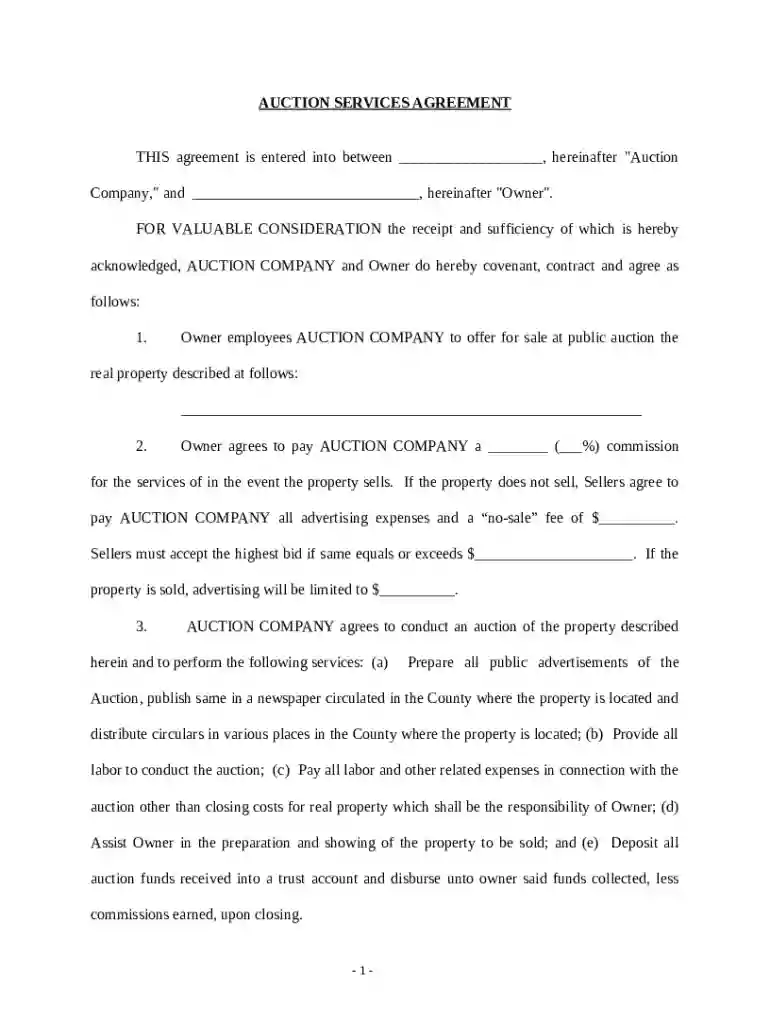
The Auction Services Agreement is a legal contract between an auction company and a property owner, outlining the terms and conditions for conducting a public auction of real property. This document serves as a comprehensive framework detailing the obligations and rights of both parties. It includes essential components such as the commission structure, advertising responsibilities, and the process for payments if the property does not sell. The agreement ensures both parties cooperate effectively to achieve a successful auction outcome.
Using the Auction Services Agreement involves a clear understanding of its terms and customizing it to fit the specific needs of the auction. Begin by reviewing the agreement's standard clauses, which cover vital elements like property details, auction dates, and commission arrangements. Customize sections to reflect the specific auction parameters, such as reserve price or payment schedule. It's crucial to involve legal counsel to ensure all modifications align with applicable laws and protect your interests.
The Auction Services Agreement consists of several key components:
The legal use of the Auction Services Agreement ensures that the auction process complies with relevant laws and regulations. This agreement serves as a binding contract that protects the interests of both the auction company and the property owner. It is essential to make sure the agreement adheres to state-specific laws governing auctions and property transactions to avoid legal disputes. Consult a legal expert to review the agreement and highlight any potential legal risks.
Understanding specific terms within the Auction Services Agreement is critical for effective usage:
Different states may have unique regulations affecting auction practices, such as licensing requirements for auctioneers and disclosure obligations. It's vital to familiarize yourself with state-specific rules that may impact the Auction Services Agreement. Compliance with these rules ensures that the auction process adheres to legal standards and helps prevent potential penalties or legal challenges.
Consider a scenario where a property owner in California wishes to auction a commercial property. Using the Auction Services Agreement, the owner engages an auction company, negotiating a 5% commission and establishing a reserve price to protect her investment. The agreement outlines marketing commitments, like digital and print advertising campaigns, ensuring both parties understand their responsibilities and facilitating a successful auction.
Common users of the Auction Services Agreement include:


Failure to adhere to the terms of the Auction Services Agreement, such as breach of contract by either party, can result in legal actions. Potential penalties may include financial damages or specific performance requirements to compensate for the breach. Ensuring all conditions of the agreement are met is crucial for avoiding such penalties and maintaining a smooth auction process.
At DocHub, your data security is our priority. We follow HIPAA, SOC2, GDPR, and other standards, so you can work on your documents with confidence.

The Auction Agent Fee represents compensation for the services of the Auction Auction Agreement shall cease upon termination of this Auction Agreement
by S PARSONS Cited by 267 In an English auction, no member of a ring can exploit the ring agreement out of many different items in auction services such as eBay or


