






Definition and Meaning
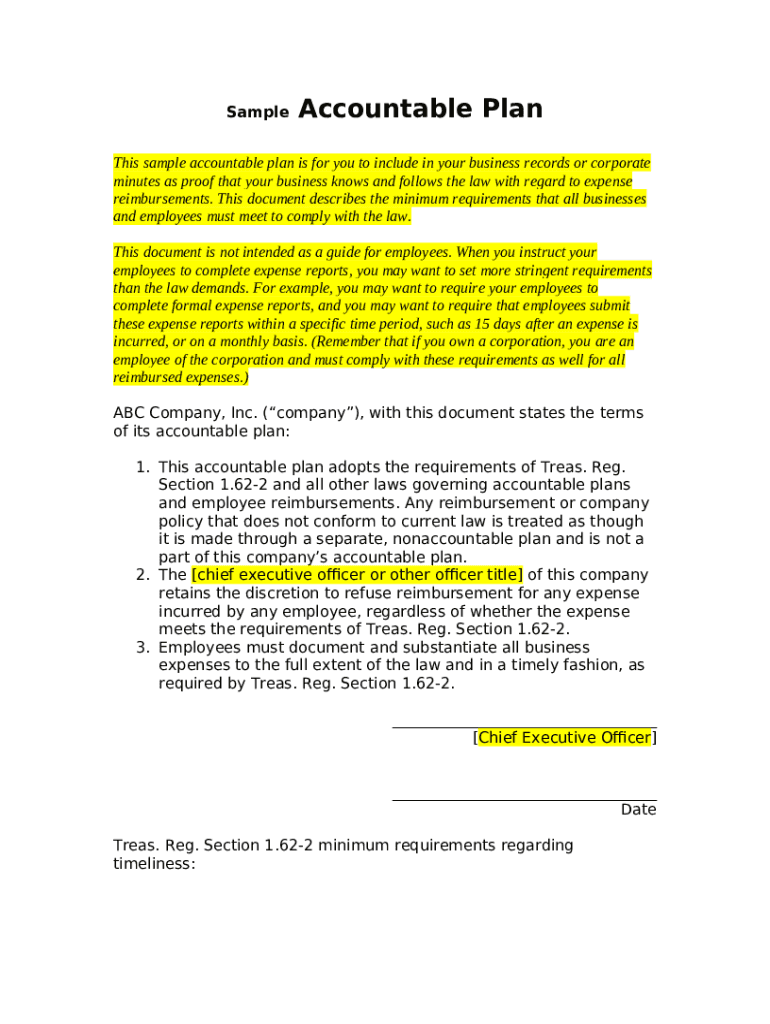
An accountable plan is a financial policy allowing a business to reimburse employees for job-related expenses while maintaining tax-deductibility for the company and tax-exempt status for employees. The "Sample Accountable Plan for Business Expense" provides a structured approach for companies to create their accountability framework, ensuring compliance with IRS guidelines outlined in Treas. Reg. Section 1.62-2. This sample plan outlines the conditions under which business expenses are considered accountable and the requirements for documentation and substantiation.
- Purpose: To facilitate the proper documentation and management of business expenses, ensuring compliance with tax laws and protecting both employer and employee from tax liabilities.
- Components: Typically includes guidelines for acceptable expenses, documentation requirements, timelines for submission, and approval processes.
Key Elements of the Sample Accountable Plan
A comprehensive accountable plan incorporates several critical elements, each designed to ensure that both the employer and employees adhere to IRS regulations.
- Expense Oversight: The company's CEO or designated officer generally has the discretion to approve or deny reimbursements. This ensures proper oversight and accountability.
- Timely Submission: Employees must submit expense reports within a specific timeframe, usually within 60 days of incurring the expense, to be eligible for reimbursement.
- Documentation Requirements: Employees must provide receipts and other documentation that substantiate each expense. This helps verify the expense nature and necessity.
IRS Guidelines
The IRS provides specific guidelines for accountable plans under Treas. Reg. Section 1.62-2.
- Substantiation: Employees must provide adequate proof of the business purpose, the amount spent, and the date and place of the expense.
- Return of Excess: Any excess reimbursement or allowance must be returned to the employer within a reasonable period, typically defined as 120 days.
- Non-Taxable: If an accountable plan meets IRS criteria, reimbursements are not considered taxable income to the employee.
Steps to Complete the Sample Accountable Plan
Implementing a Sample Accountable Plan for business expenses involves several key steps, ensuring that all parties understand their roles and responsibilities.
- Draft the Plan: Begin by customizing the sample plan to fit your company's specific needs and structure.
- Define Expense Categories: Clearly specify which expenses are eligible for reimbursement, such as travel, meals, and entertainment.
- Establish Approval Process: Designate an individual or team responsible for reviewing and approving expenses.
- Create Submission Timeline: Set deadlines for submitting and approving expense reports.
- Distribute the Plan: Share the finalized plan with all employees and ensure they understand its guidelines.
Who Typically Uses the Sample Accountable Plan
Businesses of various sizes and industries use accountable plans to manage employee reimbursements.
- Small and Medium Enterprises (SMEs): Regularly use these plans to streamline their expense management and maintain compliance with tax regulations.
- Corporations: Large companies often rely on detailed accountable plans to manage vast employee expense needs.
- Non-Profits: These organizations may employ accountable plans to handle volunteer and employee expenses while ensuring donations are efficiently managed.


Important Terms Related to Accountable Plans
To better navigate an accountable plan, familiarize yourself with key terminology often used in the context of business expense management.
- Reimbursement: Payment returned to employees for personal funds used in business contexts.
- Substantiation: Providing necessary documentation, such as receipts and invoices, to prove the legitimacy of an expense.
- Administrative Oversight: The process through which higher management reviews and approves submitted expenses.
Examples of Using the Sample Accountable Plan
Understanding how businesses apply these plans in real settings provides clarity on their operational processes.
- Travel Reimbursement: Employees traveling for business purposes must submit receipts for transportation and lodging to qualify for repayment.
- Meal Expenses: During business trips, employees can claim meal costs; however, they must provide a detailed breakdown of each receipt.
- Entertainment Costs: If an employee hosts a client dinner, a detailed explanation and justification of the cost are required as part of the reimbursement request.
Penalties for Non-Compliance
Non-compliance with an accountable plan can result in serious consequences for both the employer and employee.
- Tax Liabilities: Reimbursements may be considered taxable income if documentation is insufficient, increasing tax burdens for employees.
- Potential Audits: Inadequate record-keeping may subject the company to IRS audits, incurring additional time and cost burdens.
- Fines and Penalties: Companies found to be misusing or incorrectly applying these plans may face fines, disrupting business operations.