







Definition and Meaning of the Positive Pay System
The Positive Pay System is a security measure implemented by financial institutions like the Bank of Baroda to prevent fraud. It works by requiring account holders to pre-confirm details of high-value cheques before these are cleared. By verifying each cheque transaction, it mitigates the risk of unauthorized or altered cheques being processed. For the Bank of Baroda, this system applies to cheques amounting to Rs. 50,000 or more.
Key benefits include the prevention of fraudulent activities and the assurance that only authorized payments are processed. The system's reliance on confirmation from the account holder adds a layer of security, ensuring that all cheque payments align with the account's directives. In essence, the Positive Pay System partners with clients to maintain the integrity of their accounts.
How to Use the Positive Pay System Key Features
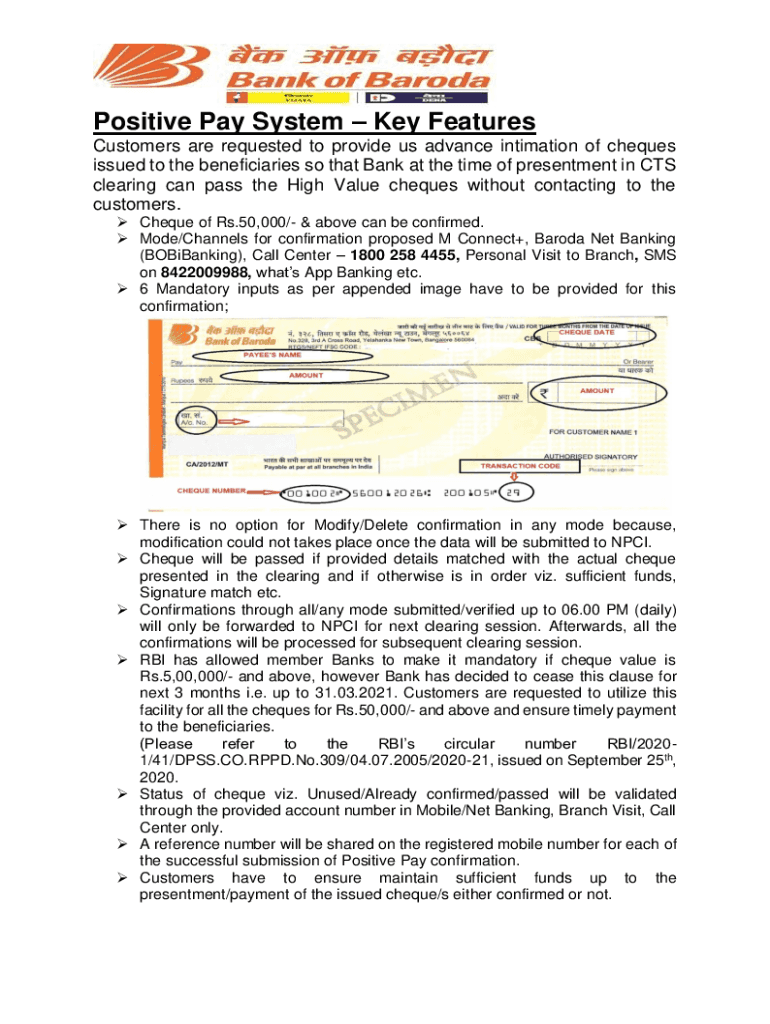
For Bank of Baroda account holders to utilize the Positive Pay System effectively, they must first understand the confirmation process. Customers must submit required details for every high-value cheque issued. This includes the cheque number, cheque date, payee name, account number, and cheque amount. These details should be provided through designated channels, such as online banking portals or mobile apps.
Once submitted, the bank matches the issuer's submitted details with the cheque presented for clearing. If discrepancies are detected, such cheques are flagged for further review, preventing unauthorized fund disbursement. To streamline the process, users are encouraged to regularly check their accounts for confirmation requests to avoid delays in transaction processing.
Steps to Complete the Positive Pay System Process
-
Issue a Cheque: Write the cheque with all necessary details such as the date, payee, amount, and signature.
-
Submit Cheque Details: Login to the Bank of Baroda's online platform or use the mobile app and submit the cheque details.
-
Verify Submission: Ensure all fields match those on the issued cheque to avoid rejection.
-
Confirmation: Await confirmation from the bank that the details have been received and accepted.
-
Clearance: Post confirmation, the cheque proceeds through the clearing process.
-
Monitor Notifications: Pay attention to any bank updates regarding discrepancies or processing issues.
Adhering to these steps minimizes cheque-processing errors and reduces the risk of fraud.
Key Elements of the Positive Pay System
Several critical components define the Positive Pay System at Bank of Baroda:
-
Mandatory Inputs: Essential details include the cheque number, date, amount, account number, and payee.
-
Submission Channels: Details can be submitted via online banking, mobile banking, or in-person at bank branches.
-
Status and Modifications: Users can track the status of their cheque confirmations and make necessary modifications before processing.
-
Notifications: The bank offers notifications to alert account holders about confirmation status and discrepancies.
This structure ensures robust protection against unauthorized transactions.
Legal Use and Compliance for the Positive Pay System
Compliance is crucial when utilizing the Positive Pay System. Bank of Baroda requires users to strictly adhere to the rules of the system to ensure legality. This includes timely cheque confirmation and accurate entry of cheque details. Failure to comply can result in the cheque being marked as unauthorized or returned.
The system aligns with legal standards for financial transactions, emphasizing the necessity for precise information and prompt user action. Account holders must ensure they maintain sufficient funds to cover the confirmed cheques, preventing legal repercussions from bounced cheques.
Who Typically Uses the Positive Pay System
Primarily, the Positive Pay System is used by:
-
Business Entities: Companies issuing large amounts of cheques as part of daily operations.
-
High-Value Individuals: Those who frequently engage in significant financial transactions.
-
Financial Institutions: These entities use it to protect account holders and ensure reliable cheque-clearing processes.
For any organization or individual engaging in high-value transactions, this system serves as a critical tool for financial security.


State-Specific Rules and Differences
While the concept of Positive Pay is universal, some state-level nuances may vary. For instance:
-
Processing Times: Different states may have specific clearing timelines based on regional banking regulations.
-
Channel Preferences: Certain states may prefer electronic submissions over in-person declarations for efficiency.
-
Legal Precedents: Local legal standards might influence the documentation required for confirmation processes.
Understanding state-specific rules facilitates smoother cheque processing and compliance at the regional level.
Examples of Using the Positive Pay System
-
Corporate Scenario: A corporation issues multiple cheques monthly for vendor payments. Employing the Positive Pay System ensures that each cheque is validated against bank records before payment.
-
Personal Scenario: An individual writing a high-value cheque for a property settlement submits cheque details via the mobile app. Upon confirmation, the cheque processes without interruption, securing the transaction.
These examples illustrate how various users can leverage the Positive Pay System for financial oversight and fraud prevention. Each example underscores the system's ability to adapt to different transaction contexts seamlessly.




