






Definition and Purpose of the 2014 IRS Form 1041
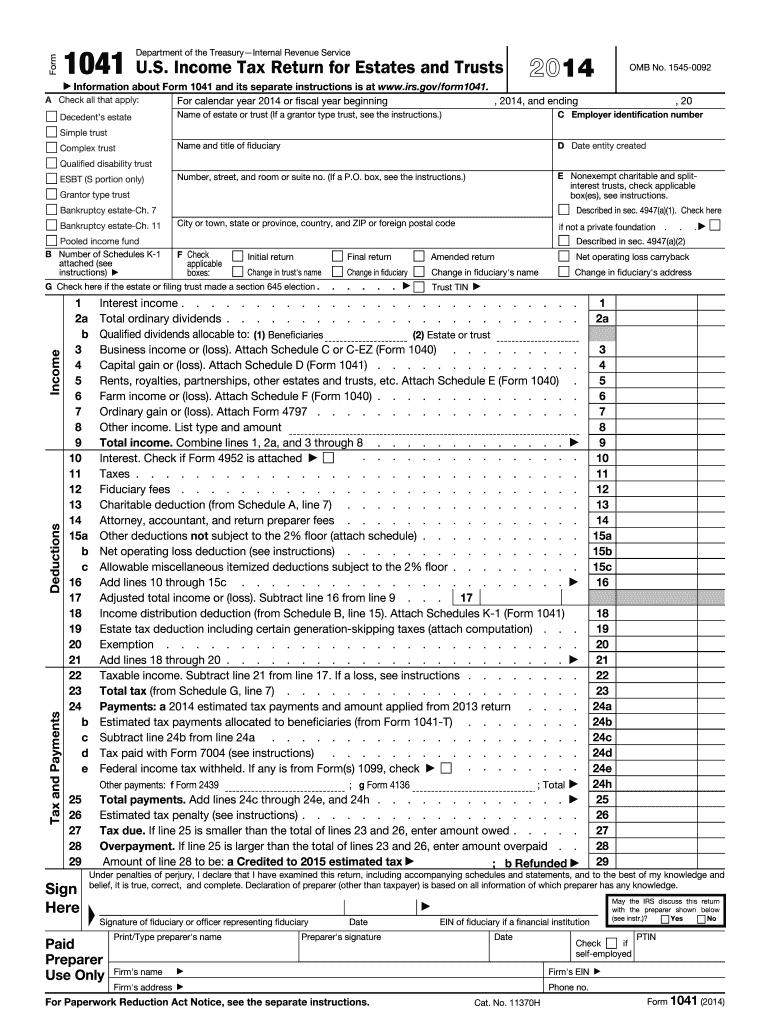
The 2014 IRS Form 1041, formally known as the U.S. Income Tax Return for Estates and Trusts, is utilized by estates and trusts to report their income, deductions, and tax liabilities for the year 2014. This form serves as a specialized tax return that allows these entities to comply with federal tax regulations. The objective is to ensure that all income generated from the assets held by estates or trusts is appropriately accounted for and that the correct amount of tax is paid.
Key Elements of the Form
- Identification Information: Identifies the estate or trust, including the name, address, and employer identification number (EIN).
- Income Sources: Details all income sources, such as interest, dividends, and business income.
- Deductions: Lists deductible expenses like administrative costs and charitable contributions.
- Tax Calculation: Calculates the total tax liability after accounting for deductions and credits.
Who Uses the 2014 IRS Form 1041
The form is primarily used by fiduciaries managing estates and trusts. These fiduciaries could be executors, trustees, or representatives who are responsible for signing the form and ensuring its accuracy. Estates in the process of administration and trusts set up for beneficiaries' benefit must file this form to report their taxable income.
Typical Users Include:
- Estates: Those that have not been fully distributed to beneficiaries after the death of an individual.
- Trusts: Various types, such as family trusts, charitable trusts, or special needs trusts.
Steps to Complete the 2014 IRS Form 1041
Completing the 2014 IRS Form 1041 follows a series of methodical steps ensuring accuracy and compliance.
- Gather Required Documents: Collect all necessary documentation, including financial statements, prior-year tax returns, and details of income and expenses.
- Input Identification Data: Enter the estate or trust's name, EIN, and fiduciary information.
- Report Income: Fill out sections for various income sources including dividends, interest, and any capital gains.
- Calculate Deductions: List all allowable deductions such as trustee fees and charitable contributions.
- Compute Tax: Apply the appropriate tax rates to calculate the tax liability before credits.
- Finalize and Review: Double-check calculations, ensure corroboration with documents, and address any discrepancies.
- Submit: File the form using the appropriate method, whether electronically or through mail.
Important Considerations:
- Accuracy: Verify all figures are accurate to avoid potential penalties.
- Deadlines: Submit the form by the specified deadline to prevent fines.
IRS Guidelines for Form 1041
Following IRS guidelines is crucial for accurate and compliant filing of the 2014 Form 1041. These guidelines provide specific instructions on how to fill out the form, detailing requirements for each section.
Key Guidelines Include:
- Filing Threshold: Estates and trusts must file if they have gross income of $600 or more.
- Deductions and Credits: Rules regarding which expenses can be deducted and how to apply credits.
- Amendments: Process for amending filed returns if errors are discovered after submission.
Filing Deadlines and Important Dates
Timing is critical when it comes to tax form submission, with strict deadlines established by the IRS for filing the Form 1041.
Key Dates:
- Regular Deadline: Typically due by the 15th day of the 4th month following the close of the tax year.
- Extensions: Forms to request an extension must be submitted by the filing deadline.
Avoiding Late Submission:
- Penalties: Failure to file on time can result in penalties, so filing early or filing for an extension is advisable for those facing time constraints.
How to Obtain the 2014 IRS Form 1041
There are multiple avenues through which the 2014 IRS Form 1041 can be acquired, ensuring accessibility for all filers.
Methods of Acquisition:
- IRS Website: Downloadable in a PDF format directly from the Internal Revenue Service website.
- Tax Software: Obtainable through tax preparation software that typically includes forms from multiple years.
- Physical Copies: Available at IRS offices or by request via mail if preferred.
Legal Use and Compliance
Proper and legal use of the 2014 IRS Form 1041 is mandatory to maintain compliance with federal tax laws. This involves ensuring that the information provided is accurate and truthful.
Legal Considerations:
- Fiduciary Responsibility: The fiduciary must ensure all reported information is current and true.
- Supporting Documentation: Maintain comprehensive records to substantiate claims made on the form.
- Audit Preparedness: Being prepared for potential audits requires meticulous record keeping and familiarity with IRS review processes.
Software Compatibility
Using specialized software can streamline the process of completing and filing Form 1041. These programs help reduce errors and improve efficiency.
Compatible Software Options:
- TurboTax: Offers steps and assistance tailored to align with IRS requirements for Form 1041.
- QuickBooks: Assists with tracking and rReporting estate and trust financial transactions.
- Official IRS e-File: Provides a platform for electronic filing, reducing the chance of errors typically associated with manual entry.