Checklist for Appealing a Small Claims Judgment 2025

Get Form
Checklist for Appealing a Small Claims Judgment Preview on Page 1

Here's how it works

01. Edit your form online
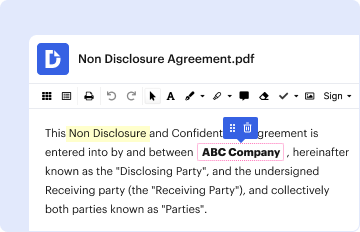
Type text, add images, blackout confidential details, add comments, highlights and more.
02. Sign it in a few clicks
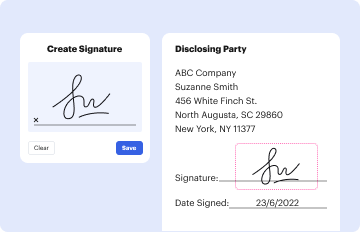
Draw your signature, type it, upload its image, or use your mobile device as a signature pad.
03. Share your form with others
Send it via email, link, or fax. You can also download it, export it or print it out.

How to rapidly redact Checklist for Appealing a Small Claims Judgment online

Form edit decoration
9.5
Ease of Setup
DocHub User Ratings on G2
9.0
Ease of Use
DocHub User Ratings on G2

Dochub is a perfect editor for changing your paperwork online. Follow this simple guide to edit Checklist for Appealing a Small Claims Judgment in PDF format online for free:

  1. Register and log in. Register for a free account, set a strong password, and proceed with email verification to start managing your forms.
  2. Upload a document. Click on New Document and choose the form importing option: add Checklist for Appealing a Small Claims Judgment from your device, the cloud, or a protected URL.
  3. Make adjustments to the sample. Take advantage of the upper and left panel tools to edit Checklist for Appealing a Small Claims Judgment. Add and customize text, pictures, and fillable areas, whiteout unneeded details, highlight the important ones, and provide comments on your updates.
  4. Get your documentation completed. Send the form to other individuals via email, create a link for faster file sharing, export the sample to the cloud, or save it on your device in the current version or with Audit Trail added.

Explore all the benefits of our editor today!

be ready to get more

Complete this form in 5 minutes or less

Get form

Got questions?

We have answers to the most popular questions from our customers. If you can't find an answer to your question, please contact us.
Contact us
Understanding the 5-Step Appeal Simple Appeal: Listen Actively. The first step in the 5-Step Appeal is the Simple Appeal. Reasoned Appeal: Acknowledge Emotions. Personal Appeal: Explore Options. Final Appeal: Agree on a Solution. Action: Follow up.
Key criteria governing the appellate courts interventions include the presence of a palpable and overriding error, a misapplication of legal principles to factual issues, or findings that are wholly unsupported by the evidence presented.
After a Decision is Issued Step 1: File the Notice of Appeal. Step 2: Pay the filing fee. Step 3: Determine if/when additional information must be provided to the appeals court as part of opening your case. Step 4: Order the trial transcripts. Step 5: Confirm that the record has been transferred to the appellate court.
Examples of valid reasons to appeal a courts decision The judge allowed evidence that should not have been admitted, despite objection, and it hurt the appellants case. The judge refused to allow relevant evidence, which hurt the appellants case. The jury was given incorrect instructions about the law.
Having strong arguments is the best way to win. So how do you make sure your appeal is as strong as it can get? Well, the data shows you should call in an appellate attorney. Most litigators understand that a trial is predominantly about facts, whereas an appeal is predominantly about law.
be ready to get more

Complete this form in 5 minutes or less

Get form

People also ask

Section one gives tips on improving five parts of a brief: facts, standard of review, argument, summary of argument, and issues presented.
In this article, well discuss the five major appeal process steps. Step 1: Hiring an Appellate Attorney (Before Your Appeal) Step 2: Filing the Notice of Appeal. Step 3: Preparing the Record on Appeal. Step 4: Researching and Writing Your Appeal. Step 5: Oral Argument.
How To Defend Yourself in a Small Claims Case. Whether youre the one filing the case or the one being sued, many of the same small claims court tips apply. Youll want to gather strong evidence, organize your documents, know the court rules, and prepare a clear, respectful presentation for the judge.

Related links